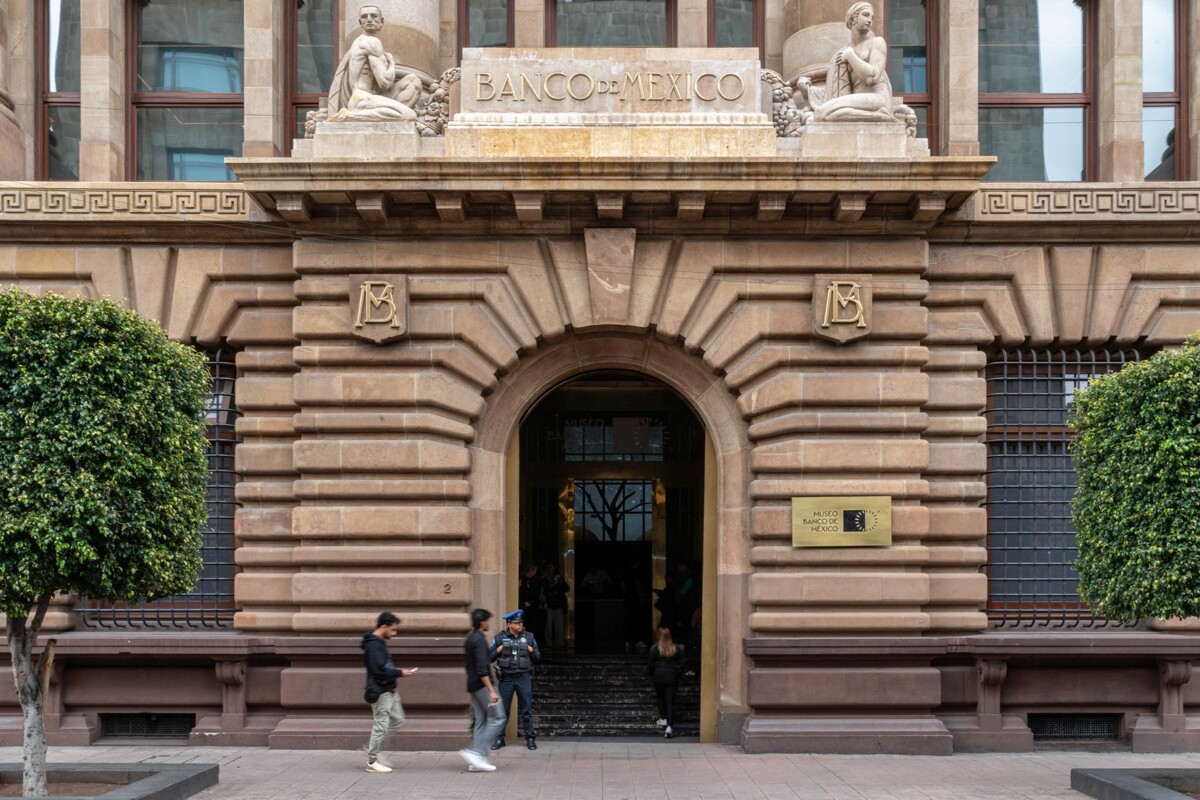
Last week, the Governing Board (JG) of the Bank of Mexico (Banxico) decided by a majority to cut the benchmark interest rate target by twenty-five basis points, setting it at 6.75 percent. The press release, however, elaborated on several adverse factors that, in principle, would point in the opposite direction. First, between the first half of January and the first half of March, annual inflation increased from 3.8 to 4.6 percent, while underlying inflation remained at 4.5 percent. Nevertheless, these factors seem to have been deemed irrelevant, as, far from leading to a cautious pause amid risks, the JG even pointed to a possible further cut in the future. In an interview, the governor of Banxico showed no major concern about either the level or the risks of inflation, stating that the increase recorded in the first half of March was due to volatility in fruit and vegetable prices, which would be transitory, and that the adjustments to the central bank's forecasts were marginal. The difficulty in logically reconciling the assessment in the press release with the March decision may be due, perhaps, to the assumption that Banxico conducts monetary policy based on its primary objective of "safeguarding the stability of the purchasing power of the national currency." The median of these expectations, according to the survey of specialists conducted by the Bank of Mexico, has shown an upward trend since September 2025 and, in February 2026, stood at 4.0 percent. Third, Banxico raised its average inflation forecasts for the first three quarters of 2026, keeping the forecast for the fourth quarter at 3.5 percent. These data should not be taken lightly, as since June 2020, inflation has been above the target, with an average of 5.3 percent. However, this assumption could be weakened if the central bank simultaneously pursues other objectives, even of greater precedence, albeit implicitly. Given the sparsity of Banxico's institutional communication, the seemingly surprising decision in March has triggered a wave of intense reactions that, in general, have grouped into two dominant trends. The most vociferous current of opinion, and perhaps the majority, has consisted of severe criticism of the JG's decision, calling it "ridiculous" and "irresponsible," and considering it evidence of the erosion of Banxico's credibility and autonomy. The disapproval of the central bank has reached an unprecedented magnitude. The opposite current has brought together commentators who have not only justified Banxico's decision but have also attempted to discredit its critics. These defenders have resorted to arguments of easing raised by some members of the JG in the past, including the "structural" difficulties in bringing inflation to the target. The continuation of the monetary easing cycle seems to have responded to a strange logic. These revisions are not trivial, as they refer to the expectations for the current year, which are fundamental to the operational decisions of companies.