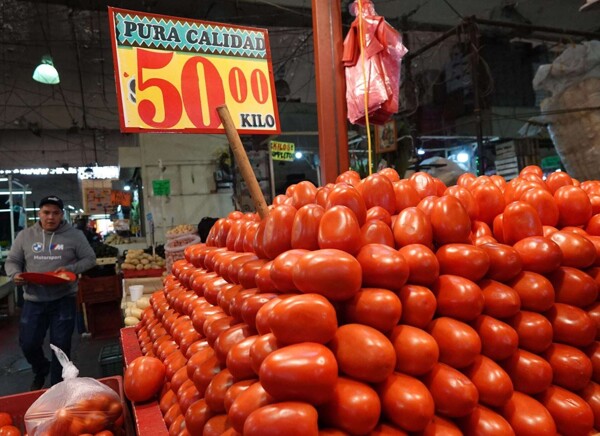
Inflation in Mexico accelerated again in March, reaching an annual rate of 4.6%, its highest level in 16 months, driven mainly by a sharp increase in the prices of basic foods, according to data from Inegi. The increase, from the 4.02% recorded in February, marks the second consecutive month outside the Bank of Mexico's (Banxico) target range, in a context of both internal and external pressures. The main factor behind this month's surge was the rising cost of fruits and vegetables, whose prices skyrocketed 21.77% annually. However, it remains above its historical average, suggesting that inflationary pressures persist. Within this component, food, beverages, and tobacco recorded an annual increase of 5.78%, while services—including restaurants—increased by 4.92%. Analysts point out that factors such as higher taxes on beverages, labor pressures, and cost adjustments continue to be passed on to final prices. Just in March, this category increased by 10.75%, the highest monthly increase for any month since 2006. Among the products with the highest increases are tomatoes, with a monthly increase of 42%, cucumbers by 42.71%, lemons by 18.26%, and potatoes by 14.92%, reflecting impacts associated with weather conditions. Following the latest rate cut, the market anticipates that Banxico will pause in May. This behavior caused non-core inflation—the most volatile—to stand at 5.05% annually, while its monthly variation advanced by 2.46%. In contrast, core inflation, which is key to measuring the underlying trend, showed slight moderation at 4.45%, down from the 4.50% of the previous month. To this are added external risks, such as tensions in the Middle East, which could affect energy and logistics costs in the coming months. The government estimates that the conflict in the Middle East will not last more than two months. According to Banamex estimates, core inflation could see a new surge mid-year before resuming a downward trajectory in the second half of 2026. With the March data, the first quarter of the year closes with an average inflation of 4.1%, in line with Banxico's projection, which in March lowered the interest rate to 6.50% against the forecast of some analysts who questioned this decision amid upcoming inflationary pressures.