Fundación Eco-Bahía consolidates regenerative tourism model in Mexico. With an 80% coral survival rate and thousands of people trained, the foundation demonstrates the viability of coexistence between tourism and ecology. The organization's efforts focused on protecting sea turtles, restoring coral reefs, and monitoring wildlife, generating measurable impacts that strengthen the natural capital of the Riviera Maya.
Achievements in marine and terrestrial biodiversity. During the nesting season, the entity protected a total of 1,712 turtle nests, resulting in the release of 148,831 hatchlings. In the reef area, the rehabilitation program achieved the transplantation of 1,000 corals with a survival rate of over 80%, intervening in 1,256 structures to improve the resilience of the marine ecosystem. Regarding terrestrial fauna, the foundation managed 1,846 sighting reports and assisted 1,330 individuals, monitoring 61 species protected by official regulations.
According to Verdín, environmental conservation must be fully integrated into the tourism development model so that the protection of natural capital is a shared responsibility between civil society and the private sector. With these results, the foundation consolidates itself as a regional benchmark in regenerative tourism, inviting citizens to collaborate with these causes through its official donations site.
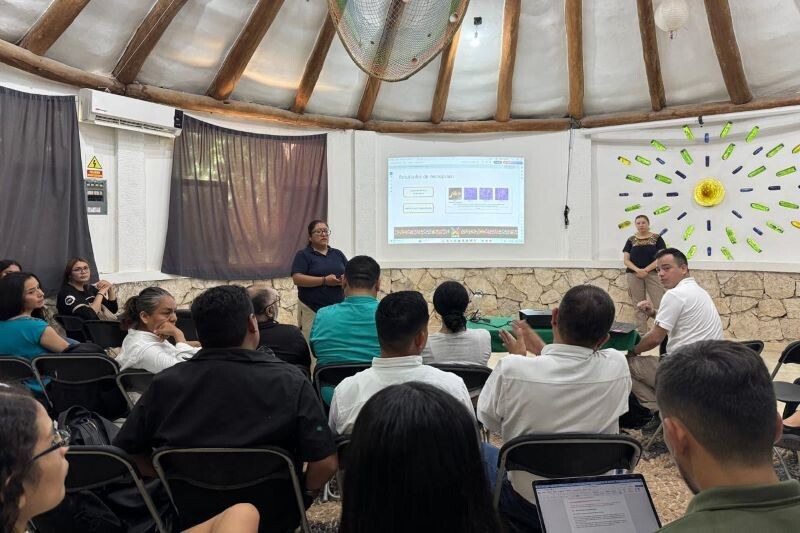
Environmental education and social transformation. The foundation's work directly impacted 6,641 people through workshops and training activities. This social axis included the training of 1,736 collaborators and the awareness-raising of 2,045 children, promoting the use of digital platforms for citizen science to involve the local population in environmental protection. The organization's director, Luis Verdín, highlighted in the third person that the fundamental value of these achievements lies in the cultural transformation generated in the region.
Additionally, scientific marking of 171 females was carried out for the monitoring of the Caguama and Verde species.