We tell you when you can best observe it and its true origin.
When to see the Pink Moon TODAY, April 2, in Mexico? Although April's full moon could be seen since the early morning of Wednesday, April 1, it will reach its peak during the night of this Thursday in Mexico. It is expected to reach its moment of greatest illumination at 8:00 PM, when the natural satellite can be seen fully illuminated from Earth.
"Full moons are visible to those in both the northern and southern hemispheres, as they are considered to be in the full moon phase for 12 hours before and after their peak," explained the specialized source EarthSky.
Why is it called the 'Pink Moon'? Despite its name, the Moon does not always take on a pink hue. The term 'Pink Moon' comes from the traditions of Native American peoples, who named each full moon according to changes in nature. In April, the term refers to the blooming of pink wildflowers, especially the phlox subulata or 'pink moss' that appears during spring.
The Algonquin nations—a group that includes the Ojibwa, Lenape, Mohicans, and other tribes of the northeastern continent—hunters and gatherers observed the sky to keep track of time, so full moons were a kind of 'natural calendar' for them. An example of this is that the full moon in January is called the Wolf Moon, as this was the time when these animals howled the most due to food scarcity; in February, the Snow Moon, due to heavy snowfalls; in April, the Pink Moon, in reference to the flowering of the trees; and in June, the Strawberry Moon, for the beginning of the harvest of these wild fruits, according to UNAM.
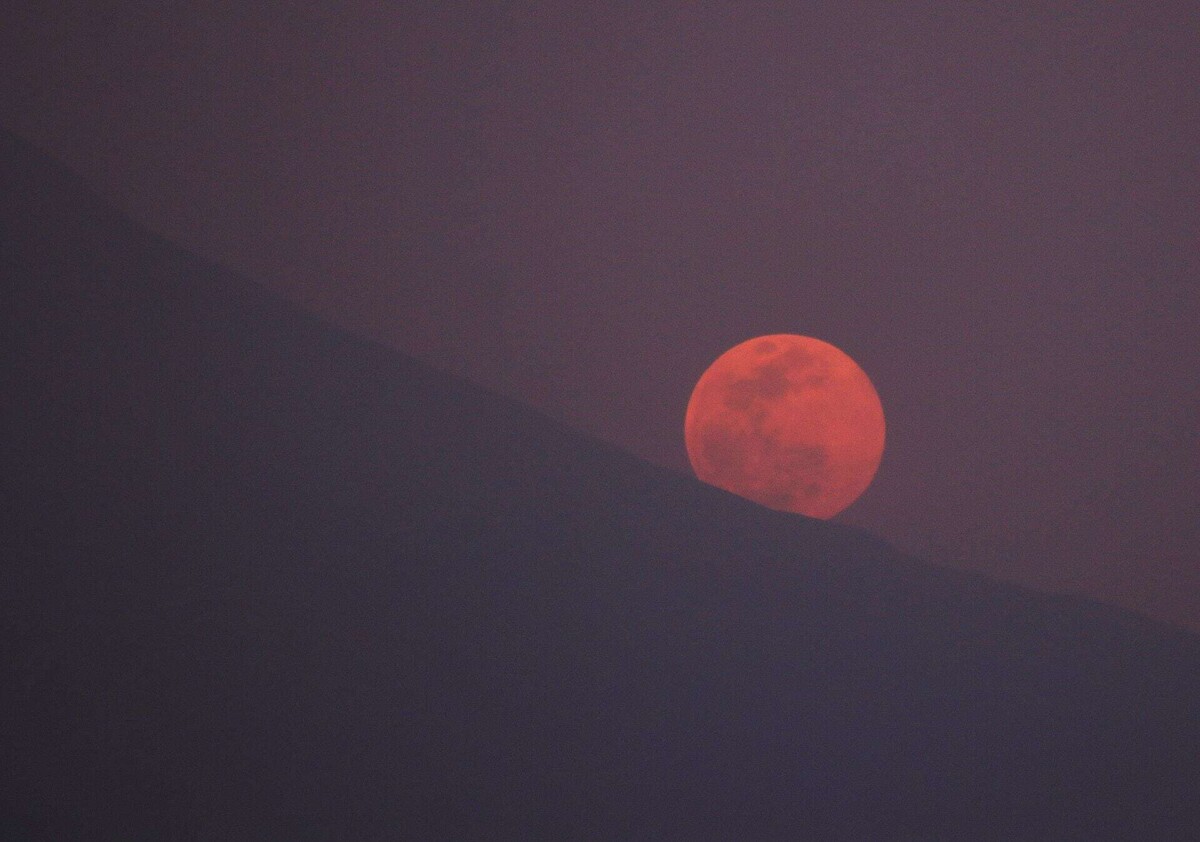
Why is the Pink Moon sometimes reddish or brighter? In an interview with Gaceta UNAM, researcher at the Institute of Astronomy, Julieta Fierro, explained why the Moon can sometimes appear reddish or orange-toned, despite not actually changing color. She pointed out that when it is low in the sky and closer to the horizon, the Moon often appears larger and with unusual tones because "the Earth's atmosphere absorbs more blue light than red". In that process, blue light scatters more easily, while red tones manage to pass through more intensely.
"Perhaps you have noticed it when the Moon passes between the Popocatépetl and Iztaccíhuatl volcanoes: it looks huge," said the astronomer, who emphasized that it is an optical effect, as the Moon's size does not actually change.
Popularly known as the 'Pink Moon', this phenomenon is characteristic of the season; however, its name does not necessarily mean the satellite takes on that color. Also sometimes called the 'Easter Moon', this phase is distinguished by its great brightness and will be visible to the naked eye in much of the country, as long as weather conditions permit. The first full moon of spring will soon illuminate the sky and can be seen in Mexico in all its splendor.