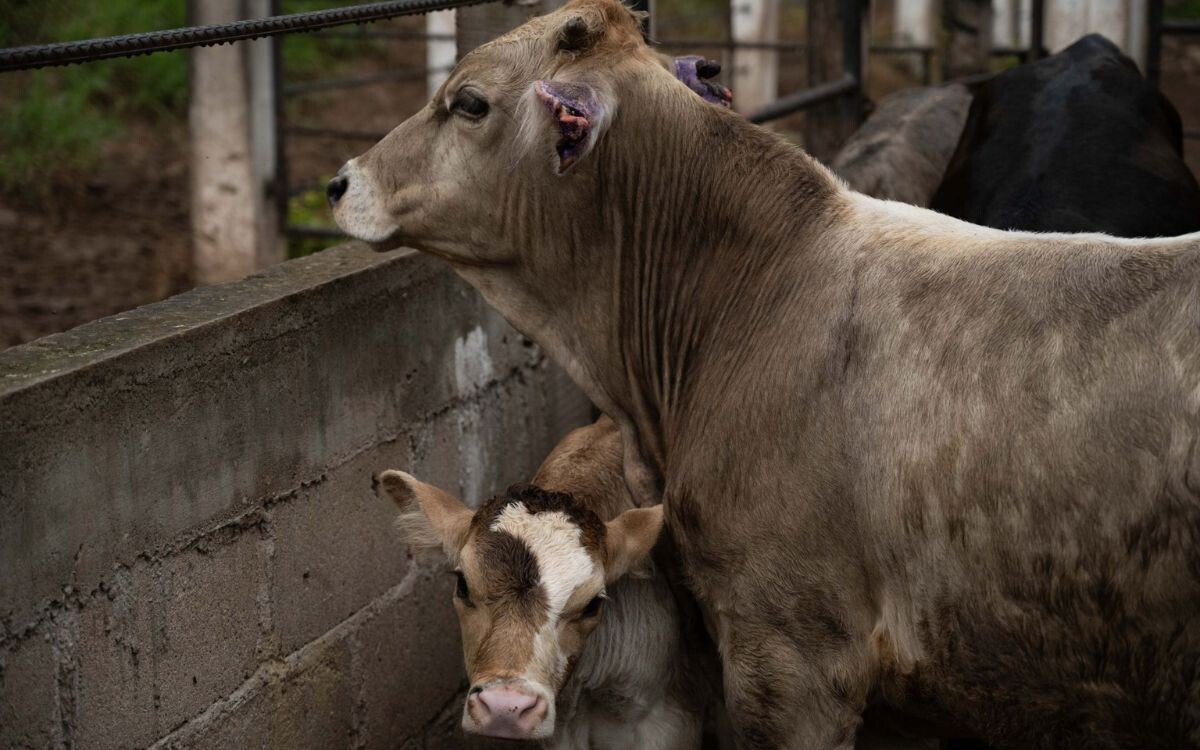
In response to the spread of the New World screwworm (Cochliomyia hominivorax), the Secretariat of Agriculture and Rural Development (SADER) officially published an agreement in the Official Gazette of the Federation (DOF) this Tuesday. The agreement modifies and expands the measures of the National Animal Health Emergency Device (DINESA) to establish stricter controls for the movement of animals. The spread of the pest and its advance from the southern border of Mexico make it necessary to implement greater animal health actions and measures. The health authority recognizes that the pest is already present in the south and center of the country, posing a direct threat to areas that maintain a free status. The agreement states that due to the presence of the screwworm pest in the south and center of the country, with a risk of spreading to free livestock zones in northern Mexico, it is necessary to expand measures to prevent, control, and eradicate myiasis. The modification to DINESA introduces Article 6 Bis, which establishes a matrix of specific requirements according to the origin and destination of the livestock. Thus, the National Service of Health, Safety and Food Quality (SENASICA) instructs that to obtain the Zoosanitary Movement Certificate (CZM), the prior treatment of the animals is mandatory. In addition to pharmacological treatment, it is ordered that livestock be 'sprayed or bathed with an insecticidal product with larvicidal effect and will be subject to a physical inspection to rule out the presence of wounds and/or myiasis'. For the specific case of equine transport, the document indicates that the movement of equines for slaughter is completely restricted when the origin is an affected area and the destination is a free or buffer zone, unless a rigorous physical inspection and certification by an Authorized Third-Party Specialist Veterinarian is carried out. The agreement also toughens transport logistics by prohibiting the movement of animals that have open wounds, are fatigued, or are sick. Strict protocols are also established for cargo vehicles and private individuals at Verification and Inspection Points (PVI) and Federal (PVIF) points. The agreement reiterates the obligation to report any suspicion of the presence of the fly or larvae. Producers, veterinarians, and the general public must report the presence of 'myiasis' through the 'AVISE' application or through SENASICA's emergency numbers. The agreement will come into force the day after its publication, immediately activating the protocols described in the eight epidemiological regions.