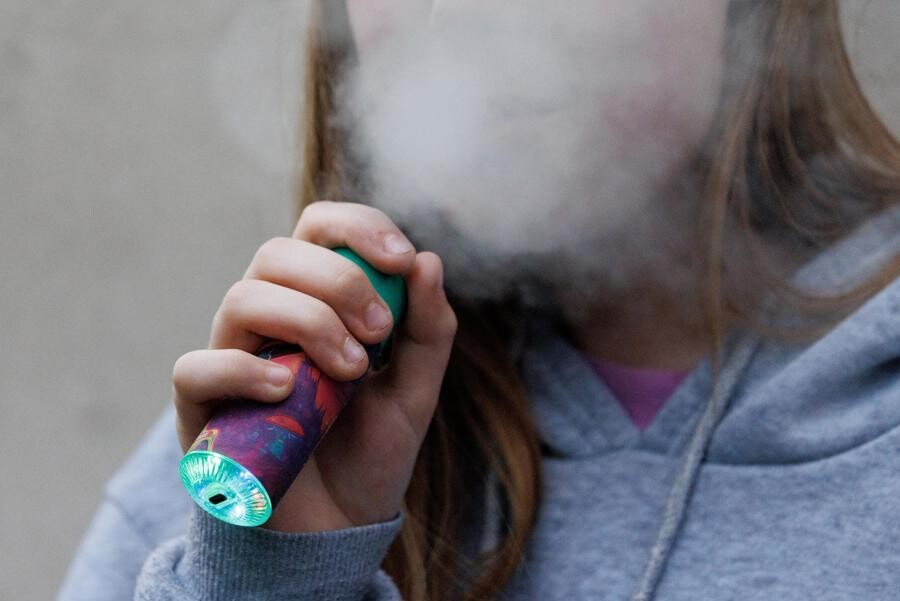
President of Mexico, Claudia Sheinbaum, stated that the nationwide prohibition on the sale, production, and distribution of vapes and e-cigarettes is because they "do a lot of damage to health." At her press conference, Sheinbaum said: "There is this idea that if you don't smoke cigarettes and use a vape, it does less harm, but in reality, the vape has many substances and materials that do a lot of damage." Sheinbaum also celebrated that the law already includes sanctions, "especially for those who sell vapes," which range from one to eight years in prison and a fine of up to 226,280 pesos (about $12,430).
Meanwhile, activists in favor of vaping and e-cigarettes pointed out this Wednesday that the legislative reforms approved on Tuesday to ban the entire distribution and sales chain of these devices formalize the handover of the distribution and sale of at least five million devices per month in Mexico to organized crime. Consumers and users were finally excluded from the prohibition after a particular discussion of the reforms, although in a first instance, deputies had approved in general the total prohibition of vapes and electronic cigarettes.
The legislative reform will now be taken to the Senate for its next discussion and final approval, which is expected to pass without problems due to the official party's majority. The president of the collective "Mexico and the World Vaping," Juan José Cirión Lee, lamented in a statement that Mexican lawmakers "have consummated the prohibition of vaping in the country." This, he said, despite the "vast" scientific evidence available and that in several countries, such as France and the United Kingdom, vaporizers are already part of public policies to combat smoking, as they are 95% less harmful than conventional cigarettes.
In this sense, the activist assured that the approved reform "formalizes the handover of the vaping market to criminal gangs," which have been favored by the absurd and harmful prohibitionist policy that began in February 2020 with the issuance of presidential decrees against vaporizers and reached its ridiculous peak with the constitutional reform approved in December 2024. According to the organization's data, it is estimated that there are around 2.8 million vape consumers in Mexico, of which 2.3 million purchase disposable devices that are usually used for about a week, so about 5.2 million of these products are purchased per month, which would be distributed, marketed, and smuggled into the country by criminal gangs.
Cirión Lee urged the Mexican Senate to discard the initiative and advance in the formulation of a regulatory framework that defines rules for the import, distribution, and sale of vaporizers. "This, under the understanding that they legislate in favor of public health and not follow political lines that will be very harmful to the country: such as funding criminal gangs, consumption among minors, tax evasion, in addition to hindering the fight against smoking; generating conflicts with the United States; among other scourges," he concluded.