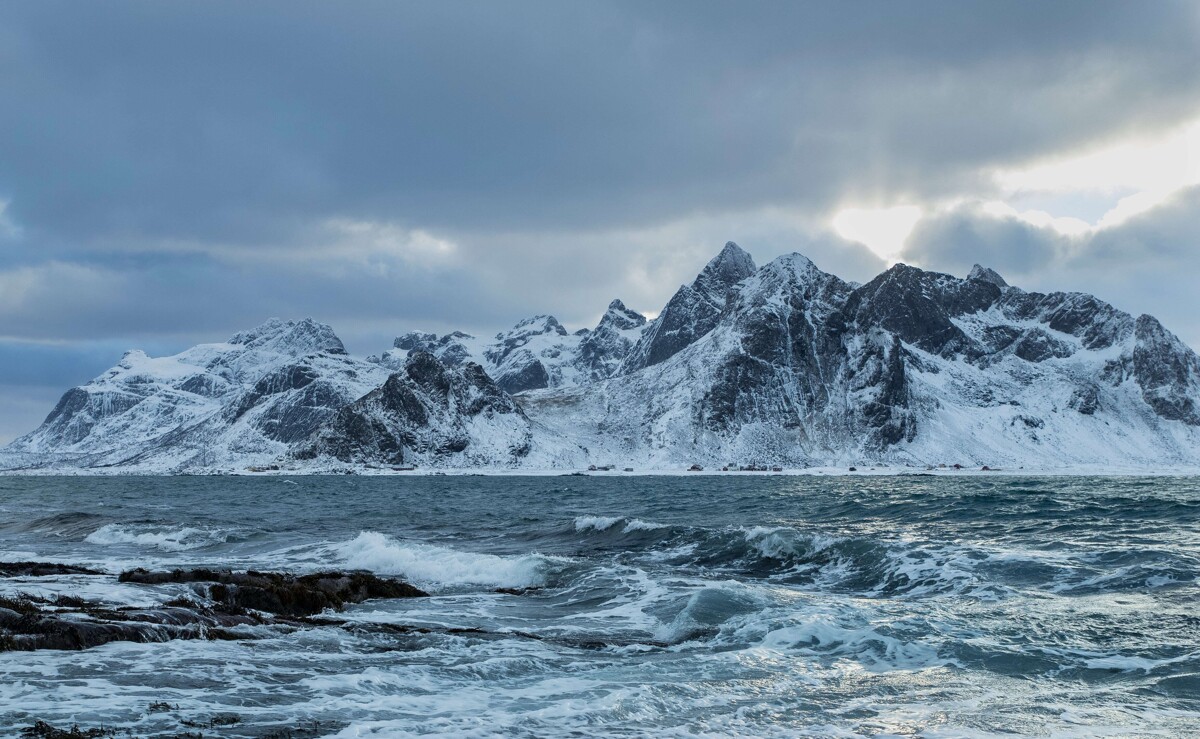
A global problem. Is the Arctic transforming faster and with more far-reaching consequences than scientists expected a few decades ago? The snow season is now much shorter, sea ice is thinning and melting earlier, and wildfire seasons are getting worse. Rising ocean temperatures are reshaping ecosystems as non-Arctic marine species move north. The thawing permafrost releases iron and other minerals into rivers, degrading drinking water. It also influences climate patterns in different regions. When Arctic sea ice decreases, the ocean absorbs more energy, accelerating global warming. As temperatures have risen over the years, there are fewer opportunities for ice to form. Additionally, extreme storms, fueled by warming seas, put communities at risk. The hydrological year from October 2024 to September 2024 recorded the highest Arctic air temperatures on record in 125 years, including the warmest autumn ever measured and a winter and summer among the warmest on record. Overall, the Arctic is warming more than twice as fast as the Earth as a whole. How uncertain is the future of Arctic sea ice? In recent decades, sea ice—the engine of the Arctic climate—has drastically decreased, with its total area reduced by about 50% since the 1980s. Precipitation patterns now bring more rain and less snow to the Arctic. The thawing of soils that remained frozen for a long time allows for more severe erosion. That is, it is a constant decline. The announcement of low Arctic sea ice levels coincides with extreme temperatures recorded in places like the United States, Mexico, Australia, North Africa, Northern Europe, and Asia. In other words, the Arctic is radically different from what it was. Combining simulations with different assumptions, initial climate conditions, and data sets reduces—but does not eliminate—uncertainty. Additionally, vegetation grows faster and further north in response to rising air temperatures. Experts agree that as long as we continue to produce greenhouse gases, and even after we stop, the Arctic will continue to warm, causing a series of changes. For the second year in a row, Arctic winter sea ice reached a level equal to the historic minimum since satellite observations began in 1979. According to the National Aeronautics and Space Administration (NASA) and the National Snow and Ice Data Center (NSIDC), U.S. organizations that are reference points in science and statistics, the extent of Arctic sea ice reached 14.29 million square kilometers on March 15, practically matching the 14.31 million square kilometers recorded in 2025. In this regard, scientists from NASA and the University of Colorado in Boulder noted that both records are statistically similar and translate into historic lows. In addition to the total sea ice extent, they specified that there are changes in the thickness of the ice. Nathan Kurtz, director of NASA's Cryospheric Sciences Laboratory, said that “a lot of the ice in the Arctic is thinner this year, especially in the Barents Sea,” to the northeast of Greenland, and that the Sea of Okhotsk, between Japan and Russia, “also recorded a relatively low amount of ice this year.” In general, scientists from NASA and NSIDC concluded that the maximum sea ice extent in the Arctic this winter continued the long-term trend observed over the last few decades, highlighting that “this year, the maximum ice extent was below the 1981–2010 average by about 1.3 million square kilometers.” ALARMING Walter Meier, a professor at the University of Colorado specializing in ice and snow, comments that the extent of winter sea ice also determines the sea ice conditions during the summer. “That is, if the Arctic starts the warm season with less sea ice, the minimum extent during the summer, measured each September 15, will likely also be lower. The recurring pattern of low sea ice extent in both winter and summer implies less accumulation of stable multi-year ice, which is alarming,” notes the expert. Likewise, Walt Meier adds that the chances of a warmer Arctic summer are increasing, and different predictive models estimate that there is about an 80% probability that El Niño, a global weather phenomenon that can raise ocean surface temperatures, will arrive by late summer. “One or two years with record lows don't mean much on their own, but in the context of the significant downward trend we have observed since 1979, the data reinforces the drastic change in Arctic sea ice across all seasons over decades,” highlights the researcher. To conclude, Walt Meier emphasizes that scientists anticipate that climate change could lead to ice-free Arctic summers by mid-century, which could drastically alter human activities in the Arctic, leading to an increase in commercial activities such as fishing, mining, and maritime shipping in the region as global warming progresses. THE KEYS. Why is Arctic sea ice so important? Sea ice plays a key role in the planet's climate balance. For example, it reflects sunlight, preventing the oceans from absorbing heat. It also acts as a global thermal regulator.