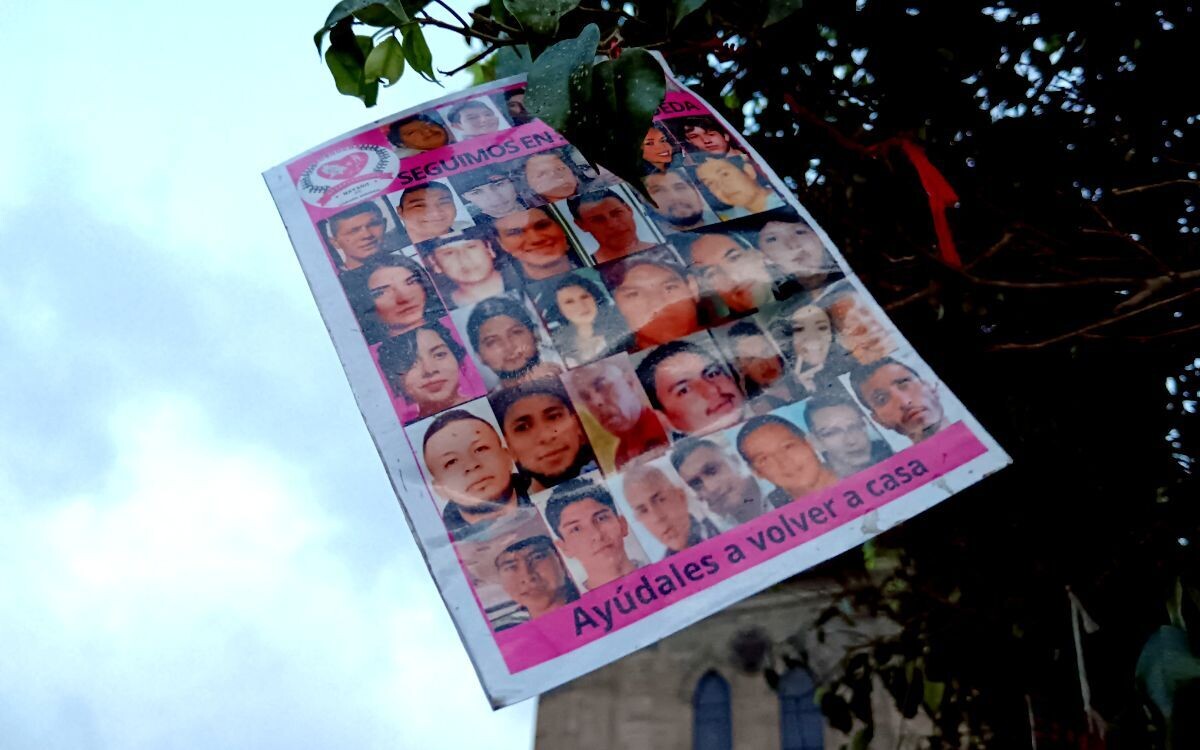
Seven organizations and several collectives of families of missing persons from different states in Mexico presented a plan with proposals to strengthen the search, identification, and assistance for missing persons. This follows the decision by the UN Committee on Enforced Disappearances to refer Mexico's situation to the UN General Assembly, and in response to the Mexican government's actions. "We speak from our daily experience: as searching mothers, as families looking for their loved ones, as victims, and as human rights defenders," the organizations stated. In their position, they acknowledge that the Mexican state has made significant progress, such as updating search and investigation protocols, creating the National Alert for Search, the National Database of Investigation Files, and strengthening the National Forensic Data Bank. However, they emphasize that these efforts are insufficient to address the crisis of disappearances and that it is urgent to consolidate a solid system for search and identification. The families stressed the need to ensure that the National Center for Human Identification (CNIH) operates permanently with sufficient human and technological resources and is fully integrated into the National Search System with clear identification goals. They also highlighted the importance of integrating the state's scientific capacity, including laboratories from the National Institute of Genomic Medicine, to create a national network of interoperable labs. Additionally, they called for strengthening genetic research to establish a reliable National Forensic Information System. On another note, they stated that the National Search Commission requires more resources, appropriate technological tools, and dignified working conditions for its staff, as well as enhancing information analysis capabilities to optimize investigations. They also called for establishing a national mechanism to monitor the international recommendations of the Committee on Enforced Disappearances, with verifiable goals, clear deadlines, and direct family participation, along with transparency in results for society. Regarding victim assistance, they stressed the urgency of reforming the General Law on Victims and reinforcing the role of the Executive Commission for Victim Assistance (CEAV) to guarantee effective access to support measures, reparation, and individualized follow-up for each victim, ensuring institutional assistance is comprehensive and dignified. "We families have participated in the construction of laws, in the development of protocols, we have conducted field searches and contributed to strengthening institutions with our experience. Our role is indispensable," the collectives underlined. The position concludes that the Committee's decision and the government's response represent a historic moment for Mexico. We have the opportunity to consolidate institutions, strengthen scientific capabilities, improve inter-institutional coordination, and ensure dignified assistance to victims. Finally, the collectives affirmed that they will continue to search, participate, and build solutions, "but we need the Mexican state to fully meet its responsibility," they pointed out. The position was signed by the Mónica Alejandrina Human Rights Foundation, Guerreras en Busca de Nuestros Tesoros A.C., the Foundation for the Sustainable Development of Oaxaca Binni Ca Zaa A.C., Santos Alvarez – JFJH Cuatro Nombres una Esperanza. Also, the Búscame de Tabasco A.C. Foundation, the International Human Rights Foundation A.C., as well as collectives of families of missing persons from the states of Mexico, Oaxaca, Tabasco, Nayar, and other federal entities of the country.