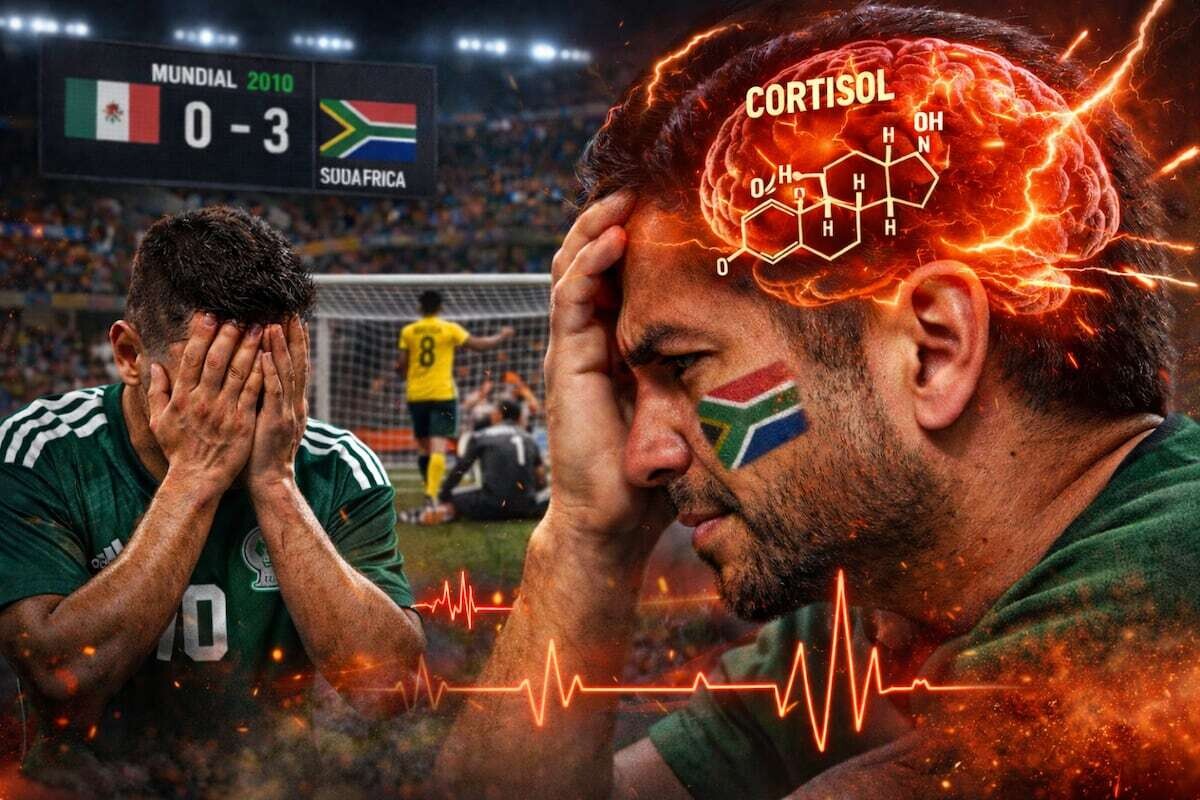
“It affects us totally at a cerebral level, in the body, in behavior, and in emotions,” said Víctor Manuel Rodríguez Molina, an academic from UNAM.
What happens in the brain when watching the World Cup?
During football matches, an intense neurochemical process is activated, as the brain releases different substances depending on the result. For example, when a fan's team scores a goal, dopamine and endorphins of pleasure and happiness are released.
However, when the team loses or makes mistakes, stress and anxiety are generated, thus increasing cortisol levels, explained Rodríguez Molina.
“Football has tense moments like a penalty, a yellow or red card, and even an unexpected play, thus triggering the brain's alert mechanisms and raising cortisol as if experiencing a real danger,” he added.
Do the big scores and missed penalties by the Tri cause stress?
During key football matches of the Tri, it is common for fans to be on the edge of their seats or standing in front of the screens, as if they were the director of the National Team. However, these attitudes are a response to a combination of chemical substances.
“During a match, not only dopamine—related to pleasure—is released, but also serotonin that favors social coexistence and adrenaline that keeps the body in a state of alert,” he concluded.
The missed penalties by the Tri and even unexpected defeats will cause high levels of cortisol—the stress hormone—in Mexicans, according to mental health experts.
According to psychology specialists, watching football, especially when there is a strong emotional connection with the Mexican National Team, generates real physical reactions that go far beyond entertainment.
“Football matches activate a whole neurobiological cocktail. The FIFA World Cup 2026 will not only be played on the field, but it will also have a direct impact on your brain.”