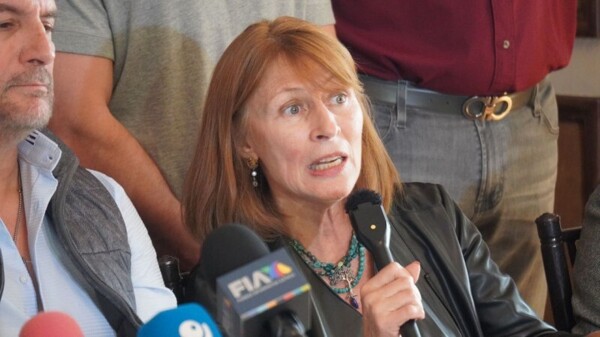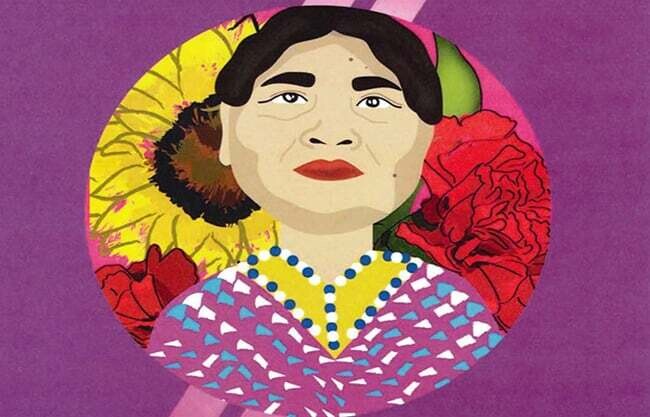
The court highlighted that the hospital did not have Nahuatl language interpreters, which prevented adequate communication between the victim, her family, and the medical staff. During the hearing, the family's legal representatives requested a conviction against the Mexican state for sexual violence, torture, lack of medical attention, and the impunity surrounding the case for nearly two decades. The victim's daughter, Martha Inés Ascencio, participated in the hearing and presented the facts in the Nahuatl language, translated into Spanish. The Court determined that the acts were perpetrated by members of the Mexican Army and that the aggression constituted an act of torture. The court noted that after the assault, Ernestina Ascencio was transferred by her family for about 10 hours in search of medical attention, until she arrived at the Regional Hospital of Río Blanco, where she died in the early hours of February 26, 2007, without having undergone surgery. The court also established that the state failed to its obligation to provide timely, accessible, and adequate medical care. In this sense, the Court determined that Mexico violated the right to health of Ms. Ascencio Rosario, in a context marked by linguistic and cultural barriers. Regarding access to justice, the ruling concluded that the ministerial investigation was not conducted with the due diligence required in a case of sexual violence against an elderly indigenous woman. The Court pointed out that the inquiry was closed prematurely and without exhausting all necessary lines of investigation. The Court also found that the sons and daughters of Ernestina Ascencio faced structural obstacles to access to justice, derived from their condition as monolingual indigenous people. It also documented pressures and intimidations directed at the family to stop their search for truth and justice, which violated their rights to personal integrity and to the truth. As a consequence of these violations, the IACtH ruled that Mexico violated various rights protected by the American Convention on Human Rights, including the right to life, personal integrity, judicial guarantees, equality before the law, judicial protection, and health, as well as provisions of the Belém do Pará Convention and the Inter-American Convention to Prevent and Punish Torture. In the ruling, the court ordered the Mexican state to implement comprehensive reparation measures: Reopening of a thorough criminal investigation to identify and sanction those responsible; Medical, psychological, and psychiatric care for the family members; A public act of recognition of international responsibility; Training programs for public officials; The strengthening of the Specialized Care Center of Soledad Atzompa; and, The creation of a National Registry of Interpreters and Translators in Indigenous Languages for the health and justice systems. The Court clarified that it did not rule on the alleged violation of the right to personal liberty of the family members due to insufficient evidence, nor on the right of access to information in one of the claims presented. A case that marked the Sierra de Zongolica and reached the inter-American system. The case of Ernestina Ascencio Rosario dates back to February 25, 2007, when the 73-year-old monolingual Nahuatl indigenous woman left her home in the community of Tetlatzinga, municipality of Soledad Atzompa, in the Sierra de Zongolica, Veracruz, to carry out daily activities related to herding. Finally, she was admitted to the Regional Hospital of Río Blanco, where she died in the early hours of February 26, 2007, before receiving surgical intervention. Before dying, the woman managed to tell her children in the Nahuatl language that she had been sexually attacked by a group of soldiers, that she had been tied up, and that they had covered her mouth. The body of Ernestina Ascencio was exhumed on March 9, 2007, in the Tetlatzinga cemetery, in the presence of experts from the Veracruz Prosecutor's Office, the Sedena, and the CNDH itself, without legal representation for the family. On March 12, 2007, new expert opinions ruled out the previously documented injuries and concluded that the woman had died from acute anemia, chronic gastritis, and intestinal ulcers. The Inter-American Court of Human Rights (IACtH) declared the Mexican state internationally responsible for the sexual violence, torture, and death of Ernestina Ascencio Rosario, as well as for the lack of access to justice on equal terms for her family, according to the ruling notified on December 16, 2025. In the ruling of the Ascencio Rosario et al. v. Mexico case, the international court concluded that Ernestina Ascencio, a 73-year-old monolingual Nahuatl indigenous woman, was a victim of sexual assault and serious injuries in February 2007 in the community of Tetlatzinga, in the Sierra de Zongolica, Veracruz. In 2020, the case was presented to the Inter-American Commission on Human Rights (IACHR), which, in August 2023, determined that there were sufficient elements to prove serious human rights violations of the victim and her family. The IACHR concluded that the Mexican state had failed to guarantee the right to health, to life, and to a diligent investigation, and highlighted the special gravity of the case due to the victim being an indigenous, elderly, and monolingual woman, in a context of militarization. The forensic expert defended his report and explained that the autopsy was performed in a private funeral home due to the non-existence of a legal amphitheater in the region, a structural deficiency that persisted in the Veracruz sierra. After internal avenues were closed, the family turned to the inter-American system. The area where she was found was located approximately 300 meters from an operations base of the 63rd Infantry Battalion of the Mexican Army, installed in the region as part of the federal operations against drug trafficking deployed since late 2006. After being located, Ernestina Ascencio was transferred by her family in search of medical attention. Hours later, she was found by one of her daughters lying in the field, with visible signs of physical and sexual violence, such as her skirt lifted and her rebozo tied to her body. According to the testimonies of her family members, the woman was in a serious physical condition. The legal representatives stated that the authorities dismissed the victim's testimony, diverted lines of investigation, and closed the case without exhausting key diligencies. During the hearing, attempts at intermediation by state officials were documented to get the family to give up the search for justice, including offers of support and benefits in exchange for abandoning the case. The Mexican state, in turn, partially recognized its responsibility. That same year, the CNDH reopened the file and recognized omissions and irregularities in its initial performance. On November 28, 2024, the Inter-American Court of Human Rights admitted the case for analysis and eventual judgment. The hearing before the Court and the partial recognition of the State. On January 30, 2025, the Inter-American Court held a public hearing that lasted almost five hours. It was not until February 2009, with the accompaniment of a lawyer, that they formally requested access to the case, which was denied despite their status as victims. In March 2010, the forensic expert Juan Pablo Mendizábal denounced that he had been disqualified by the Veracruz authorities, accused of irregularities in the initial necropsy. The journey lasted more than 10 hours, during which the woman was rejected or not properly attended in different health centers, both public and private. The official representation accepted that the rights to life and to health of Ernestina Ascencio were not fully guaranteed and that the investigation did not adequately incorporate a gender, age, and indigenous approach approach. The next day, then-President Felipe Calderon publicly declared that the cause of death had been gastritis, before the investigations were formally concluded. On April 30, 2007, the Veracruz Prosecutor's Office determined the non-exercise of criminal action by concluding that there were no elements to prove a rape. In none of the medical centers she went through were there interpreters who allowed adequate communication between the patient, her family, and the medical staff. The initial investigation and the shift in the official version. That same February 26, 2007, the Veracruz State Attorney General's Office, through its specialized agency for sexual crimes, opened the preliminary investigation 140/2007/AE for the crime of rape. In parallel, the Secretariat of National Defense (Sedena) publicly denied that its elements were involved in the facts and attributed the aggression to 'groups outside the institution,' without specifying responsible parties. From that moment on, the official version began to change. It also expressed its commitment to abide by the Court's rulings and to advance in measures of reparation and non-repetition. The CNDH, then headed by José Luis Soberanes, questioned the first necropsy and requested a new review. In June of that same year, the Military Justice Prosecutor's Office archived the investigation related to the military elements operating in the area. Obstacles, exclusion, and the search for international justice. In the following years, the family members of Ernestina Ascencio faced multiple obstacles to access the information in the file. A forensic expert from the institution initially determined that the cause of death was a cranioencephalic trauma, with a fracture and dislocation of the cervical spine, in addition to documenting recent injuries in the vaginal and anal regions, as well as the presence of seminal fluid, which pointed to a sexual assault. The content of that first expert report, prepared by the forensic doctor Juan Pablo Mendizábal Pérez, became public and generated a strong social reaction. Under pressure, the National Human Rights Commission (CNDH) initiated a complaint on February 27, 2007.