The Congress of the state of Chiapas approved, before the end of 2025, a reform to modify the state's coat of arms, with the elimination of symbols associated with the Spanish conquest and their replacement by elements of a cultural, historical, and natural character that represent the indigenous peoples and the biocultural wealth of the state. The modification was approved by the deputies of the Sixty-Ninth Local Legislature after a citizen consultation process, and was enshrined in changes to the Law of the Coat of Arms and the Anthem of the State of Chiapas. With this decision, the Legislative Branch seeks to strengthen state identity from a historical and cultural perspective of its own.
“The Coat of Arms of Chiapas honors our past, reflects who we are, and projects the future that we build with hope. The 69th Legislature of Chiapas approved its modification, a citizen proposal that strengthens the identity, humanism, and unity of the chiapaneco people,” stated the Congress state through its official account on the social network X.
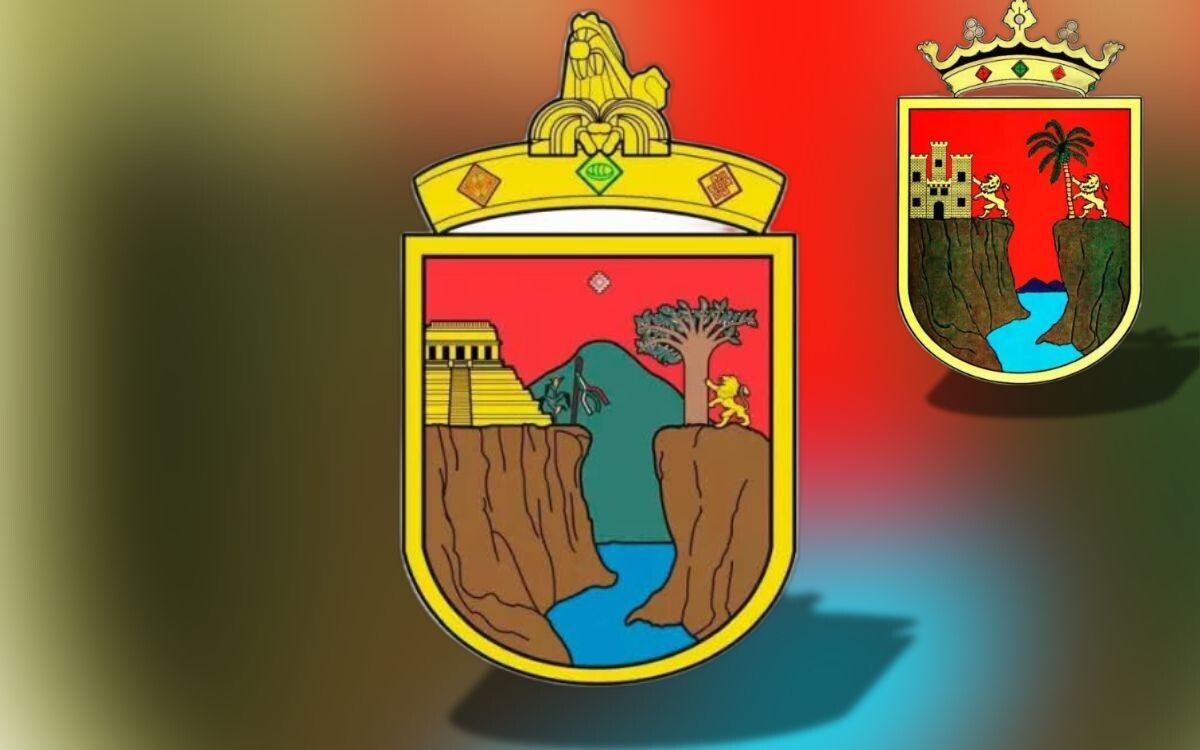
The legislators affirmed that the reform “honors our origins and projects a Chiapas proud of its history and its cultural wealth,” in a national context marked by debates on historical memory, public symbols, and the identity of indigenous peoples. The new coat of arms design incorporates 14 elements with specific meanings linked to the Mayan worldview, biodiversity, and regional history. Among them stands out a Mayan headdress inspired by King Pakal, a symbol of prosperity and greatness, which replaces the crown associated with the Spanish conquest, as well as the Mayan zero, an emblem of origin, balance, and continuity within the mathematical and cosmogonic knowledge of that civilization.
The gules (red) field background preserves the memory of the sacrifices and dangers lived during the conquest, as well as the indigenous resistance for the preservation of their principles. A pyramid is also integrated, which replaces a castle, and which represents the Temple of the Inscriptions of Palenque, as a symbol of the archaeological legacy and the cultural identity of Chiapas. Other incorporated elements are a resting command baton, which manifests indigenous authority based on wisdom and community responsibility and replaces one of the two lions; the corn plant with cobs, as sustenance and agricultural identity; and the Cañón del Sumidero, emblem of natural strength and historical memory.
The coat of arms also includes textile symbols such as butterfly embroidery and ancestral patterns, a star that represents direction and human balance, the ceiba as a sacred tree that unites heaven, earth, and the underworld, and natural elements such as the Tacaná volcano and the Río Grande, associated with biodiversity and community life. Significantly, the lion remains in the design as a symbol of miscegenation and reconciliation between the colonial past and the sovereign present of the state, in a proposal that seeks to integrate memory, identity, and future in a single official emblem.