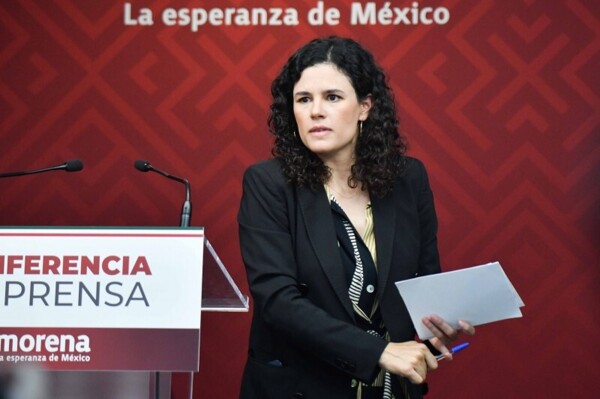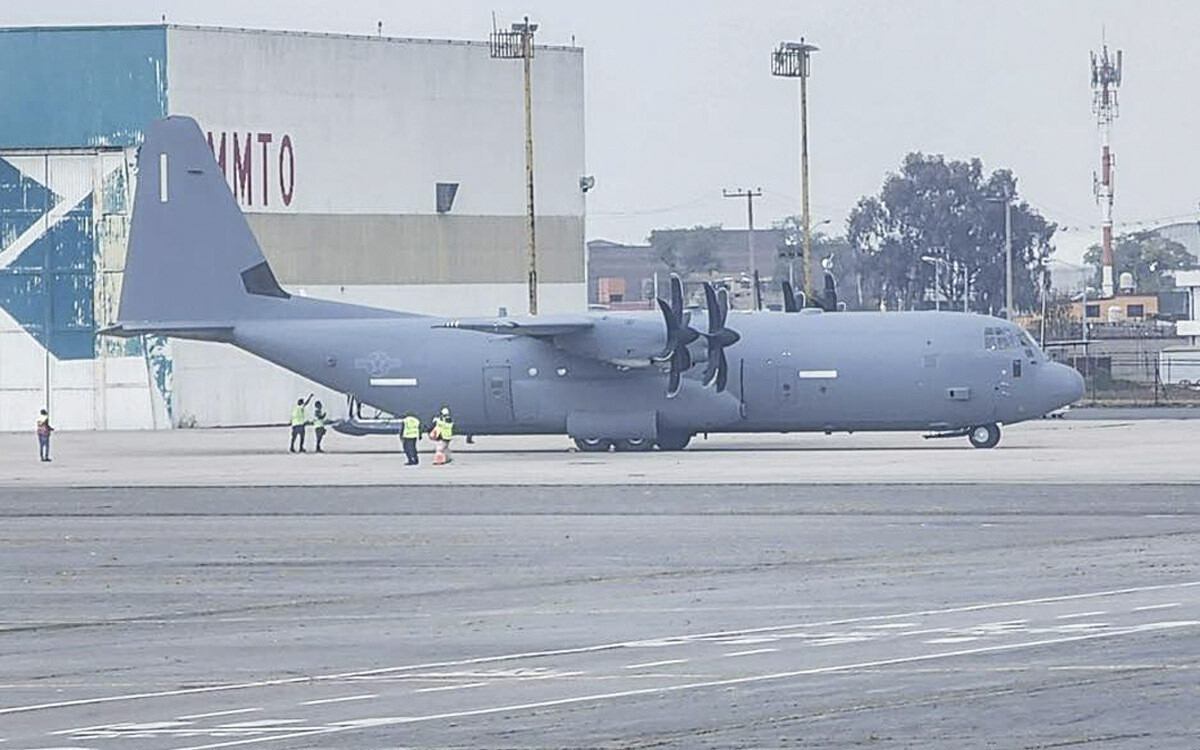
Journalist María Idalia Gómez stated that her departure is due to “a genuine loss of trust” and “at least one inefficiency in that position, not from the Mexican government, but from the U.S. government.” In her place, Major General Enrique Martínez López was appointed, who served as the Secretary of Defense. She noted that these meetings have intensified following President Donald Trump's statements about possible U.S. military actions on Mexican soil. Gómez criticized the Mexican government's communication ability in this situation. She pointed out that, beyond the presidential discourse, the team responsible for informing quickly and clearly has not been effective, and there is a lack of a broader strategic vision in the current geopolitical environment. She also alluded to recent publications in media outlets like The New York Times and The Wall Street Journal that question the reliability of the Mexican government due to alleged corruption links among officials, which, in her view, reinforces U.S. pressure to purge both political and economic corruption. She described the current moment as “tense, difficult, historic, and strong,” demanding greater political stature and strategic capacity from the Mexican government. She added that “there was more pressure around noon that same day” and that “the dialogue being held in different spheres between the Mexican and U.S. governments also became strained,” factors that, according to her, led to the acceleration of appointments. As part of these moves, the Undersecretary of Defense, Major General Enrique Covarrubias López, was officially sent into retirement, although he will remain as an advisor to the head of Defense. “All these appointments have the endorsement of the U.S. Northern Command's Joint Staff” and the Southern Command as well, she stated, and clarified that both are giving their approval based on the new commanders' past performance. Another significant change was the elimination of three secretary positions—one in the Air Force, another in the National Guard, and another in Defense—to concentrate them into one under the Secretariat of Defense. This position will now be held by Major General Hernán Cortés, coming from the National Guard, while General Guillermo Briceño Lovera, who was attached to the military zone covering Sinaloa, will take the helm of that institution. The journalist emphasized that all appointments have the approval of U.S. military authorities. In her opinion, Washington is directly influencing appointments related to national security and interior affairs, and it also seeks reliable interlocutors in other areas of the Mexican government, such as the Secretariat of the Interior, the Secretariat of Economy, and Pemex. Gómez described a scenario of growing U.S. pressure. According to Gómez, this restructuring responds to the discovery of multiple irregularities: “They discovered many acts of corruption, because there were three windows where there was no control,” so now they seek to centralize the management of contracts, agreements, and resources and strengthen that office. Gómez explained that the undersecretariat of Defense is strategic because, in addition to being the “second in command,” it is the area in charge of the Army's internal and external relations, as well as personnel, budget, logistics, and cybersecurity issues. She clarified that she does not see an open military intervention as having occurred in other countries as likely, but rather growing pressure and operational cooperation. In this context, she mentioned the reception of the U.S. ambassador, Ronald Johnson, to which high-level Mexican authorities attended, such as the Secretary of the Navy, Raymundo Pedro Morales Ángeles, the Chancellor Juan Ramón de la Fuente, and the Attorney General Ernestina Godoy. She stressed that these are people of “total and absolute trust” of President Claudia Sheinbaum. The recent movements in the leadership of the Secretariat of National Defense were not mere administrative formalities, but the result of last-minute pressures and an increasingly tense relationship with the United States, stated investigative journalist María Idalia Gómez. Gómez explained that the changes at the Secretariat of Defense were originally planned for February 1, but were accelerated after what happened the previous Friday. “These are strategic elements,” she pointed out. She recalled that this event occurred after an alert issued by U.S. aviation authorities about “some risks to aviation” in certain areas of the Pacific. She questioned the Mexican official response to said alert and indicated that, in her opinion, it was up to Mexican authorities to warn national aircraft, not the Federal Aviation Administration (FAA). In this sense, she stated that the new undersecretary, Enrique Martínez López, will be key in the dialogue with the United States, not only with the Pentagon but also with agencies such as the CIA. “Clean relations and ensure reliable interlocutors.” According to the journalist, these changes seek to “clean up a relationship that has been severely questioned by the United States in terms of corruption cases and ineffectiveness,” a process that, she said, is also being replicated in the Navy. She stated that there is “frustration” on the part of that country, which considers that there are advances in Mexico in detentions and operations against organized crime, but not enough in “government cleaning” or in the fulfillment of economic and political agreements. In this context, the United States would be demanding “reliable interlocutors to be able to not only carry out joint operations, but also to share truly crucial information,” both to combat organized crime and transnational political and economic crime. The journalist warned that the pressure will continue. “This pressure will continue to grow, this is just a glimpse of what we will continue to see, because they consider that the president does not have a 100% reliable work team,” she maintained, and added that even the tone of U.S. official communiqués has already hardened. Aviation alert and Hercules landing in Toluca. She stated that the recent U.S. air operations in Mexico—including the landing of a Hercules military aircraft in Toluca and the overflight of intelligence drones—are part of a deliberate strategy by the U.S. government, in a context of bilateral tension, political pressure, and adjustments in the Mexican Armed Forces. Regarding the landing of a U.S. military aircraft last Saturday in Toluca, she explained that the Hercules is one of the most operationally capable military aircraft in the world, capable of transporting from personnel to heavy vehicles and equipment. She rated this explanation as insufficient and flimsy. Gómez contextualized the facts with precedents in the region, recalling similar episodes that occurred in Venezuela weeks before the escalation of tensions that led to the capture of Nicolás Maduro and his wife Cilia Flores, although she clarified that she does not believe Mexico is heading towards the same scenario. However, she emphasized that the alert and operations constitute “a first piece of data” that the United States was carrying out actions in the area. To this element, she added the registration of flights of a U.S. intelligence drone that, according to her details, overflew Baja California, Sinaloa, and Sonora during Saturday and Sunday. These overflights, she pointed out, are not unprecedented, as they already occurred last year, but they take on another meaning in the current context. According to Gómez, this visibility can be interpreted as intimidation, political pressure, or a message directed at both internal U.S. audiences and Mexico and Latin America, although she insisted that what is verifiable is the intention to make it public. The journalist also warned that the most relevant thing is not what is visible, but what happens behind the scenes: operations, agreements, and structural changes within the Mexican Armed Forces. She reiterated that the U.S. Northern and Southern Commands would have reviewed and approved the recent appointments and personnel movements within the Mexican Army, despite the Mexican government denying any interference. She linked these adjustments to the need to “clean” structures within the Armed Forces and to generate a public discourse centered on security, which could lead to social acceptance of exceptional measures. “I hope they are not building a discourse to make us feel afraid, and I hope they are not building a discourse to later justify other things,” she said. She added that she was even expecting some drone attack against criminal groups over the weekend, which ultimately did not happen, although she considered it could happen at any time. She highlighted that its arrival was notable and difficult to go unnoticed. “The United States wants us to see it. The United States wants Mexicans, the people who are living in this territory or in transit to see that they are doing that […] The Hercules could have not been seen, but they wanted it to be seen.”