Renowned researcher from the Institute of Legal Research of the National Autonomous University of Mexico (UNAM), Diego Valadés, stated that disqualifying citizens for thinking differently “is in principle neither a democratic nor an ethical attitude.” He emphasized that there is a constitutional obligation to respect those who think differently. He pointed out that this duty is found in article one of the Constitution, which prohibits discrimination, and affirmed that disqualifying those who hold different opinions violates the principles of equality and non-discrimination. Valadés indicated that some of these effects have already begun to manifest, such as the approval of the Judicial Reform, which occurred “without any kind of discussion,” and argued that many legislators voted without knowing its content due to the legislative process timelines.
Institutional Weakening and Loss of Governability The distinguished researcher stated that, in addition, reforms have been incorporated that contravene constitutional provisions. He recalled that between 1999 and 2024, 29 norms were established that required a qualified majority for relevant decisions by Congress, with the purpose of forcing broad agreements among political forces. He warned that this situation “cannot survive for much longer without consequences” and will predictably lead to growing distrust in the effectiveness of institutions.
Addressing the formation of the Broad Democratic Front, Valadés clarified that he is not part of that group but expressed his concern about the treatment it has received from the Executive. In this sense, he argued that the Constitution “has been violated.” He concluded that the imminent electoral reform is being approached without knowing its content, but with the certainty that it will be approved without modifications, as it will be voted on by the same group that drafted it, so he foresees that the opinion of those who think differently will not be taken into account, as these sectors are stigmatized precisely for their difference.
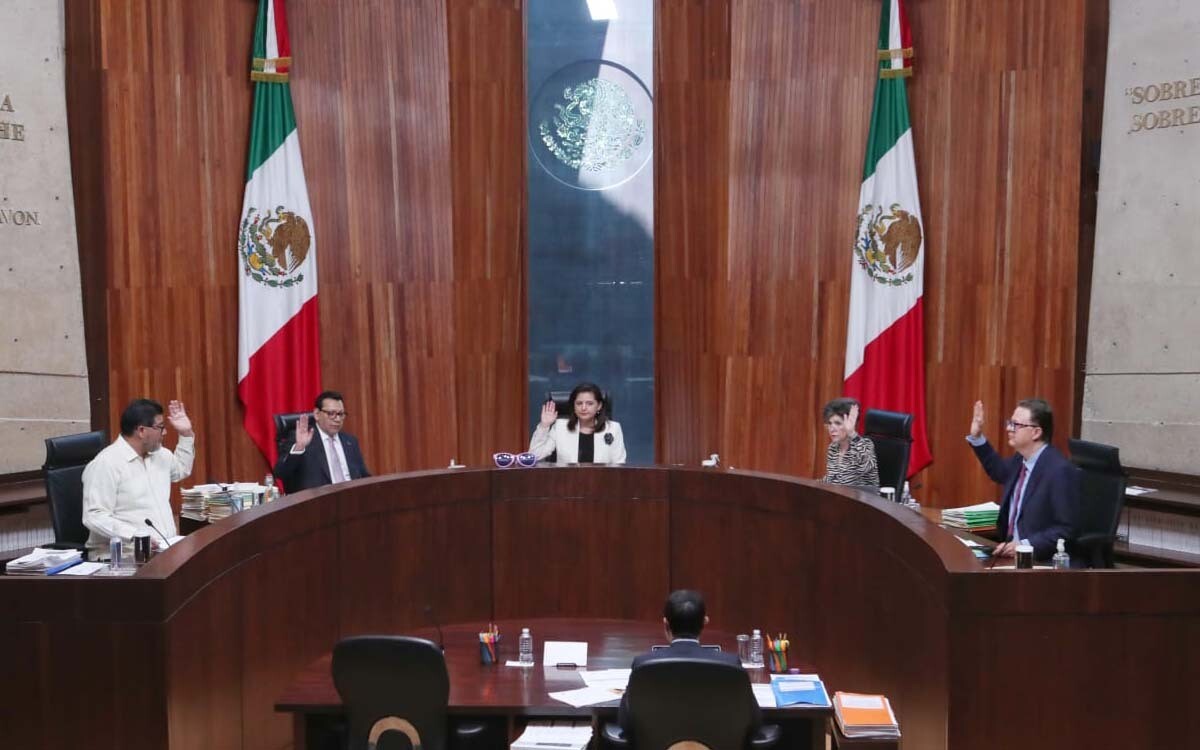
The distinguished researcher from the Institute of Legal Research of the National Autonomous University of Mexico (UNAM), Diego Valadés, affirmed that the decision of the Electoral Tribunal of the Federal Judiciary (TEPJF) regarding the composition of Congress incurred in an interpretation contrary to the Constitution and legal logic, by endorsing an overrepresentation that exceeds constitutional limits. During an interview with “Aristegui en Vivo,” he explained that the book “The Unconstitutionality of Excessive Overrepresentation in the Chamber of Deputies,” published by the Institute and coordinated with María Marván Laborde and J. Jesús Orozco Henríquez, arose as a technical and objective exercise in response to that ruling. He pointed out that the purpose was to prepare “a technical report, as impartial as possible, as objective as possible,” in which members of the observatory led by analyst Jorge Alcocer also participated. He indicated that the coordinators of the book sought to present their arguments to the Electoral Tribunal before the case was resolved, but the judicial body opted not to receive them institutionally. In this sense, he stated: “They have never deceived us. They told us they were going to rob us, and they robbed us,” and warned that now the possibility of repeating this scenario in the next electoral process is being announced.
Valadés added that overrepresentation has also had negative effects on the functioning of Congress. However, he argued that this scheme ceased to be necessary in practice, which eliminated “a minimum counterweight.” Valadés warned that this process has weakened political parties and the government itself. Although he recognized that there is legitimacy of origin derived from elections, he affirmed that the same does not occur with the exercise of power, considering that it is exercised “in a unilateral and arbitrary manner and without consensus,” which he pointed out, in a democracy implies a loss of legitimacy. To this, he added a progressive loss of governability and a stage of institutional weakness. He described a paradox in which political power is highly concentrated and has a qualified majority to push any decision, while at the same time it is weakened by the lack of legitimacy in its actions and the deterioration of governability. In his opinion, the electoral authority “read the provision backwards” and turned it into an additional benefit, extended even to allied parties.
Supermajority and Underminority: An Unforeseen Effect That decision, he affirmed, generated an effect not foreseen by the Constitution: the simultaneous creation of a supermajority and an underminority. He recalled that the constitutional design itself presupposes that oppositions should have at least 30% of the representation, a threshold necessary to promote unconstitutionality actions. In the current scenario, he pointed out, “no minority, nor the sum of all minorities, has 30%,” which implies that this constitutional control mechanism has been de facto nullified, as well as the possibility of impeachment. For this reason, he qualified the ruling as “a robbery of the Constitution” and argued that it is an openly unconstitutional action by the majority of the Electoral Tribunal’s magistrates.
Regarding the role of the National Electoral Institute (INE), Valadés affirmed that the body “prepared the entire scenario for the Tribunal to be able to make this decision.” In this context, he argued that the Tribunal was deliberately kept incomplete, when it should have had seven magistrates. “With three magistrates it was enough to make the decision they wanted,” he affirmed. The researcher recounted that he directly exposed to the magistrates who received him that the adopted interpretation not only contravened the Constitution, but also common sense. To illustrate it, he explained that, under that logic, the more parties integrated a coalition, the greater the additional percentage of overrepresentation granted, which would lead to progressively more distorted results. Subsequently, Rodríguez voted in favor of the constitutionality of the questioned measure. Valadés argued that the core of the problem lies in the interpretation of article 54 of the Constitution, particularly in the 8% limit of overrepresentation. He emphasized that this percentage is not an incentive, but a cap: the Constitution establishes that no party may exceed that margin when adding its relative majority and proportional representation seats. However, he said, the coalition was validated as if it were a single party to meet that requirement, but they were treated as separate parties when assigning the seats. In his opinion, this double interpretation of the same constitutional provision constitutes “an abuse, an excess, an arbitrariness and a clear unconstitutionality.” Valadés pointed out that the book was the subject of criticisms and even insinuations to prevent its circulation. He pointed out that the legislative debate has become “very acidic” because the majority does not need to negotiate and the minorities lack real capacity for influence, even through the constitutional route. This, he said, has led to systematic disqualification, citizen skepticism and weakening of institutions, as well as the impossibility of building consensus, an essential characteristic of democracies. Faced with statements about the country's democratic quality, he argued that Mexico lives in a democracy based on the concentration of power and its arbitrary exercise.
Regarding the argument that allied parties should be counted separately, Valadés affirmed that it was an artificial construct. He warned that this increase would necessarily translate into a reduction in the representation of millions of citizens who did not vote for that coalition. Photo: Chamber of Deputies.
The Prelude to the Electoral Reform Heading to 2027 He also pointed out that this precedent acquires relevance in the face of the discussion of an electoral reform with a view to 2027, in a context where political actors have openly announced their intention to maintain the qualified majority in Congress. He mentioned that this phenomenon is also reproduced in local governments, which operate as “mini presidentialisms” and exercise an increasingly suffocating power. In this context, he argued that a supermajority in power faces an underminority that, although it represents almost half of the country, has only a quarter of the representation in Congress. He explained that article 54 itself requires, to access proportional representation seats, that each party have nominated candidates in at least 200 single-member districts, a requirement that none of the coalition parties met individually. He indicated that, despite this, the edition sold out in 15 days with profits for the Institute of Legal Research, and added that the impact was greater in its digital version, as almost 40,000 complete copies have been downloaded for free, as it is a public institution. He explained that the book analyzes, among other aspects, how the electoral system and Congress have been organized, as well as the effects derived from the representation scheme. “The Tribunal chose not to receive us. Only Janine Otálora and Reyes Rodríguez received us,” he recounted.