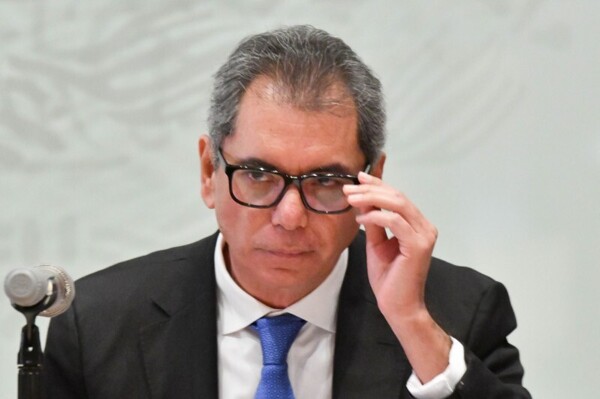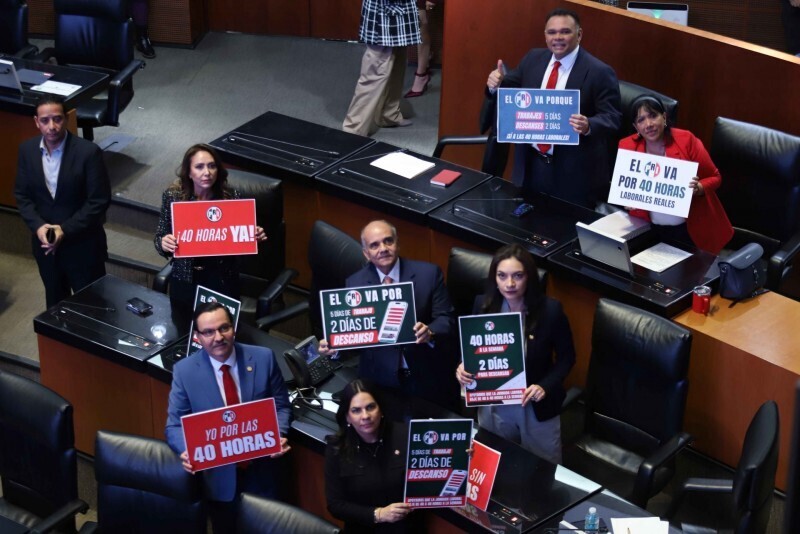
The Secretary of Labor, Marta Bolaños, highlighted her work in achieving this agreement with unions and employers, which adds to the agreements on salary increases. However, collectives such as the National Front for the 40-hour work week warn of significant changes from the initial proposals, one of which was related to guaranteeing by law two days off, a part of the first initiative. However, during the discussions, this was modified to only one mandatory day off, meaning the agreed-upon working hours will be distributed over six workdays. 'The historic demand of workers was 40 hours, and we are achieving it, plus income is being guaranteed,' said the president, attempting to close the discussion on the matter during her morning press conference this Thursday. After long hours of discussion, the reform for the 40-hour work week was approved on Wednesday, a goal that will be gradually reached by 2030, but with a final ruling that was controversial for collectives pushing for the proposal, as it left out the two-day rest proposal. In fact, they claim this initiative legitimizes labor exploitation, making criticisms about the adjustments to overtime, as it now allows up to 12 hours, from nine, with double pay. The approved ruling also specifies that the 40-hour work week will be gradually achieved: it proposes that in 2026 the workday be 48 hours; in 2027, 46 hours; in 2028, it will be 44 hours; in 2029, it will be 42 hours; and the workday will be 40 hours by 2030. Regarding overtime, it will be paid as salary to the worker 100% more than the rate set for ordinary hours and will not exceed twelve hours in a week, which can be distributed up to four hours daily, for a maximum of four days in that period. 'Until now, it has been the demand of workers, it is the request, and it is being fulfilled and guarantees that income will continue to be met,' she responded when questioned on the matter. Claudia Sheinbaum defended this morning that this was not the labor demand. 'That is very important.'