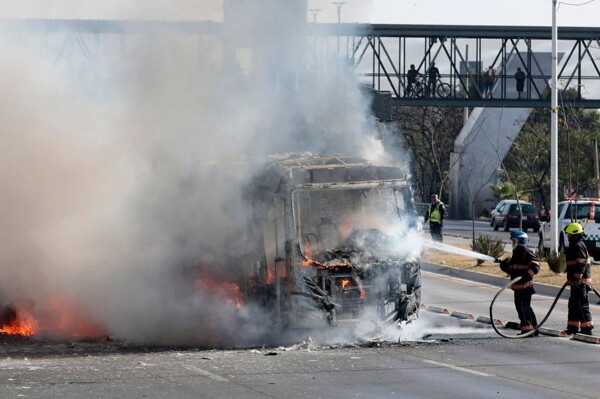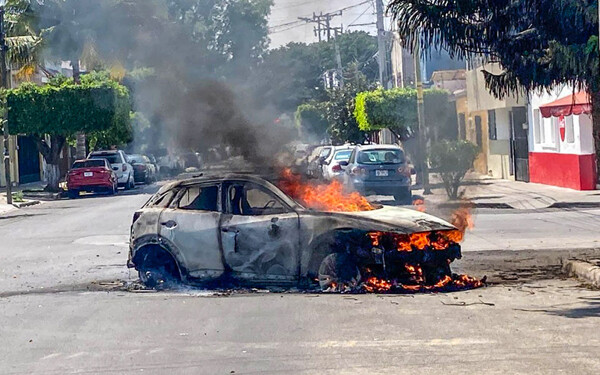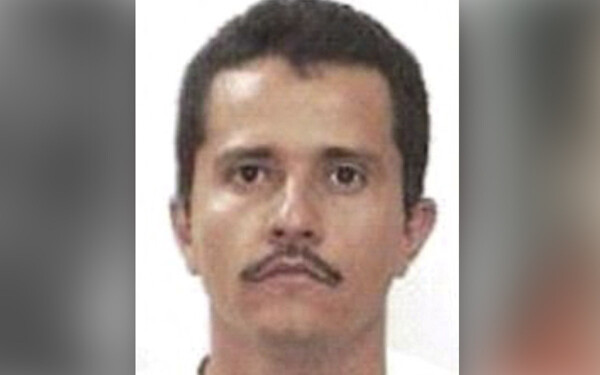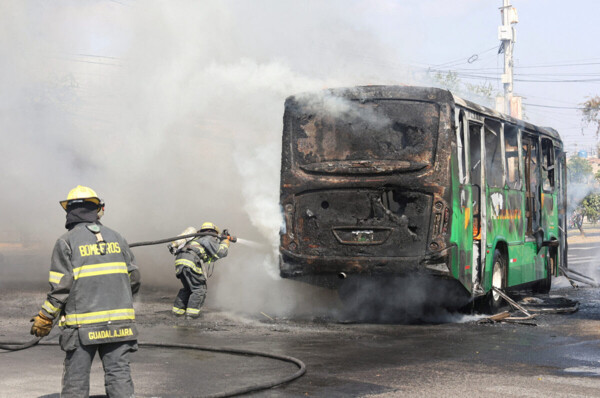
What Mexican citizens want is accountability, not just for 'El Mencho' […] We want every link in this criminal system to fall, and for that to happen, the information that these drug traffickers have is required,” concluded the journalist. According to the journalist, in this episode, the decision would have been based on the sensitive information that the detainee possessed. “It was better to be dead than extradited and revealing the dirty secrets of officials linked to this criminal organization in the current six-year term,” she stated. “If it is confirmed that 'El Mencho' was executed, it is a great damage to the justice of Mexico and it is a great damage to the victims of these famous narcos,” she said, because there will be less clarity about who helped him operate and his chains of command. The journalist emphasized the need for accurate information about the circumstances in which Nemesio Oseguera died, such as making the autopsy public to have certainty about it. She indicated that Oseguera had been in custody since February 14 or 15, and that the information came from U.S. authorities based on data provided by an extradicted drug trafficker. She stated that it would be an internal betrayal within the cartel and explained that Oseguera operated with at least three security circles, which were active in the place where he was located. How did 'El Mencho' die? Hernández also referred to information disseminated by journalist Ioan Grillo, who raised the possibility that Oseguera had been executed by decision of Mexican forces. Investigative journalist Anabel Hernández stated that the operation on Sunday that led to the death of Nemesio Oseguera Cervantes, leader of the Jalisco New Generation Cartel (CJNG), must be analyzed in a binational context, both due to the origin of the criminal structures and the alleged participation of the United States government. During her participation in Aristegui en Vivo, she maintained that both Oseguera Cervantes and Ismael 'El Mayo' Zambada developed their criminal careers significantly in U.S. territory. She explained that both found in that country conditions that favored their criminal growth. Hernández assured that the penetration of the CJNG in California is such that it could well be called the 'California New Generation Cartel.' She indicated that she has documented the circulation of vehicles with license plates from that state and stickers from the criminal group in cities such as Sacramento, San Francisco, and Los Angeles. She also stated that, despite the legalization of marijuana in California, between 60 and 70 percent of the market continues to be illegal, and attributed part of that activity to the CJNG in alleged complicity with Asian communities, particularly Chinese, through hydroponic crops in U.S. reserves. Dispute over leadership Regarding possible reactions after the death of Oseguera Cervantes, she warned that she does not rule out episodes of violence both in Mexico and the United States. In this regard, she stated: 'At this moment I have not been able to corroborate it, I will seek to corroborate it,' although she considered that it must be taken into account due to the communicator's track record. You may be interested > Mexican forces dictated that 'El Mencho' would not be detained alive: Ioan Grillo. She added that, if confirmed, it would be an extrajudicial execution like that of Pedro Insunza Coronel, alias 'Pichón', who 'would also have been executed when he was already detained.' She indicated that, according to information corroborated with various sources, there would not only have been collaboration in intelligence matters, but even 'there would have been physical participation, on-site, in territory, in the operation.' She added that this type of action requires a small circle of knowledge due to the infiltration of organized crime in governmental structures. Photo: Reuters. She indicated that she has maintained communication with authorities in entities such as Texas, where, she said, the organization operates with a strong presence and infiltration. Regarding the internal reordering of the CJNG, Hernández indicated that the organization, with presence in more than 40 countries and at least 19,000 members according to DEA reports, will enter a stage of dispute over leadership. She mentioned as the main candidates Hugo Gonzalo Gaytán, alias 'El Sapo'; Juan Carlos Valencia González, alias 'El Cero Tres', Oseguera's stepson; and Audías Flores Silva, 'El Jardinero.' She pointed out that, unlike other criminal groups, in the CJNG the logic of succession by family ties does not prevail, but a structure that she defined as 'meritocracy,' where leadership would fall to whoever has the most operational merits. She warned that the dispute could lead to a scenario of extreme violence. 'It can be a real massacre,' she said, while emphasizing that the context is particularly delicate given the proximity of the World Cup, whose venue includes the state of Jalisco. She stated that the capture and death of Oseguera Cervantes occurs in a context of pressure from the United States government, which should not be minimized. Treatment: AN. Regarding the details of the operation, Anabel Hernández highlighted the official version that a romantic couple would have been key to locating the CJNG leader.