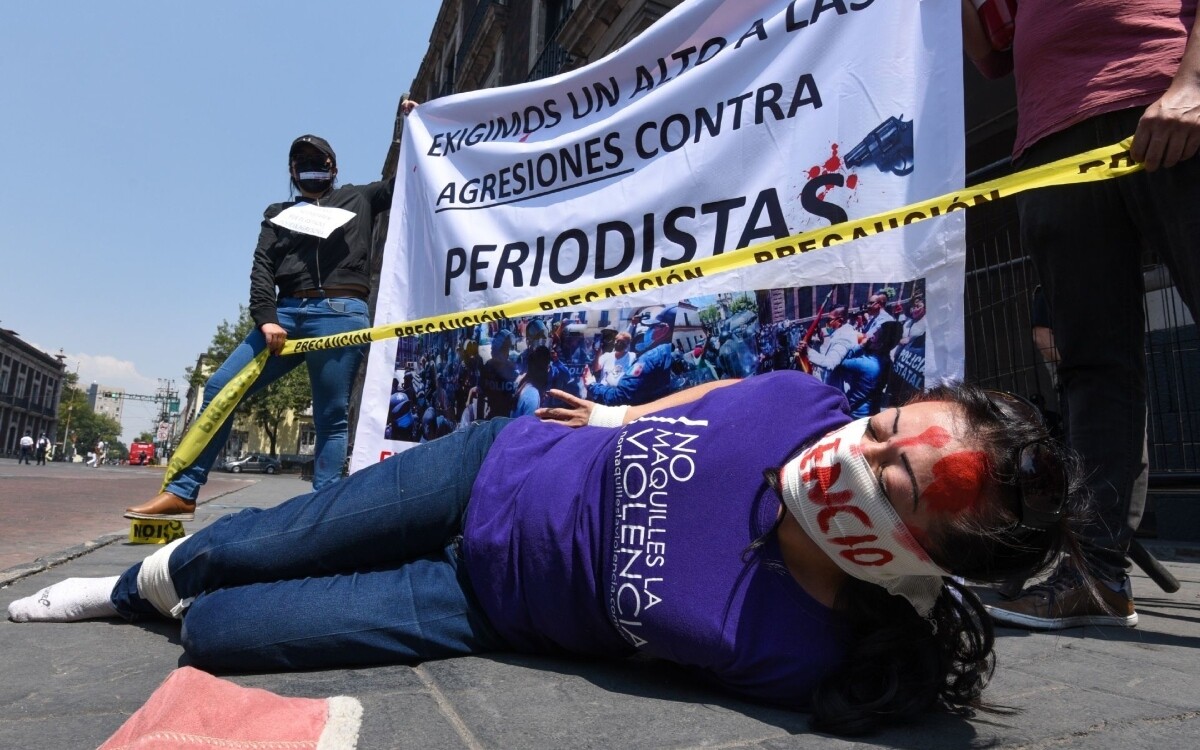
According to monitoring by Article 19 Mexico and Central America, in 2025 at least seven journalists were killed in possible connection with their professional activities in the country; historically, since the year 2000, the organization has documented 175 journalist murders, 12 of whom were women.
The economic situation of women journalists is no different. According to official Data México statistics from the Ministry of Economy for the first quarter of 2025, in the category of Authors, Journalists, and Translators, women represented 41.7% of the workforce. However, they received an average monthly salary of 4,680 pesos, while men, who held 58.3% of the positions, earned an average of 12,200 pesos monthly, implying a pay gap of nearly 50%.
In the informal sector, 39.8% were women with an average salary of 2,850 pesos, compared to 60.2% of men with 17,900 pesos monthly, reinforcing gender-based wage inequality.
Beyond the figures, many women journalists face a double or triple workday by combining their profession with motherhood and family care.
However, these conditions are not the only challenges. According to monitoring by the organization Comunicación e Información de la Mujer A.C. (CIMAC), between September and November 2025, 65 aggressions against women journalists directly linked to their professional work were recorded, with public officials among the main aggressors. Furthermore, less than 30% of women who request protection mechanisms receive the necessary support, according to Article 19 reports. This highlights that even when turning to authorities, women journalists face barriers to ensuring their safety.
Historical reports from CIMAC show that during the previous six-year term under Andrés Manuel López Obrador, 1,189 aggressions against women journalists were documented, revealing a sustained pattern of structural violence. Moreover, the danger of losing their lives is ever-present.
This situation becomes even more complex for those who are single mothers or care for children with disabilities, balancing professional demands with care work that is not always recognized or visible.
The combination of direct attacks, digital violence, smear campaigns, wage gaps, and family burdens creates a hostile environment, affecting not only the journalists but also the quality, plurality, and security of the information the public receives.
The 2025 data show that in addition to external threats, women journalists face structural inequalities within their profession and care burdens that require public attention.
These figures and realities underscore the need for public policies that protect women journalists and ensure fair wages and support for motherhood and family care.
But these are not just numbers. This is the reporter covering a protest while also arranging who will pick up her child; this is the single mother, the one investigating while undergoing therapy and handling paperwork because her child has a disability or she is ill herself. The risk is not always a bullet; sometimes it is a late-night message, a threat, a 'shut up.' Therefore, March 8 is not for congratulations, but to ask ourselves about the conditions in which the women who inform us work.