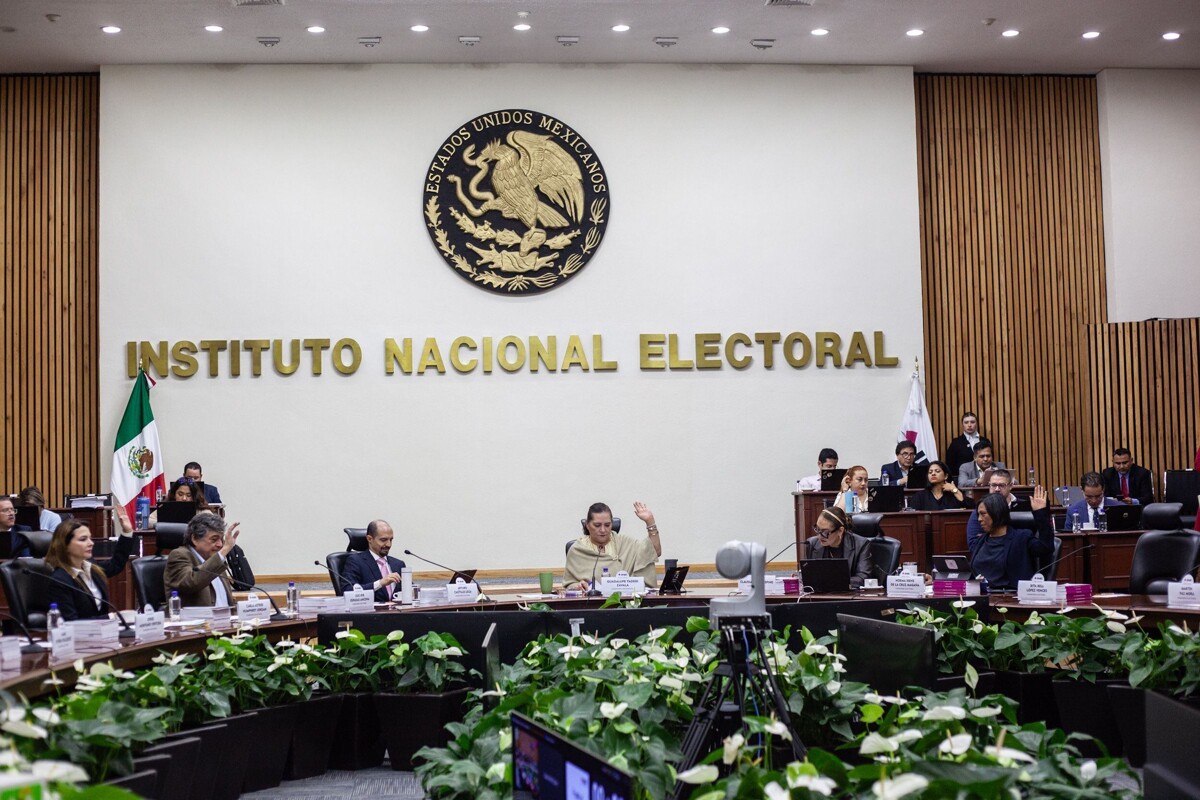
The Electoral Tribunal was left with five members, instead of the required seven, for 22 months during the most critical phase of the electoral process that led Claudia Sheinbaum to the presidency; ultimately, Morena had the 'influence' over three magistracies, which guaranteed rulings in its favor. This occurred despite the Senate, the body responsible for these appointments, being in constitutional violation and disregarding rulings from the Supreme Court of Justice. A characteristic of authoritarian regimes is that, in their quest for self-perpetuation, they do not hesitate to mortgage the future, and in their shortsightedness, even their own, as long as they can ensure their continuity by nullifying or obstructing the opposition; which sooner or later will erode social trust and public peace. For this reason, the first two institutions to achieve the status of autonomous and independent in our country's democratic process were the Bank of Mexico and the IFE, that is, financial stability and politics. Morena and its allies have this qualified majority and could impose it to appoint members without needing to discuss with any other political force. In the 1996 electoral reform, this threshold was established so that no political party or coalition of parties would have such a majority and would be forced to build consensus among all political actors. Due to the unconstitutional overrepresentation resulting from the 2024 elections, Morena and its allies now have it, and just as they imposed reforms unilaterally, among others judicial reforms, they could appoint the three people to fill the vacancies on their own, violating the explicit purpose of the democratizing reforms. José Woldenberg reminds us that after 1996, when it was established in the Constitution that no party could have more than 300 deputies and no more than 8% overrepresentation, it was also noted that this condition applied to a political force, be it a party or a coalition. This story always ends badly. In recent days, the dominant bloc has failed to reach agreements on the electoral reform proposals presented by the Presidency. Are these temporary disagreements, as they have said, or a deep fracture that will be reflected, among other things, in the appointment of councilors? If it is the latter, the INE could be left with eight members on its highest decision-making body instead of eleven. The current regime knows how to live with that, and even has encouraged it to its advantage. This forced them to seek the broadest possible consensus among the various actors. But beyond the rules that may be established to encourage consensus, democratic or at least moderately respectful of their responsibility and the society they claim to represent, political actors will understand that what is most convenient for everyone is for the arbitrator to have the greatest possible neutrality, that is, to be equidistant from those who are the subjects of their arbitration. Will these two anchors of certainty continue to be eroded? POSTSCRIPT: My recognition to Dania Ravel, Claudia Zavala, and Jaime Rivera, with whom I had encounters and disagreements on electoral criteria, but in whom I always found a willingness to dialogue, as corresponds to those who understand that the best solutions are built through exchange between different perspectives. Finally, the call for the appointment of three counselors to the National Electoral Institute has been issued, as the terms of Dania Ravel, Claudia Zavala, and Jaime Rivera will conclude in the coming days. Thus, the week that begins now will be the period during which interested parties can register. Otherwise, there will always be doubts about the impartiality of the referee and suspicion about their rulings. In other words, in the short term, the political party that imposes an arbitrator ends up losing credibility in the results of the elections and, for the same reason, the legitimacy of the governments that emerge from those processes. Thus, it is a Pyrrhic victory, and most lamentably, it deteriorates the social climate and undermines trust in institutions. Yes, only one week. This is not a minor issue; those who occupy these positions will have a state responsibility; to a large extent, their decisions can contribute to or detract from public peace. It falls to the Chamber of Deputies to elect them by a two-thirds majority.