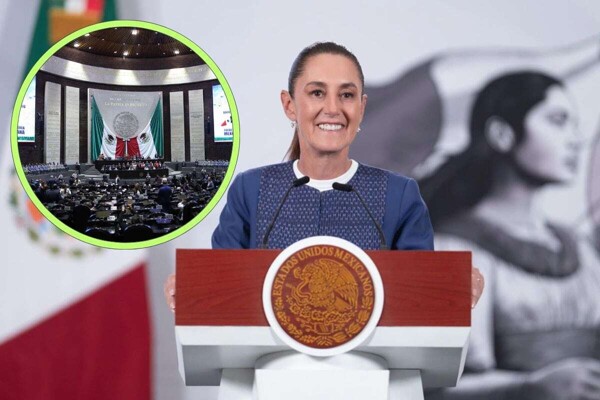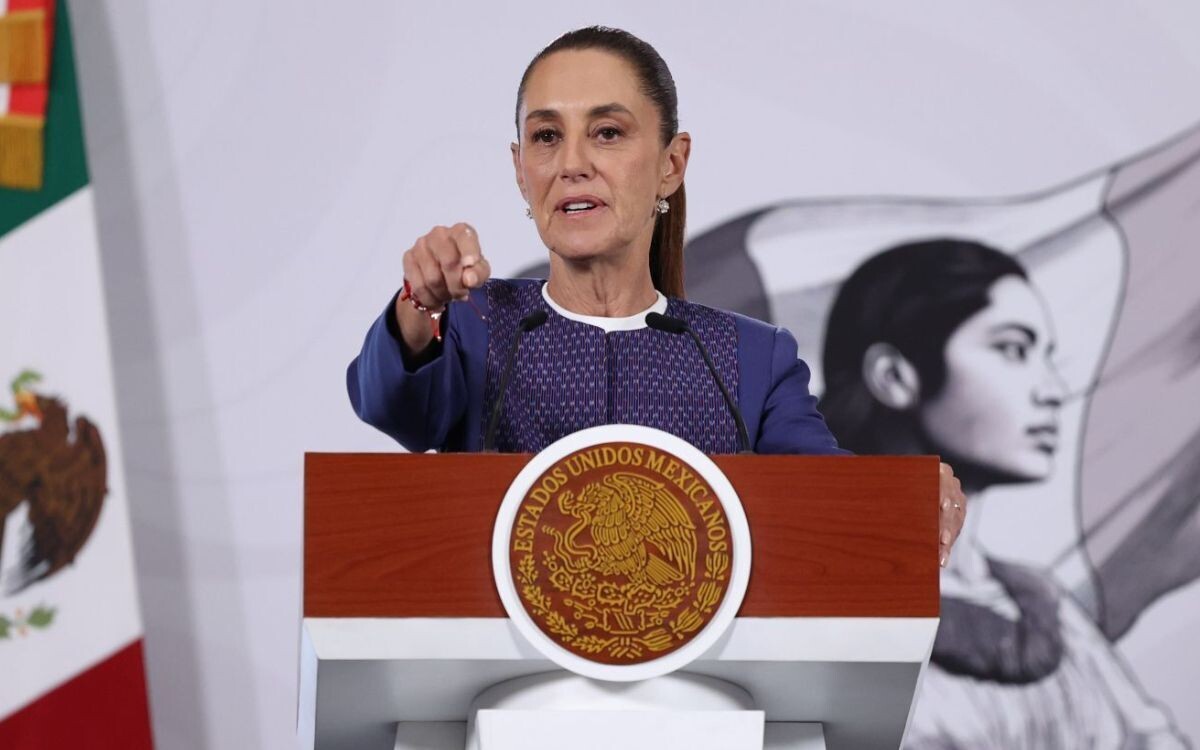
«Let them deny history». The statements of the Mexican ruler come after the president of the Community of Madrid, Isabel Díaz Ayuso, made it clear that Spaniards have nothing to apologize for to Mexico. «Far from apologizing, we are deeply proud of Spain's legacy in Mexico and vice versa,» she said. In turn, Sheinbaum also criticized Mexican historian and writer Juan Miguel Zunsinegui, whom, according to the head of state, has said that the current Mexican government has «taught to hate Spain». «He is wrong,» stated the Mexican leader. She referred to how Spain went to the New World, bringing a civilized way of life to New Spain through missions, universities, hospitals, and important infrastructure,» noted Díaz Ayuso, one of the most influential figures on the Spanish right. In response, Sheinbaum criticized Ayuso's stance, accusing her of being advised by former President Felipe Calderón. «What is she going to say? They are allied there with (former President) Felipe Calderón (2012-2018) and with the Mexican right there. We have many relations with the Spanish people,» Sheinbaum stated. Finally, she emphasized that the recent recognition by Spain's King Felipe VI of abuses committed during the conquest is a historical step forward and called to «move forward» in reflecting on that past. President Claudia Sheinbaum Pardo headed this Tuesday's presidential conference from the National Palace, where accompanied by the Attorney General of the Republic, Ernestina Godoy, she presented a new law reform regarding the attention and resolution of femicides in the country. The Government of Mexico presented this Tuesday an initiative for a General Law for the Prevention, Investigation, Sanction, and Reparation of the Crime of Femicide, with which it seeks to homogenize the penal type throughout the country, increase sanctions, and unify investigation protocols. The proposal will be sent this Tuesday to the Congress, according to Mexican President Claudia Sheinbaum. The Attorney General of the Republic, Ernestina Godoy, stated that the project was built together with the Ministry of Women and seeks to address a problem that requires structural responses. «This crime that affects thousands of women should call on us to eradicate femicidal violence, and that is what we are seeking with this proposal,» she said during the presidential press conference. The proposal establishes nine gender-based reasons to configure femicide, including signs of sexual violence, degrading injuries, history of violence, power relations, disconnection, or exhibition of the body. Federal homogenization of the crime Godoy detailed that it proposes «a penalty of 40 to 70 years in prison», in addition to sanctioning the attempt «with a prison sentence of half to two-thirds». It also contemplates 21 aggravating factors, such as the victim being a girl, adolescent, older woman, having some disability, belonging to original or Afro-descendant peoples, or that the crime is committed in front of children. The initiative also seeks to homogenize protocols so that «every violent death of a woman is investigated from the first moment under the hypothesis of femicide», with mandatory gender perspective and «continuous shift», to avoid the discontinuity of investigations. Furthermore, it establishes that the crime will be prosecuted ex officio, it will be imprescriptible, and the responsible party will lose parental authority, guardianship, and succession rights regarding the victims. In turn, Ingrid Gómez Saracíbar, Undersecretary of the Right to a Life Free of Violence, emphasized that femicide transcends the direct victim. «We are talking about a crime that snatches the lives of women, but undoubtedly also changes the lives of people in their immediate circle, especially their daughters and sons,» she stated, explaining that the proposal articulates rights for direct and indirect victims, including medical and psychological attention and free legal assistance, among others. «Reparation must be adequate, effective, rapid, and also proportional,» she added. Likewise, the initiative prohibits the exposure of victims' images in media and digital platforms, and proposes the creation of a special commission to accompany the implementation of the law, strengthen investigations, and articulate a permanent campaign against femicidal violence. On the other hand, Sheinbaum expressed her hope that the initiative will have broad legislative consensus. I don't think there is anyone who would oppose the violent death of a woman being investigated as femicide and that there are protocols to be able to punish the responsible person. Sheinbaum accuses Díaz Ayuso of maintaining an «ideological» stance aligned with Felipe Calderón The president defended this Tuesday the historical relevance of Spain recognizing the «abuses» committed during the conquest and accused the president of the Community of Madrid, Isabel Díaz Ayuso, of maintaining an «ideological» stance and aligned with former President Felipe Calderón. «She (Díaz Ayuso) is ideological. (What is important) is that a step has been taken and we have to move forward (...) I believe what the pardon means is important. The ruler defended the pertinence of the pardon request promoted since 2019 by then-President Andrés Manuel López Obrador (2018-2024), remembering the Mexican tradition of solidarity with Spain, especially during the Republic and the exile caused by Francoism. She also stressed the importance of recognizing the greatness of the original civilizations to recover the historical dignity of indigenous peoples, and ruled out any animosity towards Spain. Relations between both countries have gone through tensions in recent years, especially since in 2019 the then Mexican president Andrés Manuel López Obrador (2018-2024) requested an apology from Spain for the grievances of the conquest, a request that was not answered. However, in recent months, both parties have given signals of détente, with calls to deepen the historical and political dialogue between Mexico and Spain. Rejects pardon in the Colosio case On other issues, the ruler was questioned about the statements on Monday by Luis Donaldo Colosio Riojas, on the 32nd anniversary of his father's assassination, requesting a presidential pardon for Mario Aburto, sentenced as responsible for Colosio's assassination. In response, Sheinbaum Pardo was brief in stating that the murder of Colosio is a matter of state, and therefore, it is not a «matter of pardon». Regarding the cancellation of permits for donations to NGOs After the Tax Administration Service (SAT) canceled permits for tax-deductible donations to more than 200 non-governmental organizations, the president was questioned about the decision, to which she responded that it was a decision by SAT that responds to its own technical evaluations. Thus, she ruled out that it was a decision promoted from the Executive she heads. Delving into specific cases, the ruler addressed the case of Mexicans Against Corruption and Impunity (MCCI), remembering that from the previous six-year term, headed by Andrés Manuel López Obrador, its status was revoked due to what was accused as a supposed foreign financing with political interests against his movement. Pemex – Petrobras meeting President Sheinbaum answered this Tuesday to the Brazilian president Luiz Inácio Lula da Silva, who proposed an energy alliance between the state oil companies of both countries: Pemex and Petrobras. The proposal of her Brazilian counterpart would seek collaboration at different levels for the exploration of deposits in the Gulf of Mexico. Although the head of state did not provide more details, she announced that they will hold a meeting in the month of April to analyze the possibility of an alliance, starting from the benefits and complications it could entail. Responsible for the oil spill in the Gulf of Mexico is unknown President Sheinbaum recognized this Tuesday that authorities have not yet identified the responsible for the oil spill affecting the beaches of Veracruz and Tabasco since early March, despite the Federal Attorney's Office for Environmental Protection (Profepa) pointing to a company as a possible origin. «It is still not identified (...) There Profepa says it was a company, but it is still not fully identified,» stated the ruler in her conference, emphasizing that the priority is to clarify the cause of the spill and determine if the leak continues. Her statements come after the environmental organization Greenpeace Mexico and the Gulf of Mexico Reef Corridor Network denounced that the oil slick continues to expand in that southeast region of the country and has already affected more than 630 kilometers of coastline, with severe environmental and social impacts. In this sense, the ruler assured that the state-owned Petróleos Mexicanos (Pemex) continues to work on the cleaning tasks. «It must be said that cleaning is being done (...) even more Pemex workers were sent to continue with the cleaning,» she said, at the same time explaining that the Attorney General's Office (FGR) has already been required for an independent investigation. The ruler announced that an interdisciplinary group will investigate the exact cause and the possible continuity of the spill. That is why I made the interdisciplinary group, to really know and see if there is still a leak or not. So what are you waiting for me to say? According to Greenpeace and the Reef Corridor, the authorities continue to clarify the origin of the spill, which prevents determining if the leak is still active. The NGOs pointed out that 26 sites still have not received attention and accused that fishing, indigenous, and Afro-descendant communities have carried out cleaning «without adequate equipment or training». Meanwhile, the Government has reported that 91 tons of hydrocarbon-impregnated waste have been collected, although activists maintain that the impact continues to spread from Tampico, in Veracruz, to Paraíso, in Tabasco. The emergency, the organizations warned, is not only environmental but also social, and they requested the temporary suspension of hydrocarbon exploration and exploitation activities in the area while the origin is determined and the responsible parties are sanctioned.