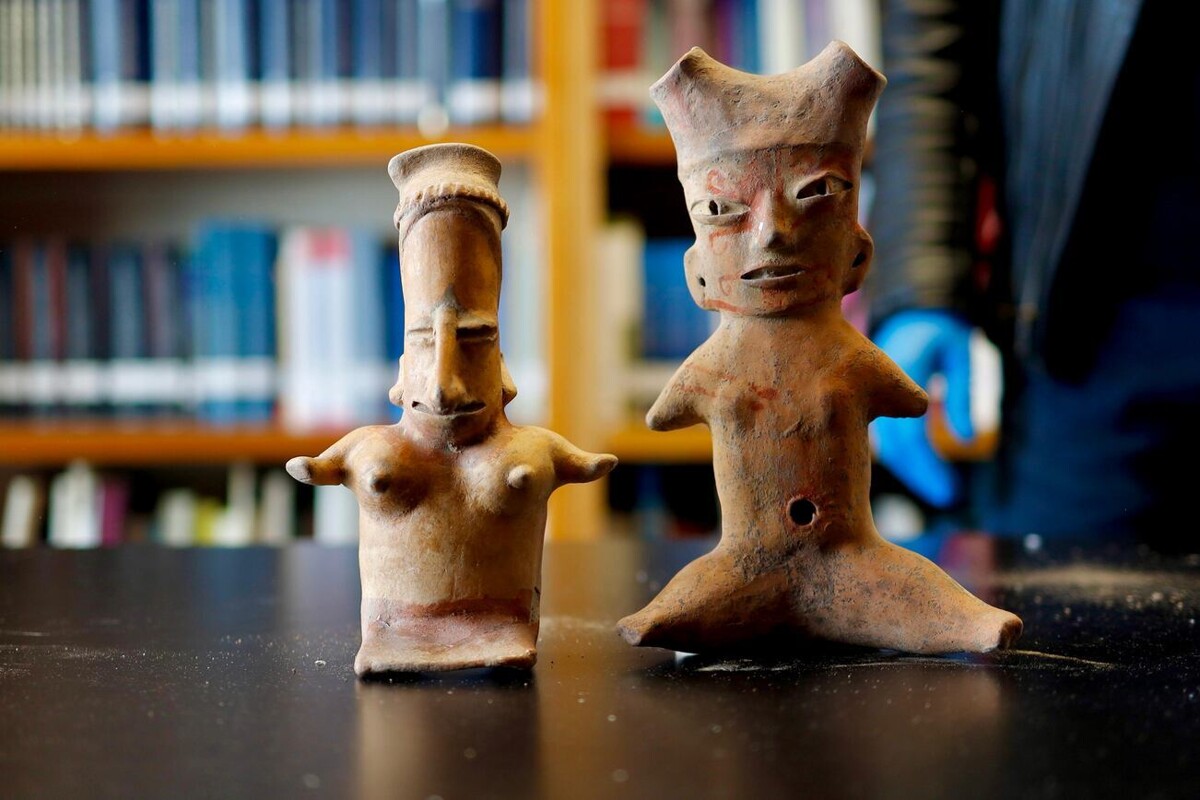
The Mexican government has repatriated 160 cultural assets from abroad as part of a strategy to recover and protect the country's historical heritage. Of the total, 157 are archaeological pieces and three are historical objects, recovered from the United States, Canada, France, and Argentina through coordinated actions between diplomatic and judicial authorities.
Recovered Pieces: From the Pre-Hispanic to the Vicereinal Era The pieces cover a period from the Mesoamerican Preclassic period (2500 BC) to the vicereinal era. Among the most outstanding objects are:
Two wooden doors from the 18th century, in a Baroque style, recovered in Atlanta, with carvings of angels, saints, and floral motifs. A book printed in 1703 titled "Manual Summa de las Ceremonias de la Provincia del Santo Evangelio de México," recovered in Argentina. These assets reflect both the wealth of Pre-Hispanic culture and the historical legacy of the colonial period.
Recovery in Consulates and International Operations Most of the archaeological pieces were recovered in the United States through voluntary deliveries and seizures:
Seattle: 140 pieces, mainly clay figurines and sculptures from traditions such as Chupícuaro, Tumbas de Tiro, and Teotihuacan. Raleigh: 12 objects, including vessels and zoomorphic figures from Oaxaca and the western part of the country.
In France, three pieces in the San Sebastián style were repatriated, with an estimated antiquity between 300 and 600 AD.
Diplomacy and the Fight Against Trafficking in Cultural Property The Secretariat of Foreign Relations (SRE) highlighted that these restitutions are the result of international collaboration and the voluntary delivery by individuals. One of the pieces was recovered after being identified in the catalog of an international auction and secured by customs authorities in the United States.
Long-Term Strategy These actions are part of a comprehensive strategy implemented since 2018, through which Mexico has managed to recover approximately 16,500 cultural pieces. The country has also intensified its participation in suspending international auctions in cities such as Paris, New York, and Rome, with the aim of curbing the illegal commercialization of heritage assets.
Heritage in Return The repatriation of these pieces reinforces the efforts of the Mexican state to preserve its cultural identity and recover assets that are part of its history. In a global context where art trafficking remains prevalent, international coordination continues to be a key tool to protect national heritage.