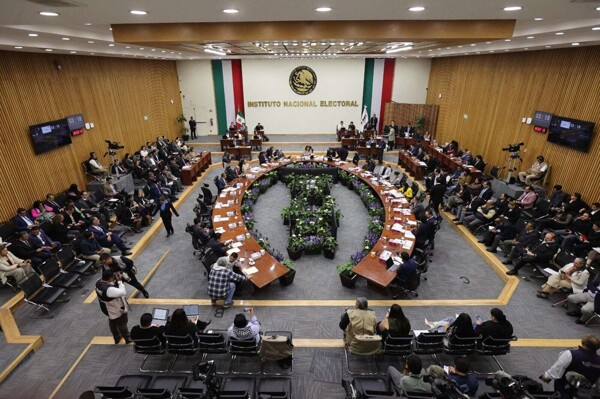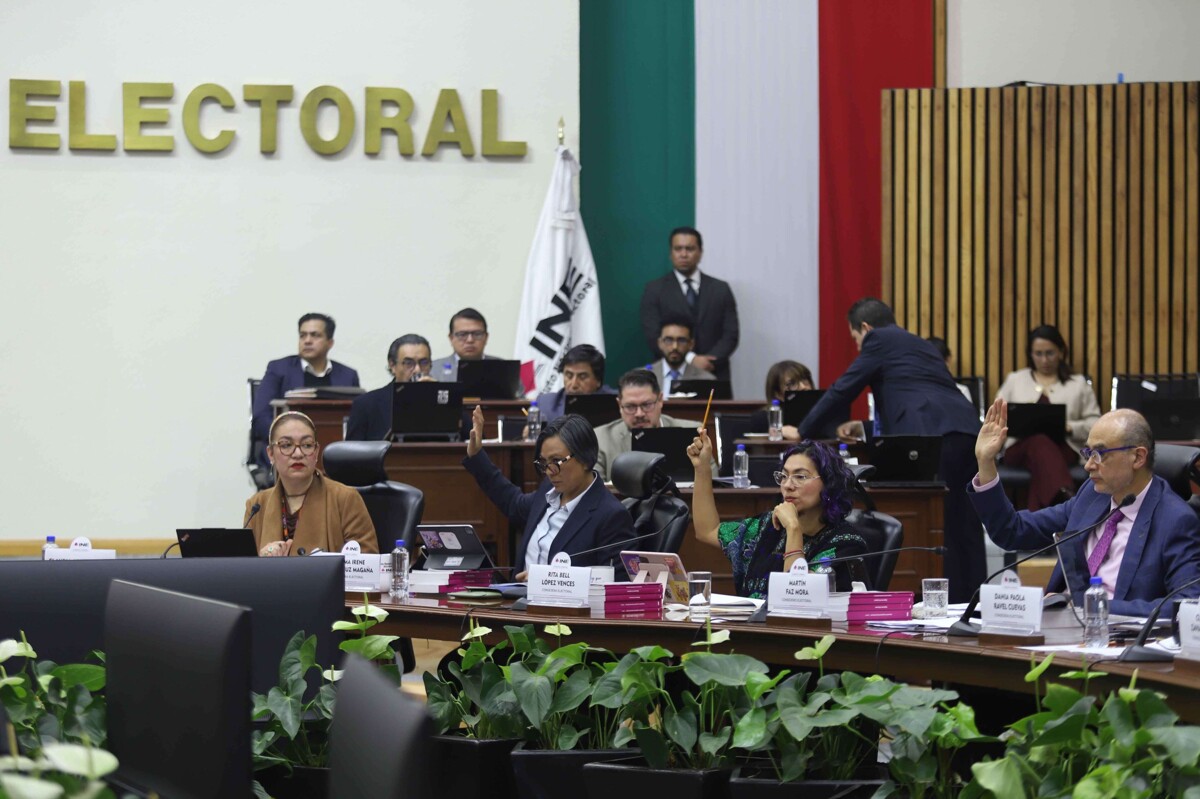
From among the candidates, three new councilors will be chosen to fill existing vacancies that arose last week. They will be integrated into a machinery that is already advancing in the organization of the 2026-2027 electoral processes. The selection depends largely on the management of the Technical Committee, integrated by the ruling party through the Political Coordination Junta and the National Human Rights Commission, with five members whose impartial performance is expected, in line with the principles established by the Constitution and the democratic demands of a task of such relevance. This is especially important because the councilorships are key pieces for the functioning of the National Electoral Institute (INE), the institution responsible for coordinating the national electoral system. They are the ones who make the main decisions that directly impact the development of the elections and determine the guidelines that electoral service officials must follow. The integrity and authenticity of Mexican elections are in the hands of the ruling party, which controls the procedure for the renewal of the councilorships and pulls the strings, promoting the profiles that best suit the interests of the "movement." Morenistas are advancing confidently with the support of the PVEM and PT, which will not oppose this issue and will seek to carry out a "stitching operation" after the fractures suffered with Claudia Sheinbaum's electoral reform initiatives. Instead, they will press internally to try to get a close candidate to reach the "horseshoe of democracy." There are sufficient elements to affirm that the construction of a qualified majority will only be between the parties of the governing coalition, outright nullifying the legitimacy that should vest the designation of councilors with the agreement and support of all political forces. It is regrettable, but we are days away from Mexican democracy not having an electoral authority disconnected from power, committed to impartiality and the organization of integral and authentic elections. In an environment where Plan B continues its legislative process, parties are advancing pre-campaigns to promote candidacies for the 17 governorships and four organizations seek to obtain registration as new political parties, the Chamber of Deputies is handling the procedure to select three new councilors for the National Electoral Institute, from a list of 369 people who passed the first filter of requirement review and yesterday took the knowledge exam. It is a universe in which profiles with a solid trajectory, both national and local, stand out, with extensive knowledge and practical experience in the matter, former members of Local Electoral Bodies (OPLEs) and local tribunals. There is also a group with clear ties to the "4T" and candidates identified with the president of the INE. The "4T" is aiming for the three councilorships to reduce to a minimum the possibilities that the referee will conduct the electoral contest through the path of impartiality. The objective is to avoid dissonant votes that may present alternatives on delicate issues, as happened at the time with legislative overrepresentation or the declaration of validity of judicial elections. The precedents indicate that Morenism has no propensity or interest whatsoever in establishing consensus with opposition parties in a decision that requires building agreements to arrive at a qualified majority vote.