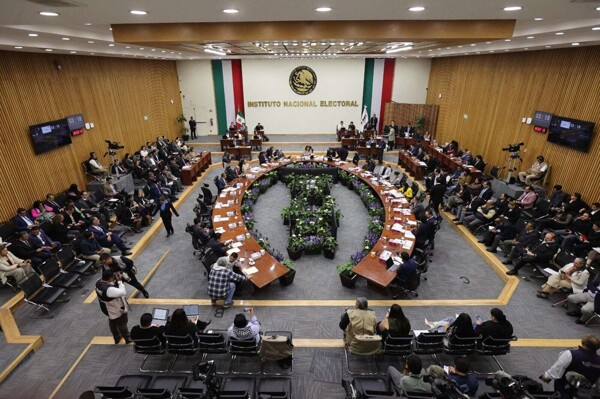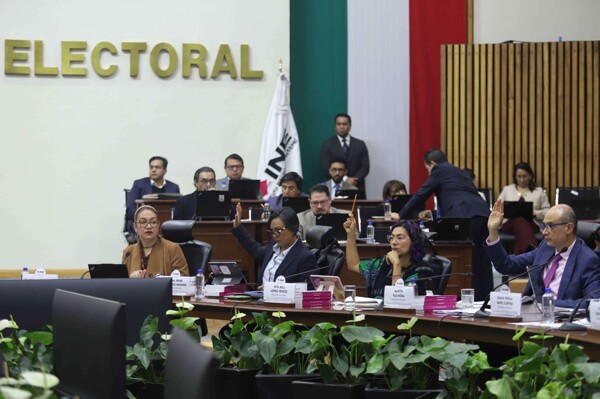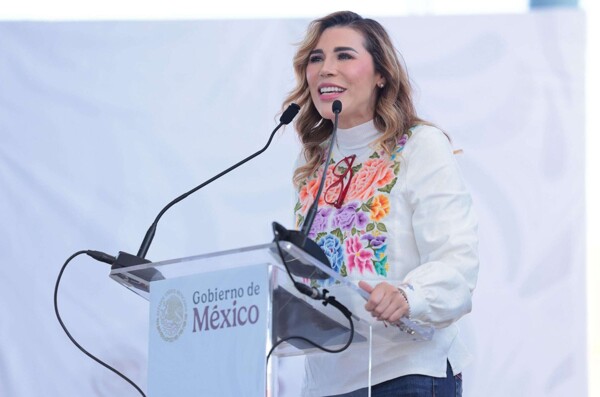
Mexico's political landscape could be set for a significant change. In the coming days, the country could move from 6 to 11 national political parties. This is not an exaggeration or political gossip; in a democracy, the emergence of new options can be a healthy development. However, it's crucial to understand that new acronyms and logos do not, by themselves, guarantee a stronger democracy. The rise of new parties signifies a shift in ballot options, competition, and the way votes, seats, and resources are contested. More fundamentally, it changes the expectation of representation. When an organization seeks to become a political party, it implies that there are individuals who may not feel fully represented by existing options and could identify with this new choice. The first thing to note is that the appearance of new political parties should not, in itself, be seen as a bad thing. If more parties arrive, it does not automatically mean a larger total budget. Public financing is distributed according to existing formulas and rules. If an organization obtains registration as a national political party, it can participate not only in federal but also in local elections. This means the political map in Querétaro could be shaken up. The INE has until June 25, 2026, to make a decision. So, more parties could come, but it is not yet finalized.