In recent years, access for new political forces to the arena of political competition has become increasingly rigid and difficult. If we aspire to live in a democracy, we must open the party system to allow for social diversity, thereby enriching public deliberation and representation. This is one of the factors explaining the public's disengagement from politics and the rise in abstentionism, especially among young people who find no appealing options in a strident but cause-free political landscape. This issue can be addressed by replacing current ex-ante requirements with conditional registration, allowing a political force to compete in an election, with the vote of the citizenry determining its permanence or removal from the electoral competition.
Another underlying issue, without a doubt, is the internal life of the parties. The democratization of party life goes beyond each individual organization; it is a matter of public interest. If this is a state reform, these are issues that deserve a prompt national reflection and resolution before it is too late. Disenchantment, abstentionism, the public's separation from discussion, and from elections themselves could lead to the consolidation of authoritarian, autocratic regimes with parties acting as orthodox instruments that impose their dogmas.
POSTSCRIPT: A world at war is another failure of politics, though, returning to Clausewitz, it is the most "rational" of armed conflicts; in this case, irrationality, ambition, and hatred prevail. These are, for the most part, anything but democratic, yet they aspire to gain power through the democratic route to representation and the exercise of public office. It is a contradiction, then, that parties with authoritarian, vertical structures aspire to build a democratic society. At the very least, we must ask the question; it is uncomfortable in a society that for centuries has lived under the yoke of political concentration and paternalism, but it is pertinent, especially in light of the excesses to which this centralism has led us.
Let's for a moment imagine a president and a prime minister from coalition governments, that is, alliances of different parties that publicly commit to a common executive and legislative program and form a cabinet backed by the Senate. This could lead to greater stability when there are no clear majorities, forcing agreements and consensus and seeking a broader representation of more sectors of society. Of course, disadvantages can be rightly cited, such as the maximization of internal conflicts, slower decision-making, and the risk that the coalition breaks down if there are disagreements, "paralyzing" the government. However, all of this is preferable to authoritarianism and war understood as the absence of politics, despite Clausewitz.
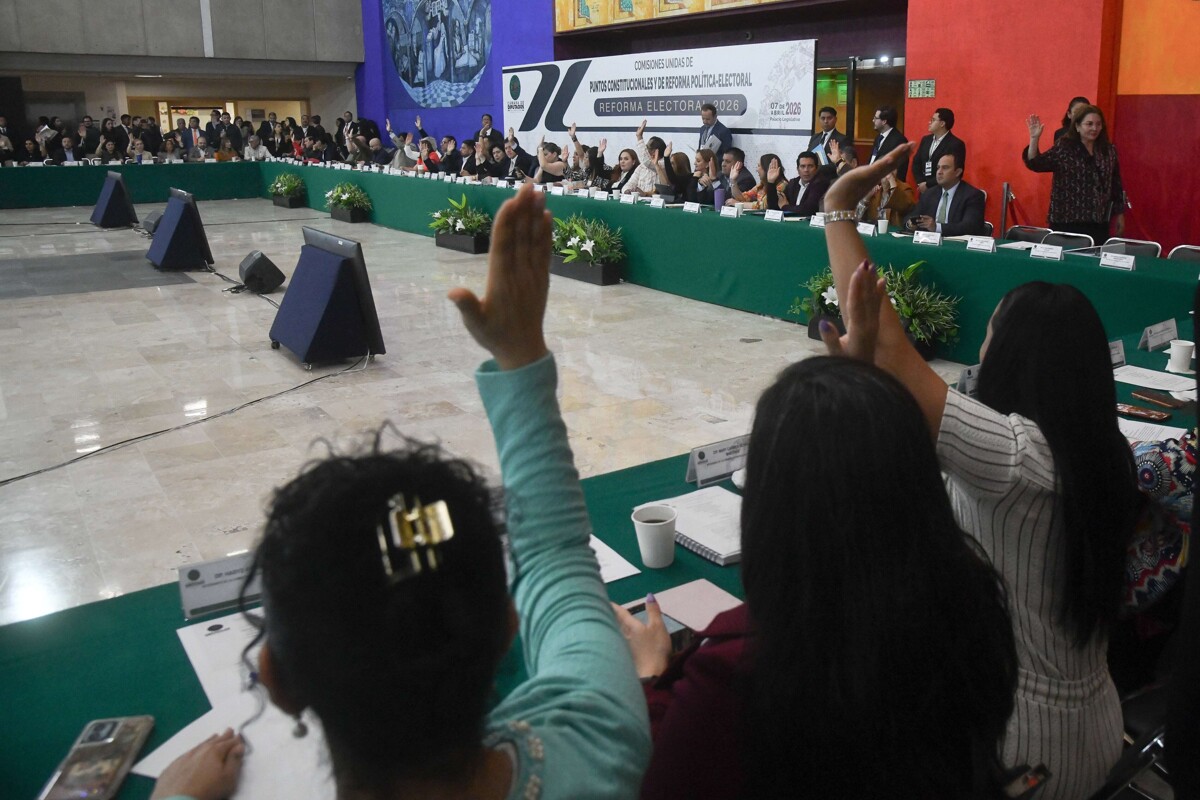
Let's move to the second point, a contradiction in a democracy: a closed party system. After another episode in the journey of the Fourth Transformation (4T) in its attempt to carry out a major political—not just electoral—reform, it is time to take them at their word and provoke an inclusive, in-depth deliberation on the political regime suitable for Mexico today. Deliberation, not the imposition of "majorities" or pragmatic negotiations. The journey formally began for López Obrador in 2022 and had its most recent chapter with the failure of his successor's Plan B, who "washed her face" at the cost of another affront to federalism, trampling the sovereignty of the "federated" states with the poor argument of eliminating privileges.
I still believe that the 4T will not back down from its intention to reverse what was achieved during the "democratic transition" period and to set ad hoc rules for the 2030 elections. Keeping that in mind, it is urgent not only to question the structural changes that through reforms and administrative decisions have modified the state and governmental framework, concentrating power to be exercised arbitrarily, leaving the citizen defenseless—the amparo law and the powers granted to the UIF illustrate this—and militarizing the country, to mention just a few issues. But the goal is not to follow behind; let's propose at least three political issues for public consideration that deserve to be opened up: presidentialism or parliamentarism; the party system and the democracy and transparency of the parties themselves. Has the time come to put an end to presidentialism?
Political parties, vested as legislators, have increased the barriers to entry into the political arena. Previously, the registration of new parties took place every three years; now it is every six. Previously, the minimum vote required to maintain a party's registration was 2% of the vote cast; today it is 3%.