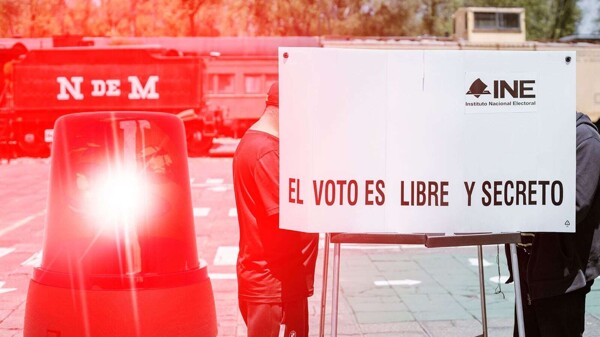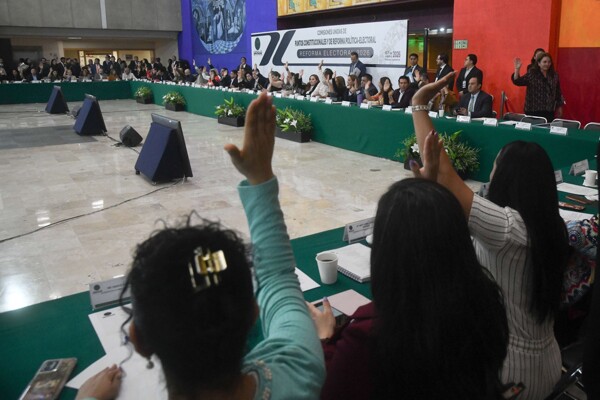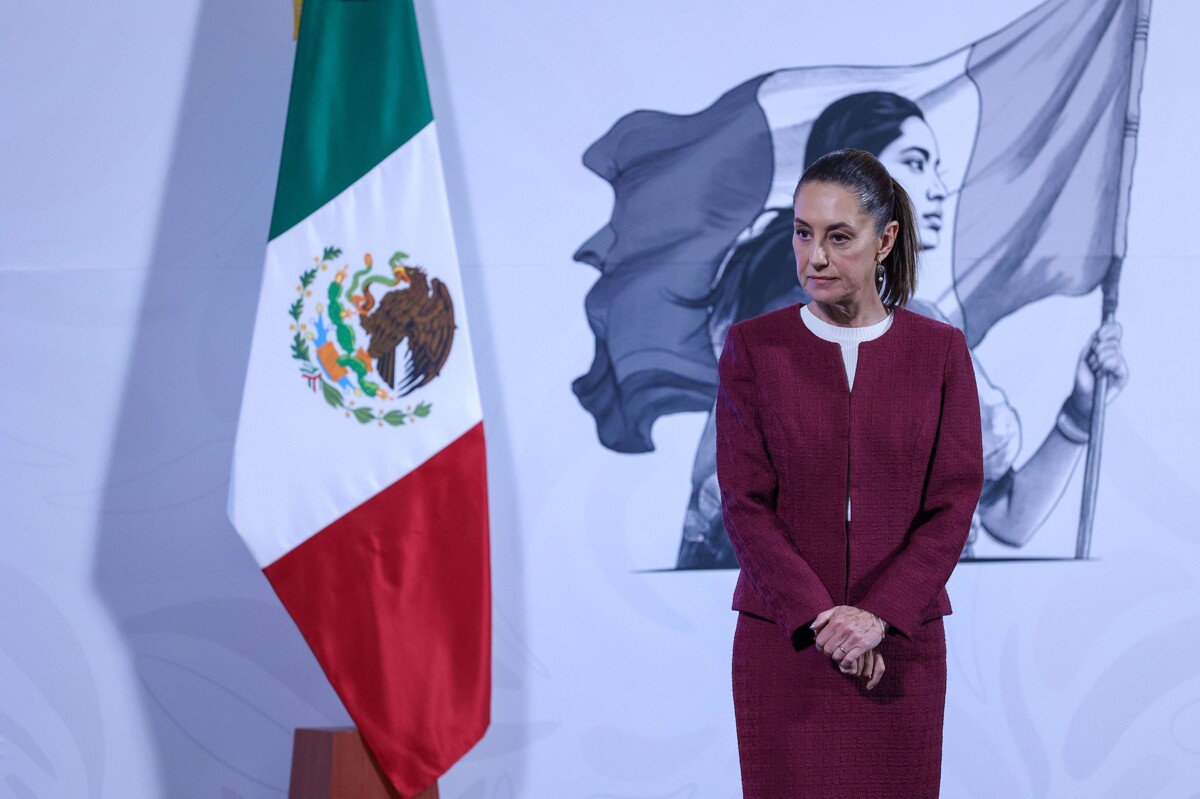
An allegedly autonomous body falls silent by presidential order. Putting aside the fact that its political partners twice rejected the electoral reform it proposed—not for reasons of governability, but out of strict electoral business calculation—we have a president who enjoys unchecked power. Some say that in this sense, even the Bank of Mexico is bowing to the National Palace by its decision to continue cutting the benchmark interest rate despite inflation showing signs of spiraling out of control and lingering fears over rising oil prices. In this scenario—of institutions that do not challenge the Executive, aggravated by Sheinbaum's micromanager style—the president remains the sole and total benchmark of public policy, including, and above all, for anything that goes wrong, or simply goes very badly. 2026 is set to yield meager economic results, especially considering all that has been changed to concentrate more power. No devaluation is needed for a presidency to be devalued. "The Political Consequences of Bank Nationalization," Colmex, 2008. Mexico, according to him, had a devalued presidency. In March 1982, before the General Assembly of Concanaco, he said: '... A president who devalues, devalues himself; I know that a president who makes decisions at times like these, for many sectors, loses [sic] credibility and, of course, for many others it is a cause for loss of faith'. Today, as in the 80s, the immense power of the presidency can cause the costs of economic wear and tear to be transferred to the person who holds it. But even that initiative, rushed through amid the stumbles of a president who wanted more, denotes the concentration of power in the Executive. The presidency of Claudia Sheinbaum decides how a municipality will be organized just as it decides the monetary limit for the so-called golden pensions (without failing to mention that she dared to make that reform retroactive). And let's not mention that she also has a hand in who will be the new auditor general of the Federation—which was supposed to be the prerogative of San Lázaro precisely to oversee budget spending—or that candidates linked to her are advancing to the National Electoral Institute. In the same vein, the administration of justice has been reconfigured to the point that in recent days the head of state brought Prosecutor Ernestina Godoy to the morning press conference, whom Claudia warned would not take questions. Good idea or bad, it was drafted from a presidential centralist perspective and without republican debate. It is, of course, not the most important of the constitutional reforms made since October 2024. Perhaps it is time to use some of that political capital to warn that the year could be very complex, and to park the triumphalism. Showing realism could help Sheinbaum so that if the situation worsens, the same thing does not happen to her as it did to López Portillo with the devaluation (it also applies to Peña Nieto with the gasolinazo). Soledad Loaeza recalls in a book that in JLP's time 'the crisis had erased the already tenuous borders between the person of the president and the institution. And that it is not without risks'. The most recent of the constitutional reforms reduces and limits the number of councilors in municipalities and the budgets in state legislatures. On April 9, President Claudia Sheinbaum boasted that there have been '23 constitutional reforms and more than 60 laws that we have changed'. López Portillo himself lived this confusion; for example, instead of seeing in devaluation a financial instrument, he considered it a personal discredit, not only was the peso devalued, but the presidential institution and he himself also lost value. If the prognosis was already mediocre in the best-case scenario, Trump's bloody adventure in Iran has made it even darker. It is a re-engineering whose implementation will demand time and resources. It is very bad news for a country with so many new rules to put into practice. In addition to reforms, Claudia Sheinbaum last week boasted the good levels of her popularity in the polls.