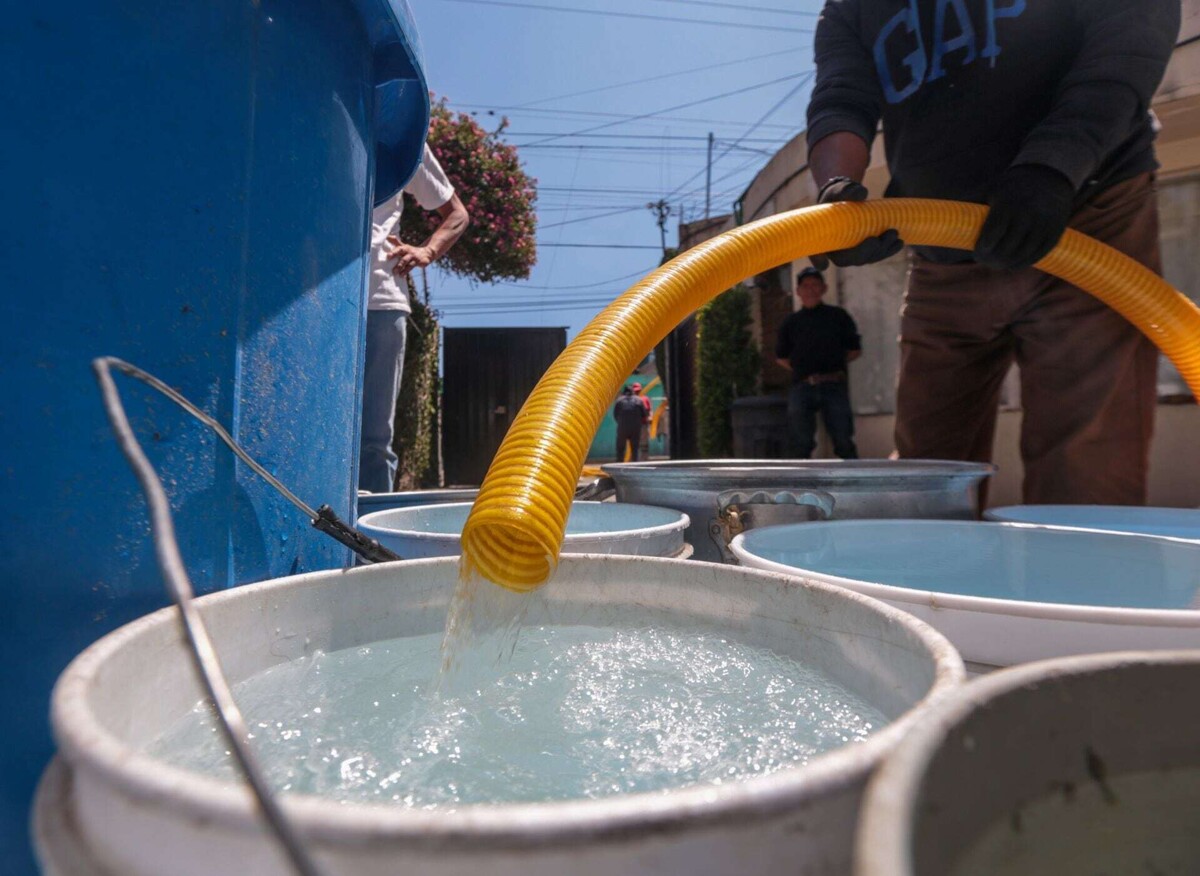
The consequences are known: rivers with low assimilation capacity and greater health risks. Finance: where is the money? While the Sustainable Development Goals require protecting and restoring water resources and ensuring access to drinking water, the financial gap persists. The case of the Río Santiago, in the Guadalajara metropolis, synthesizes the problem: thousands of economic units operate in its environment, but the traceability of discharges and social surveillance remain insufficient. Opacity and Deferred Costs. In various sectors, impacts on water and biodiversity are little measured and worse reported. When the climate changes and ecosystems degrade, that regulation breaks down, and with it the material basis of economic activity. Freshwater species face a risk five times greater than terrestrial ones, driven by poor sanitation and uncontrolled discharges. CONABIO's diagnostics already warned of deterioration in 85% of Latin America's hydrological ecoregions and a critical state in Mexico's rivers and streams. The evidence is overwhelming: the decline in biodiversity and nature's contributions to people is already a systemic risk threatening the economy, financial stability, and human well-being. Five fronts are unavoidable: Measurement and traceability. Map risks and impacts along the value chain (extraction, inputs, production, distribution, and disposal), with public and verifiable indicators. Water and sanitation with social surveillance. On-site pre-treatment, water efficiency, reuse, and discharge goals based on the limits of each basin's ecosystem. Circular economy. Redesign products and processes to reduce waste and pollution, prioritizing regenerative materials and closed cycles. Territorial governance. Participate in basin councils, fair water-sharing agreements, and community monitoring mechanisms, with transparency in permits, volumes, and quality. Aligned financing. Redirect subsidies and capital towards green infrastructure, river and wetland restoration, and nature-based solutions that restore regulatory capacity to ecosystems. Without the regulation that nature provides, the economy becomes more expensive, conflict increases, and water security becomes a luxury. Mexico City is an extreme example: its supply exceeds its geographical limits and reconfigures neighboring territories to sustain urban demand. Mexico: Rivers on Alert, Species at Risk. Competition for water between sectors reduces access to clean and safe water for the population and degrades freshwater and terrestrial habitats. Otherwise, protection becomes another form of dispossession and biocultural loss. What companies can—and must—do. Business dependence on biodiversity requires moving from discourse to concrete management. Organizations and communities insist that conservation must be done with and for Indigenous Peoples and local communities, respecting rights, knowledge, and territorial arrangements. However, the business response is not yet up to the challenge. The Invisible Regulation that Sustains the Economy. Biodiversity is not an abstract concept: it forms a web of ecological relationships that makes it possible to have clean water for drinking, producing food, and the territories where we settle industries and cities. This network supports critical functions such as the quantity, quality, and timing of water. The message is clear: economic incentives prioritize activities that degrade the ecological foundation on which businesses depend. 30×30 with rights, not at their cost. The Kunming-Montreal Global Biodiversity Framework set the 30×30 target: to protect at least 30% of land and water areas by 2030. The path, however, is as important as the goal. Deterioration, in turn, comes back as a boomerang: it forces the search for new sources—with social and environmental tensions—or investment in pre-treatment and purification technologies. In Mexico, many treatment plants do not operate as designed due to energy costs, oversized design, lack of local relevance, or corruption. Basins are hydrosocial systems: their functioning is mediated by human decisions, infrastructure, and political arrangements. The dilemma is clear: sustain the network that sustains life—and with it, business—or continue to postpone an ecological and social bill that has already arrived. Thinking about water requires looking beyond rain and rivers. Between 2012 and 2018, 98.53% of the lotic sites monitored by CONAGUA presented mesotrophic or eutrophic conditions, evidence of chronic pollution. The decision, and the numbers, are on the table. Lack of transparency prevents the evaluation of policies and solutions. Achieving SDG 6 would require about 114 billion dollars annually. In contrast, in 2023, 7.3 trillion dollars were mobilized in harmful subsidies and private capital that generated negative impacts on nature, compared to a mere 220 billion oriented towards its conservation. “All companies depend on biological diversity,” warns the IPBES Assessment on Business and Biodiversity (2026).