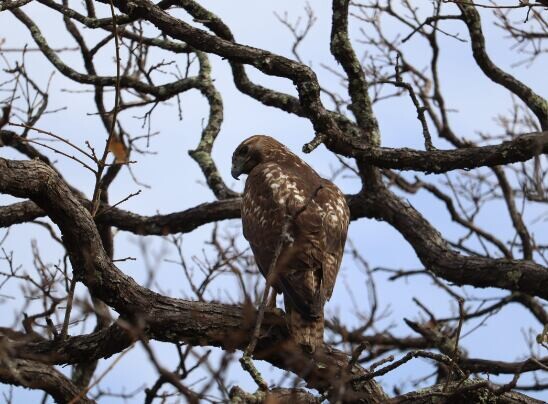
These animals do not come from distant jungles or untouched ecosystems: often they survive among power lines, roads, and garbage. Therefore, the release of wildlife in Guanajuato is not just an environmental act, but a second chance for species that have learned to live under human pressure. State and federal authorities released five specimens: two kestrels (Falco sparverius), one red-tailed hawk (Buteo jamaicensis), and two northern opossums (Didelphis virginiana) after their recovery at the Celaya Wildlife Animal Assistance Center.
Species that already live among us. The case of the kestrels is revealing: they are birds that can be seen perched on cables or on the roadside of roads, adapting to intervened environments, where they hunt insects or small mammals. The red-tailed hawk, one of the most common raptors on the continent, was rescued in a state of hypothermia and now returns to an environment where it can reintegrate without risk. But perhaps the clearest symbol of this forced coexistence is the opossum: a widely distributed species that, due to habitat loss, ends up in landfills or run over on roads.
Returning to the habitat, not the asphalt. The release was carried out in Protected Natural Areas of the state, where conditions exist for these species to find food, shelter, and continue their development without the constant pressure of urbanization. The objective is not only to rescue, but to break the cycle that pushes these species to survive in hostile environments, where they face predators, traffic, and constant contact with humans.
From rescue to reintroduction. The authorities recalled that Mexican legislation allows rescued or voluntarily delivered specimens to be reintroduced into their natural environment as part of conservation strategies. In addition, they called for reporting the illegal trafficking of fauna, a practice that not only affects biodiversity but also increases health risks.