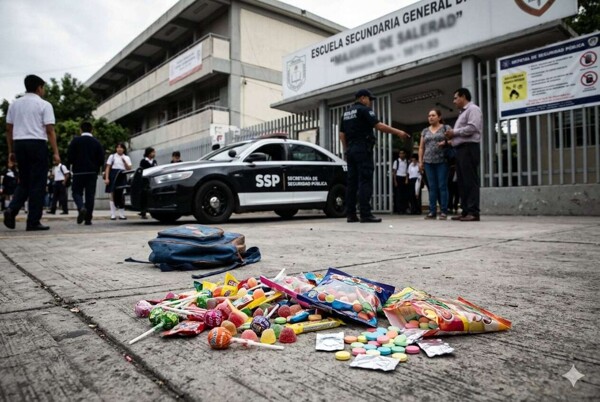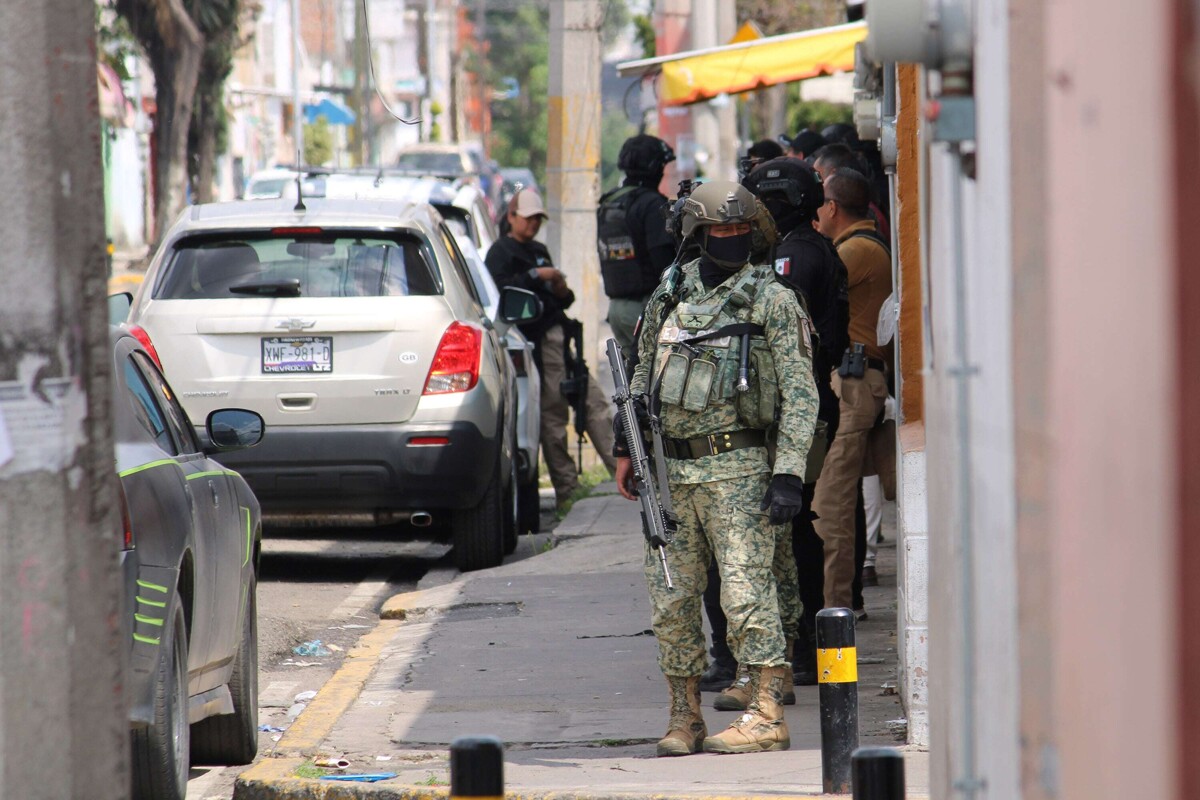
This tactic aims to facilitate contact with students and avoid detection by teachers or parents. While the three detainees in Rinconada Los Arcos are already at the disposal of the Public Ministry to define their legal situation, authorities maintain surveillance in educational areas of the metropolitan zone to curb this distribution method, which directly puts minors at risk. The State Attorney General's Office (FGE) dismantled a criminal cell dedicated to the storage and sale of narcotics that had been besieging the southern part of Puebla's capital. The operation, carried out in the Rinconada Los Arcos subdivision, in the El Porvenir neighborhood, resulted in three detainees and the seizure of three 'safe houses'. After weeks of intelligence and following anonymous complaints, investigating agents, supported by the SEDENA, National Guard, and State Police, simultaneously stormed properties on Arco de Constantino and Arco del Triunfo streets. The network, made up of subjects with family ties, operated under a 'total availability' scheme (24 hours), turning residential homes into logistical distribution centers. Secured at the scene: Detainees: Juan Pablo N., Hadahasa N., and Krivan Moroni N. Narcotics: 104 doses of 'crystal' and various packages of marijuana. Equipment: Scales used for weighing and dosing the drug. Drugs disguised as candies in school zones This police operation comes in a critical context, as the head of the Public Security Secretariat (SSP), Francisco Sánchez, issued a worrying warning: school zones have become the new 'red flags' for street-level drug dealing. According to authorities, criminal groups have sophisticated their methods to infiltrate the youth of Puebla: The vice-admiral warned that they are using candy wrappers to distribute synthetic drugs.