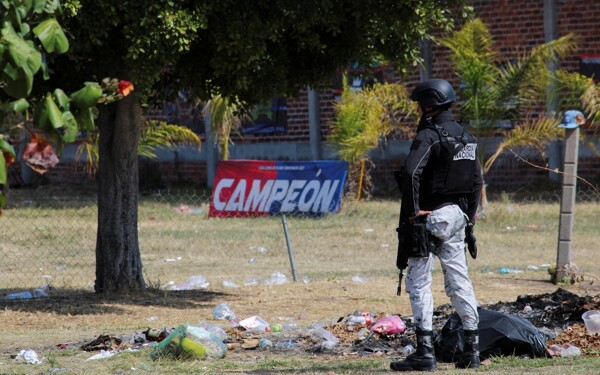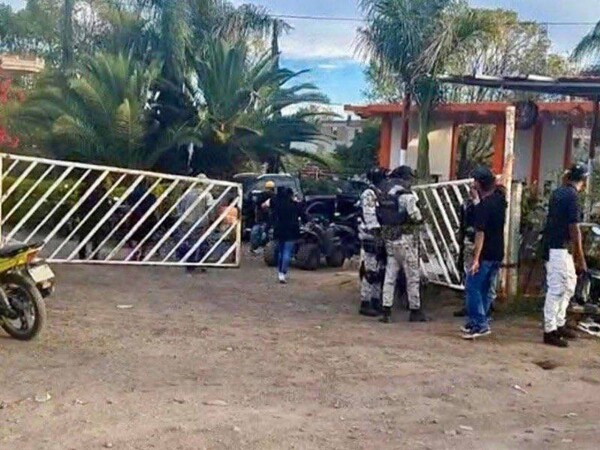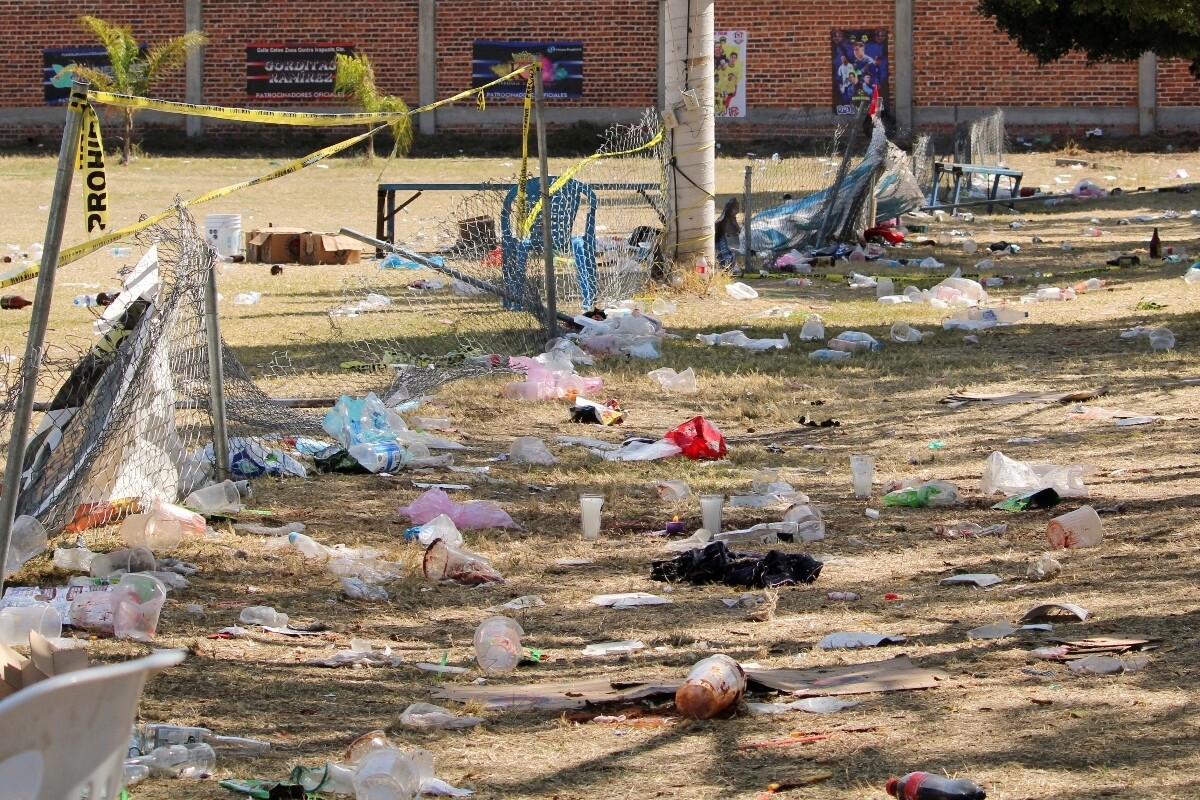
Last Monday, January 26, the Santa Rosa de Lima Cartel (CSRL) again captured national attention following the massacre of 11 people at a football field in Salamanca, Guanajuato. The initial lines of investigation point to the material and intellectual authors of the attack being members of this criminal organization, according to federal government sources cited by journalist Juan Omar Fierro. Prior to the attack, witnesses stated that banners with threats from the CSRL against its rival, the Jalisco New Generation Cartel (CJNG), had been placed in the Lomas de las Flores community. The dispute between these groups for control of Guanajuato has been ongoing for at least seven years and has generated a sustained increase in violence and insecurity in the state. Federal sources indicate that the direct responsible for the massacre is Moisés Soto Bermúdez, the current leader of a cell known as “Los Marros,” whose name pays homage to José Antonio Yépez Ortiz, alias “El Marro,” founder of the CSRL. Yépez Ortiz has been in custody since August 2, 2020, after being captured in the municipality of Juventino Rosas, Guanajuato; however, according to U.S. government complaints, he continues to influence the organization from prison. Currently, “Los Marros” operate under the command of Mario Eleazar Lara Belman, identified with the aliases “Negro,” “Camorro,” and “Gallo”; Lara Belman is considered a generator of violence in Irapuato, Salamanca, and Celaya, and has a standing arrest warrant for qualified homicide. He is also linked to other crimes such as kidnapping, enforced disappearance, drug sales, and extortion of regional producers. The Santa Rosa de Lima Cartel emerged in Guanajuato between 2010 and 2014, with the rise of fuel theft, known as “huachicol,” in a state crossed by strategic Pemex products. Therefore, unlike other cartels in the country, the CSRL was not born from drug trafficking, although it later diversified its activities into extortion, street-level drug sales, and homicides. In those years, local criminal groups dedicated to huachicol began to consolidate with the use of violence and territorial control in the state's industrial corridor. It was from 2015 that the group led by José Antonio Yépez Ortiz consolidated as a structured criminal organization, controlling clandestine taps, illegal extraction routes, and entire communities. Sustained wave of violence David Saucedo, a public security consultant, explained in an interview for Aristegui en Vivo that the massacre in Salamanca is an example of “narco-terrorism,” as the attack affected both people allegedly linked to a rival criminal group and civilians with no criminal ties. Since last year, attacks have been recorded in sports fields; the Santa Rosa de Lima Cartel has tried to charge a “floor tax” to football teams, forcing them to hire private security to protect matches. The massacre last Sunday at the football field is part of a context of sustained violence in Guanajuato that, according to statements from Salamanca's mayor, César Prieto, in addition to the 11 people killed, six others were hospitalized. Regarding the fact, the State Prosecutor's Office confirmed that ten died at the scene and one more died later in a hospital. Just one day before, five people had been murdered in the community of Cuatro de Altamira and one more in San Vicente de Flores. In recent days, an explosive device was even placed near Pemex facilities in Salamanca, which evidences the continuity of the CSRL's offensive. Does “El Marro” operate from prison? After Yépez Ortiz's capture, the cartel did not disintegrate; according to specialist David Saucedo, the organization fragmented into various autonomous cells that operate municipally and regionally, under a decentralized leadership model. Some of these cells are headed by family members of Yépez Ortiz himself, such as his son, known as “El Monedas,” as well as other plaza bosses identified as “El Mamey,” or Mario Eleazar Lara Belman and Moisés Soto Bermúdez continue to be priority targets for federal forces, which have conducted raids and seizures of weapons and vehicles in municipalities like Villagrán, one of the cartel's bastions. Another identified leader of the group is Adán “G,” alias “El Azul,” presumed successor to “El Marro”; in March 2024, he was sentenced to 29 years in prison for organized crime, carrying exclusive-use army weapons, and possession of methamphetamine for commercial purposes. The sentence evidenced how the authorities have sought to dismantle the cartel's structure, even after the arrest of its historical leaders, but despite these actions, the CSRL cells continue to operate, involved in extortion, collection of “floor taxes,” selective homicides, and street-level drug sales, allowing them to maintain influence in strategic Guanajuato municipalities. The dispute with the Jalisco New Generation Cartel is not only territorial but also economic, as both seek to control drug routes, fuel extraction, and collection of quotas from local producers and merchants. For David Saucedo, attacks like the Salamanca massacre are part of an offensive to weaken the CJNG and reaffirm the CSRL's territorial dominance, although the violence of this cartel directly affects the civilian population. Even, preliminary reports on the fact in Salamanca reveal that some victims may have had ties to private security companies indicated as being aligned with the CJNG. Saucedo explains that this strategy seeks to generate fear and send clear messages of territorial control. In recent years, the CSRL has attacked sports fields and sought to charge a “floor tax” to amateur football teams, with a violence that has drawn the attention of international media, especially in the context of global sporting events in Mexico. Among its settlement strategies, the CSRL also uses banners with threats and explosive devices in public spaces to intimidate and consolidate its social control in the face of rival groups. Consultant David Saucedo warns that even after years of operations and arrests, “the Santa Rosa de Lima Cartel continues to find spaces to act and challenge the authorities, demonstrating that its strength does not depend on a single leader, but on its entire criminal structure,” which could make its eradication difficult.