The tariff escalation between Mexico and the United States began on March 4, when Washington imposed a general 25% tariff based on the IEEPA. This move affected 15.24% of Mexican exports to the US, setting the tone for the rest of the year.
Eight days later, on March 12, the first escalation on steel and aluminum began, starting at 25% and rising to 50% on June 4, backed by Section 232. On July 14, a 17.09% tariff was imposed on Mexican tomatoes, authorized by the US International Trade Court, affecting 0.62% of exports.
"This will determine whether Mexico remains competitive," said Julio Ruiz.
Ramsé Gutiérrez of Franklin Templeton agrees that the outcome will likely be less favorable in absolute terms but better than that of other countries: "Mexico could end up with an average tariff of 5%, while its peers would face tariffs of 30% or 40%, plus higher logistics costs."
The automotive industry is cautiously approaching the start of 2026: "Tariffs will set the course for the sector."
Cars were added on April 3, and in November, heavy-duty trucks (25%) and buses (10%) were included, covering 6.42% of total exports. With these figures, Mexico ranked 8th out of 35 countries that account for 92.9% of the US's total imports.
"We are aiming for 0%, and the ideal scenario is to achieve this before June, when the USMCA review begins," the report states.
The path to zero tariffs
The only voice that remains firm in defense of total free trade comes from the Mexican Automotive Industry Association (AMIA), which has not abandoned the idea of zero tariffs. The goal is being met so far.
"The USMCA will continue, but with tariffs," said a resigned analyst. This message was repeated at year-end breakfasts hosted by Citi, Franklin Templeton, and the Base Financial Group.
Its director, Rogelio Garza, insisted that the demand for both governments must be the total elimination of tariffs affecting the sector, as they don't even address problems specific to the industry.
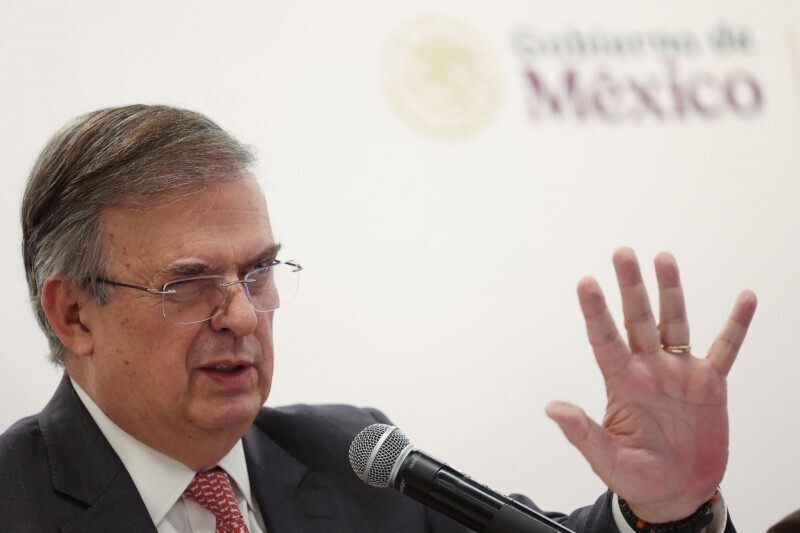
That idea, which began to take shape with Marcelo Ebrard in April when the US threatened a 25% tariff on cars, light trucks, and auto parts, ended up monopolizing the projections of analysts and business leaders. For the automotive industry, it was the clearest signal that the preferential treatment of the USMCA was no longer guaranteed.
"The renegotiation must be evaluated not against the current agreement, but against the rest of the world," they repeat. While they acknowledge the conversation must start from the demand for zero tariffs, the result "must be measured relatively."
The only voice that remains firm in defense of total free trade comes from the AMIA.