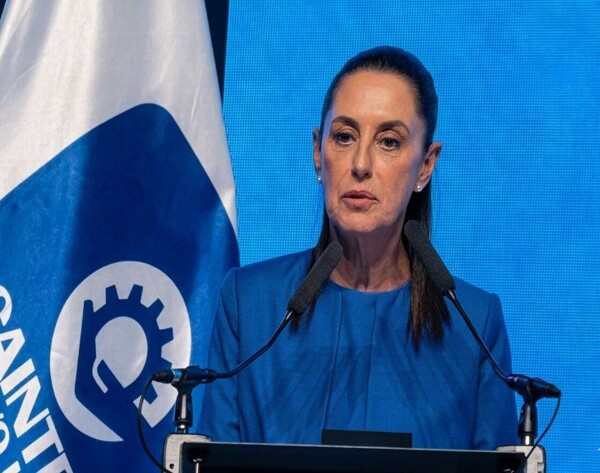
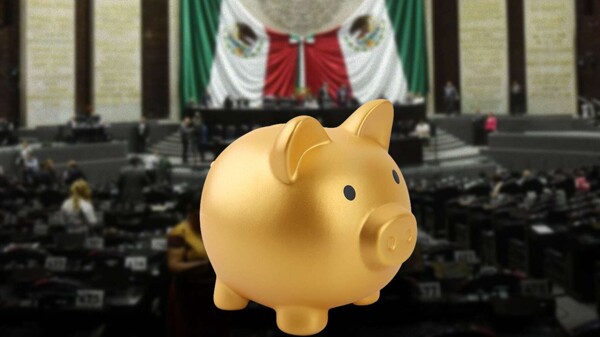
The abandonment of airport infrastructure in Mexico City and the country's network of roads and ports demand urgent investment. Instead of setting mechanical investment-to-GDP targets as if they were a panacea, the government should focus its efforts on eliminating bans on private initiative and creating conditions for the expansion of innovation and technological change—conditions indispensable for overcoming the mediocre growth path. Notably, in the 1950s, American economist Robert Solow demonstrated that the main source of long-term economic growth is not investment, but technological change. The above does not mean that Mexico does not need good investment projects that allow for better public services and contribute to economic efficiency. Despite this, Finance officials emphasized that the planned infrastructure investments would shield the economy from current external turbulence and promote GDP growth of between 2.5 and 3.0 percent during 2026. Another deeply rooted official justification is the idea that the higher the investment-to-GDP ratio, the greater the sustained economic growth. This proposal is part of a sequence of planning announcements that has included the Plan Mexico, the National Development Plan 2025-2030, and the Infrastructure Investment Plan for Development and Well-being 2026-2030, among many others. According to the explanatory statement, the new law seeks to integrate private investment as a 'mechanism of collaboration' in the federal government's priority projects. The multiplication of previous projects with negative financial profitability, such as the Maya Train, AIFA, and the Dos Bocas Refinery, offers no confidence whatsoever. Regardless of the government's success in persuading institutional investors to fund projects, as well as the likely subordination of more profitable destinations for private capital, the justifications that the government, and even many commentators, have given for physical investment, especially in infrastructure, are problematic. A frequent argument has been that investment drives growth and employment in the short term. Although marginally, it opens the door to private capital in the face of the exponential growth of government transfers, the neglect of many essential areas of the State, and the limitation of tax resources. According to the Secretary of Finance, the 'mixed investments' allowed by the new law would offer the attraction that private companies 'would receive preferential treatment in the flows and the peace of mind of having the public sector as a strategic partner'. Undoubtedly, the government would have to guarantee that this time it would indeed respect the rules of the game, in contrast to the previous administration's propensity to apply discretionary changes, and that its partnership will now be more reliable, despite having virtually disappeared all checks and balances on the exercise of power. Likewise, the government would have to convince investors of the financial attractiveness of the projects, taking into account, among other factors, that, according to the same explanatory statement, 'the initiative surpasses approaches focused exclusively on financial profitability'. Within the Banking Convention, last Thursday, President Claudia Sheinbaum announced the sending to the Chamber of Deputies of the initiative of the 'Law for the Promotion of Investment in Strategic Infrastructure for Development with Well-being'. The new provisions would facilitate the design of funding structures in the form of minority private capital to achieve the government's objectives. This initiative arises as an emergency exit in the face of the administration's insistence on maintaining its control over certain 'strategic' sectors. The main problem with this interpretation does not lie in the fact that, accounting-wise, more spending is not equal to more GDP, but that it ignores the very nature of investment, which is defined based on the benefits of useful services over several years in the future. If the impact of investment were mainly the immediate increase in GDP, such spending would not differ greatly from current expenditures. This idea, reminiscent of an old assumption that the productive capacity of any country is proportional to the stock of machinery, has been widely refuted by economic theory and empirical evidence.

Mexico's Infrastructure Investments Require a New Strategy
Mexico demands urgent infrastructure investment, but the government should focus on creating conditions for innovation and private initiative rather than mechanical targets. Economists emphasize that the key to growth is technological change, not just investment in GDP.