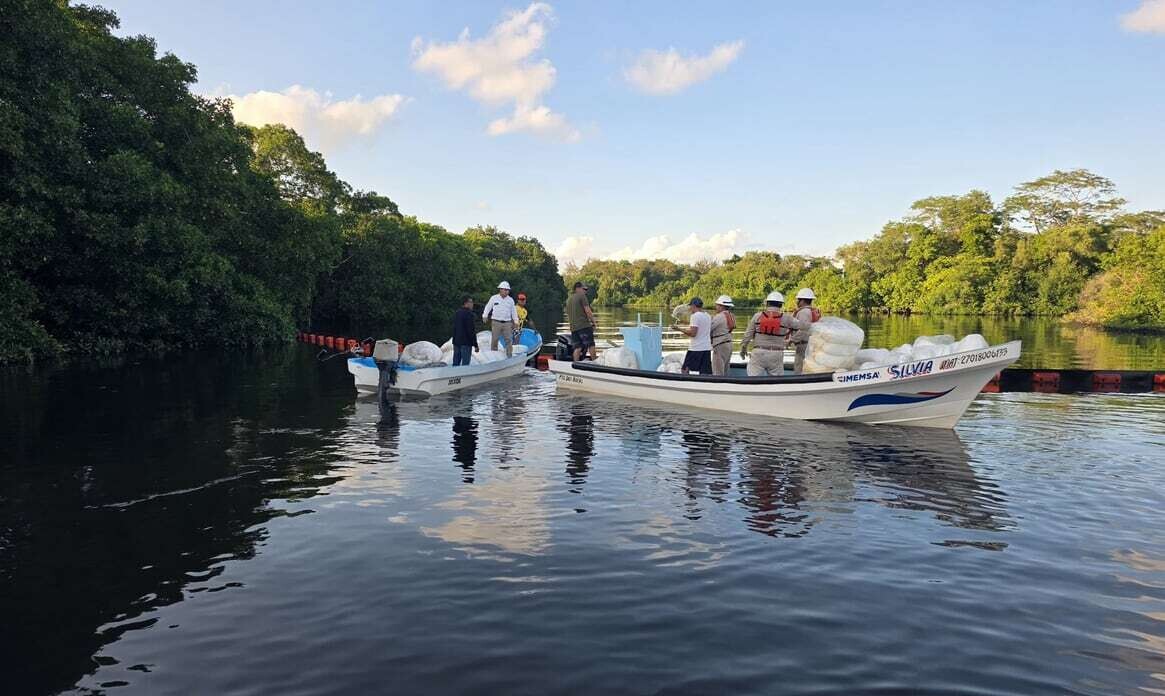
State-owned oil company Petróleos Mexicanos (Pemex) issued a new statement responding to recent reports of a hydrocarbon spill in the Gulf of Mexico, particularly in the Cantarell field area. The company stated that the information spread about a corrective intervention on pipelines linked to a large crude oil slick is “inaccurate,” while defending its inspection and maintenance protocols for offshore facilities. In its informational bulletin, Pemex detailed that it maintains a constant presence in the Gulf of Mexico through a fleet of 13 maintenance vessels and 62 logistics vessels, which support exploration and extraction operations, as well as over 13,300 workers on marine platforms. The company emphasized that these vessels belong to 17 service providers and highlighted the case of the Árbol Grande vessel, which “operates continuously in the Campeche Sound and performs preventive inspections on platforms,” in addition to participating in spill response and mitigating natural emissions in the Cantarell field. Pemex also affirmed that it has a “special preventive plan for the inspection and maintenance of marine pipelines, with an average of 1,500 activities per year.” According to the statement, this strategy seeks “the timely detection of anomalies, risk mitigation, and the reduction of major failures,” in compliance with current safety standards and regulations. In this sense, the oil company maintained that the information disseminated about a corrective intervention on pipelines is incorrect, reiterating that the vessels mentioned perform permanent preventive inspection tasks and not actions derived from a specific contingency. Cleanup actions continue along the coasts of the Gulf of Mexico, while tourists report the appearance of tar and residents face the consequences for their work activities following the impact.