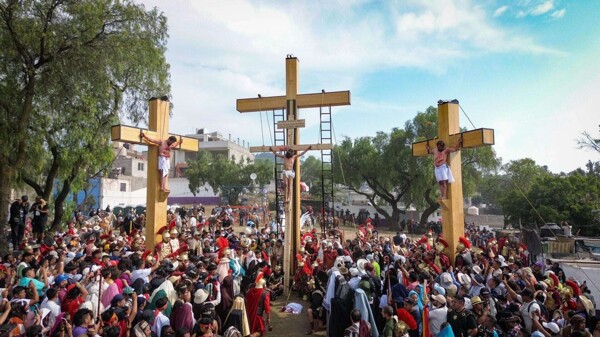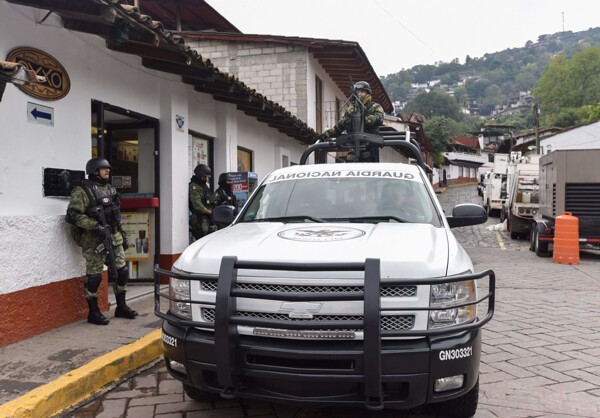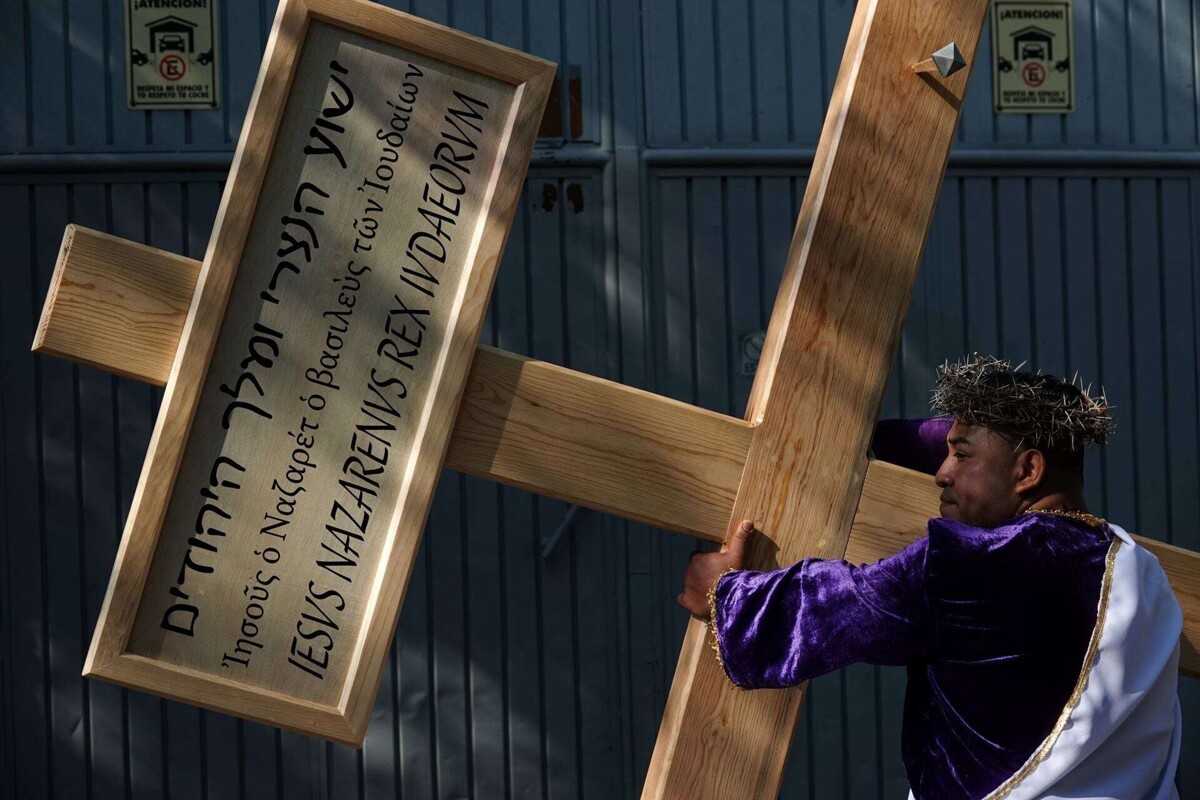
The Government of Mexico City confirmed security operations for the celebration of the Via Crucis of Iztapalapa, as well as road closures in the borough due to the staging of the Passion of Christ in Iztapalapa.
Just last December, UNESCO inscribed the Representation of the Passion, Death and Resurrection of Christ in Iztapalapa on the Representative List of the Intangible Cultural Heritage of Humanity.
The security operation for the Representation of the Passion, Death and Resurrection of Christ in 2026 will include a police deployment starting March 31, and will also take place on April 1, 2, 3, and 4, and will include police presence and aerial surveillance for this 2026 Holy Week representation.
On Thursday, April 2, starting at 14:00, processions will take place in the eight neighborhoods of Iztapalapa, on the streets Aztecas, 5 de Mayo, Avenida Toltecas, Callejón General Anaya, Calle General Anaya, Ignacio Comonfort, Ermita, Avenida Luis Hidalgo Monroy, Calle Concepción Álvarez, Vicente Guerrero, Artemio Alpízar Ruz, Allende, Ayuntamiento, Lerdo de Tejada, Cuauhtémoc, Estrella and Camino al Cerro de la Estrella.
On Friday, April 3, the day the Via Crucis takes place, surveillance operations will begin around 13:00, according to the government of CDMX.
Due to the staging of the Passion of Christ in Iztapalapa, traffic cuts are expected in the area from 14:00 on Thursday, April 2, as well as on Friday, April 3, and Saturday, April 4, from 7:30.
Street closures are expected on Thursday, April 2, for the 2026 staging of the Passion of Christ on Calzada Ermita Iztapalapa.
The alternative routes are as follows, according to the Government of Mexico:
Eje 5 Sur
Anillo Periférico
Avenida Tláhuac
Eje 3 Oriente
Año de Juárez
Avenida Andrés Molina Enríquez
Calzada de Tlalpan
Eje 4 Plutarco Elías Calles
Eje 5 Sur Leyes de Reforma
Avenida Taxqueña
Passion of Christ in Iztapalapa, recognized by UNESCO
The Catholic Church commemorates Holy Week, which this year is celebrated from March 29 to April 5. However, its first staging took place in 1843, so it has more than 180 years of history with uninterrupted annual representations.
In December 2025, UNESCO inscribed the Representation of the Passion, Death and Resurrection of Christ of Iztapalapa on its Representative List of the Intangible Cultural Heritage of Humanity.
The Passion of Christ performed in Iztapalapa is the most crowded Holy Week representation in the country, and is also considered one of the largest religious gatherings in Latin America.
This tradition in Iztapalapa began in 1833 as a community vow to ask for the end of a cholera epidemic that was decimating the population.