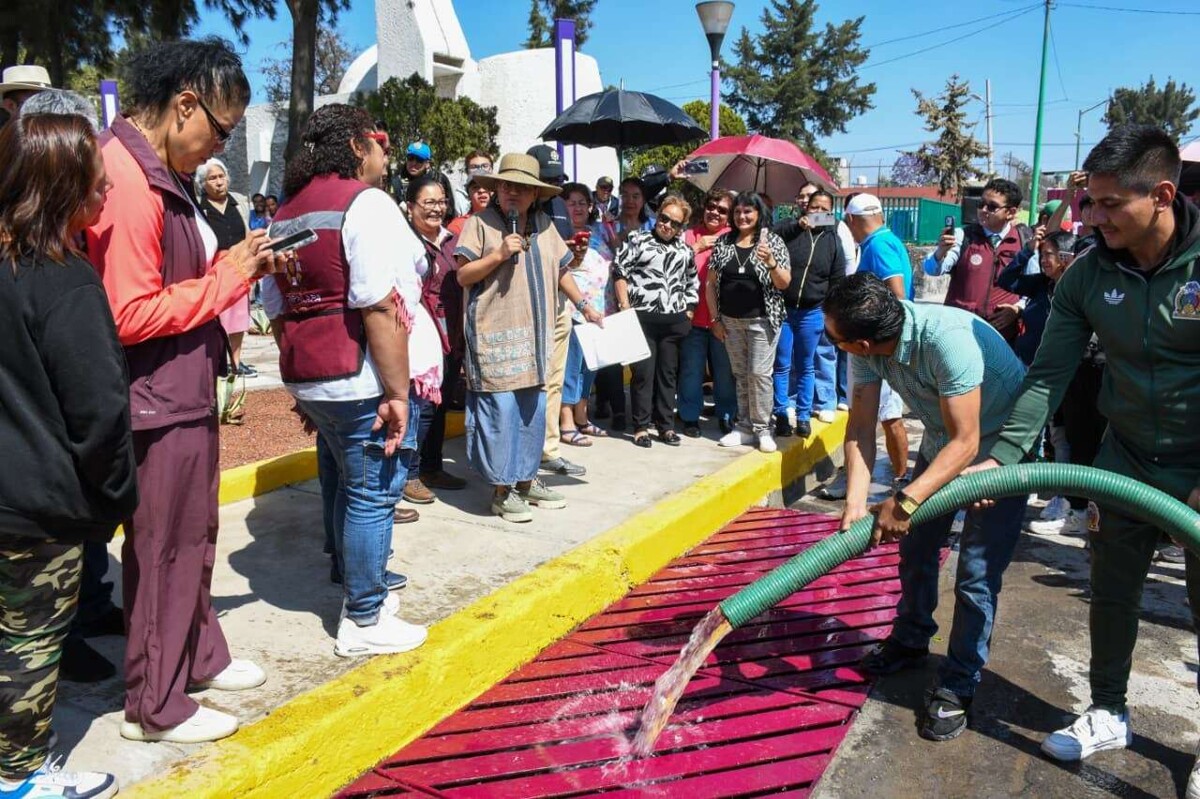
On World Water Day, the Iztapalapa mayor's office announced one of the most ambitious hydraulic strategies in recent years: a rainwater capture network capable of collecting up to 37 million liters of water per hour, with the aim of recharging aquifers and mitigating flooding in the demarcation. During the forum 'Advances and Prospects of Water Management in Iztapalapa', Mayor Aleida Alavez emphasized that access to water is a fundamental human right, which is why her administration has increased investment in hydraulic infrastructure by 300%. This effort translates into key works such as the construction of absorption wells, the rehabilitation of drinking water and drainage networks, as well as desilting and leak repair, actions that will have a short, medium, and long-term impact on the population's quality of life. One of the most significant advances is the accelerated construction of absorption wells. While between 2000 and 2024, 283 had been built, the current administration has managed, in just a year and a half, to advance towards creating 40% of the total existing in the demarcation. In 2025 alone, 67 wells were built, 14 of which were made possible through participatory budgeting, and the construction of 57 more is expected this year, consolidating a network that will allow for the efficient use of rainwater. This infrastructure will be key, especially in areas like the Sierra de Santa Catarina, where rainwater capture will contribute to aquifer recharge and reduce flood risks. 'We are taking the money to where it is really needed. These are not flashy projects, but they are the ones that guarantee dignity and quality of life for the population,' stated the mayor. Furthermore, the strategy includes the replacement of 12,574 meters of drinking water network, the renewal of over 13,000 meters of drainage, the desilting of more than 690,000 linear meters, the repair of 2,878 leaks, and the cleaning of 607 cisterns in schools and public spaces. The plan also incorporates a social and gender approach. The mayor highlighted that water scarcity disproportionately affects women, which is why actions such as public laundries with water reuse technology have been promoted, in order to reduce the burden of domestic work and optimize resource use. Finally, she reiterated that the water strategy in Iztapalapa not only responds to a technical need but is also a commitment to social justice, sustainability, and the well-being of future generations: 'where water flows, equality grows'.