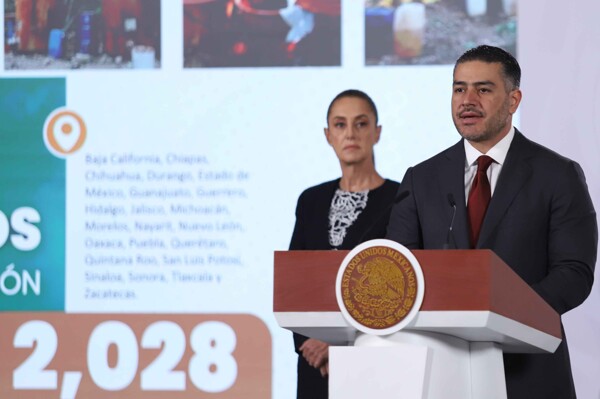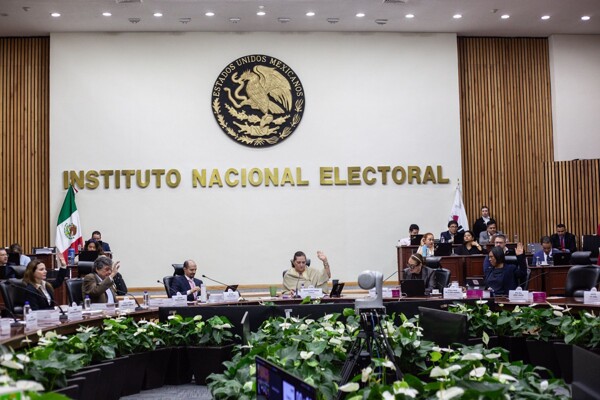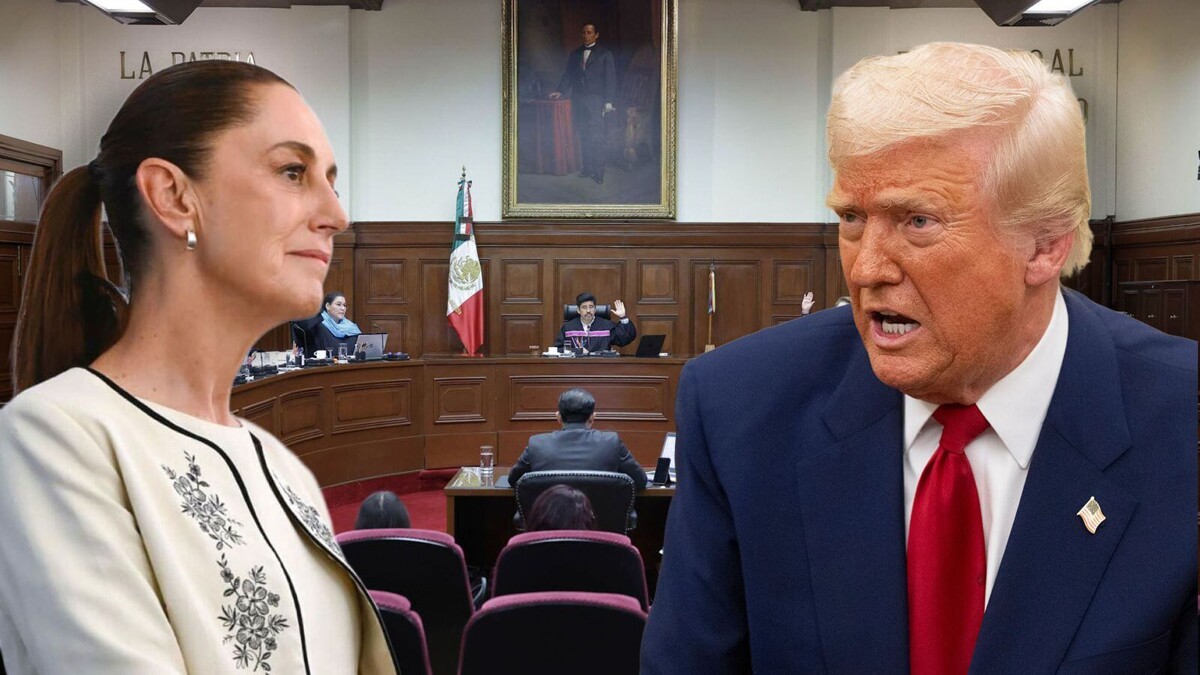
The response was negative, under the argument of 'national sovereignty.' This leads to an inevitable reflection: First, while the United States faces external conflicts, its internal institutional life remains functional, accessible, and orderly. In Mexico, in contrast, the war is internal and the territory has been ceded to crime for years. The consequence is evident, as we cannot even guarantee basic security conditions in our own capital. Second, what 'sovereignty' are we talking about? And when a state cannot guarantee security, justice, and institutional access to its citizens, that sovereignty is, de facto, non-existent. Denying international cooperation in this context does not seem like a strategic decision, but rather an act that deserves deeper analysis. Because, at the end of the day, the true obligation of the state is to its citizens. What was once an accessible institutional environment has today become a bureaucratic wall. The Supreme Court of Justice, which in the past could be visited by both citizens and litigants interested in following a case, is now perceived as a closed, distant, and in many cases inaccessible space. Entry is limited, conditional, and at times denied. There is order, there is access, and above all, there is trust in the institutions. The comparison with Mexico is, to say the least, painful. In reality, we are living an internal war against organized crime. But precisely because of this, it is even more alarming that this insecurity has come to justify the restriction of fundamental rights. In this context, it cannot go unnoticed that President Donald Trump recently offered his support to the government of Mexico, led by President Claudia Sheinbaum Pardo, to directly combat organized crime. And if we talk about prosecutor's offices, the situation is even more worrying. The current headquarters of the Attorney General's Office in Santa Fe, far from representing modernity and efficiency, has become an inaccessible venue. Following up on an investigation file, even with the right to do so, involves navigating administrative obstacles that border on the absurd, such as electronic appointments, strict data validations, prolonged waits in the open air, and inefficient service that eliminates any notion of swift and expeditious justice. Some will argue that these measures respond to security needs. And it is true, Mexico faces a violence crisis that cannot be minimized. And today in Mexico, that obligation remains pending. When violence has penetrated structures, when access to justice is limited, when authority yields to crime, as happened in the case of the release of Ovidio Guzmán López, it is legitimate to question whether this 'sovereignty' is still a reality or if it has become an empty discourse. Sovereignty is not proclaimed, it is exercised. In such complex times, when violence and international conflicts dominate the planet, it is when the true strengths or weaknesses of states are observed. Today, the United States of America faces several fronts: tensions with Iran, the conflict in Palestine, and also internal protest movements against the federal government led by Donald Trump. It is, without a doubt, a complicated scenario, characteristic of a nation living in an environment of confrontation. However, despite this context, there is a deeply revealing reality: in the United States, order prevails. It is not about denying risks or idealizing a society, but about recognizing that even in a context of internal and external pressure, the citizen can move about with relative calm. It is enough to walk through the North American capital to realize it, as any visitor can stroll its streets with a sense of security that, in other places, seems increasingly distant. It is possible to enter the Capitol, tour it, observe the functioning of the Legislative Branch; it is possible to go to the Supreme Court, enter, and get to know the venue. Even upon gaining access, following up on a case becomes an extremely difficult task, as there are evasive answers, a lack of available staff, and a digitization that, instead of facilitating, hinders the exercise of the human right to access to justice. It is no exaggeration to state that the Supreme Court of Justice of the Nation is beginning to resemble a prosecutor's office. Our country, particularly after the recent judicial reform, has experienced an institutional deterioration that cannot be ignored. Those of us who practice the law live it every day. Yes, there are security controls, as is natural in any modern state, but these do not translate into an institutional closure or an immovable barrier for the citizen. Is it really about 'sovereignty,' or about other interests? The question is uncomfortable, but necessary. What is it that is intended to be protected?