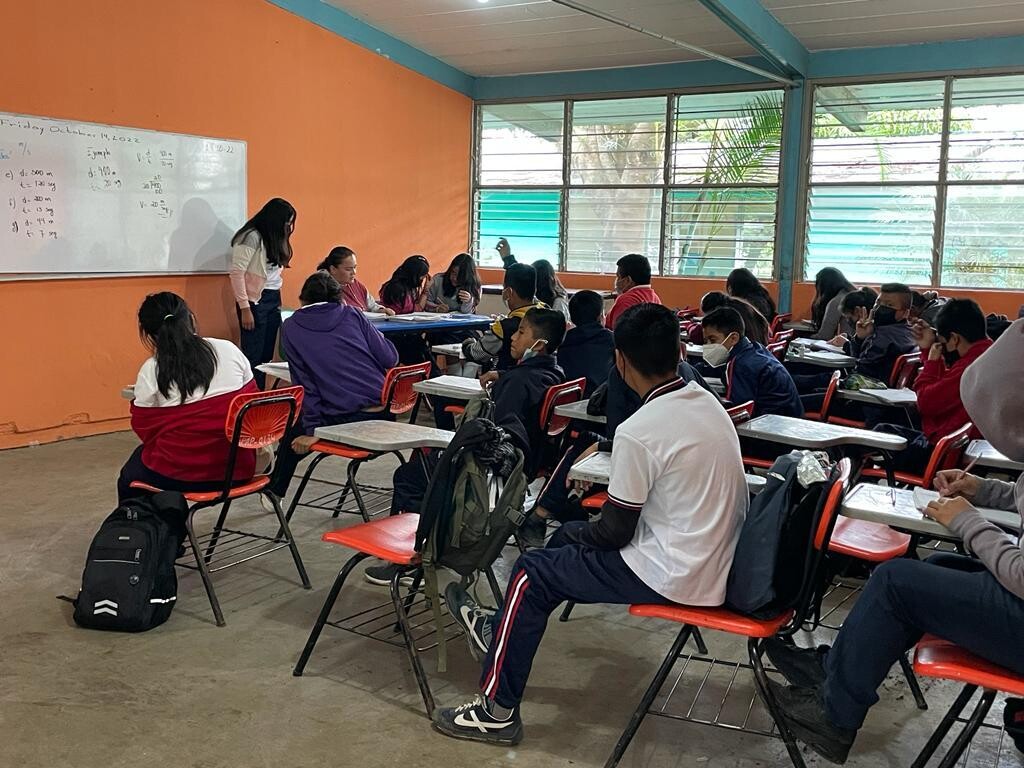
The Mexican Institute for Competitiveness (IMCO) reported that only 8 out of 100 third-year secondary school students in Mexico achieve the expected knowledge in scientific literacy and thinking. IMCO is one of three organizations with a critical stance on the federal government and its public policies, and as of January 2026, they will no longer be able to receive tax-deductible donations, as the Tax Administration Service (SAT) has revoked their authorization as charitable organizations. IMCO's report highlights differences between school types, as 18% of students in private institutions achieve these learning outcomes, compared to only 7% in public schools. In its study, 'Educational Inequalities in Mexico,' IMCO warns that educational inequality is one of the main obstacles to the country's development due to disparities in access, resources, infrastructure, and teaching quality. Beyond academic performance, the report, published in 2024, emphasizes that 6.4 million girls, boys, and young people in Mexico do not attend school, representing 18% of the school-aged population. In 2023, educational inequality in Mexico surpassed the regional Latin American and global averages. The document also notes that gaps deepen among vulnerable populations, such as indigenous communities, people with disabilities, and rural residents, who face greater obstacles to accessing and remaining within the education system. Additionally, factors like socioeconomic status, teacher availability, and access to technology influence academic results. IMCO states that to reduce these gaps, public policies are needed to improve access, retention, and educational quality, as well as to strengthen teacher training and school infrastructure.