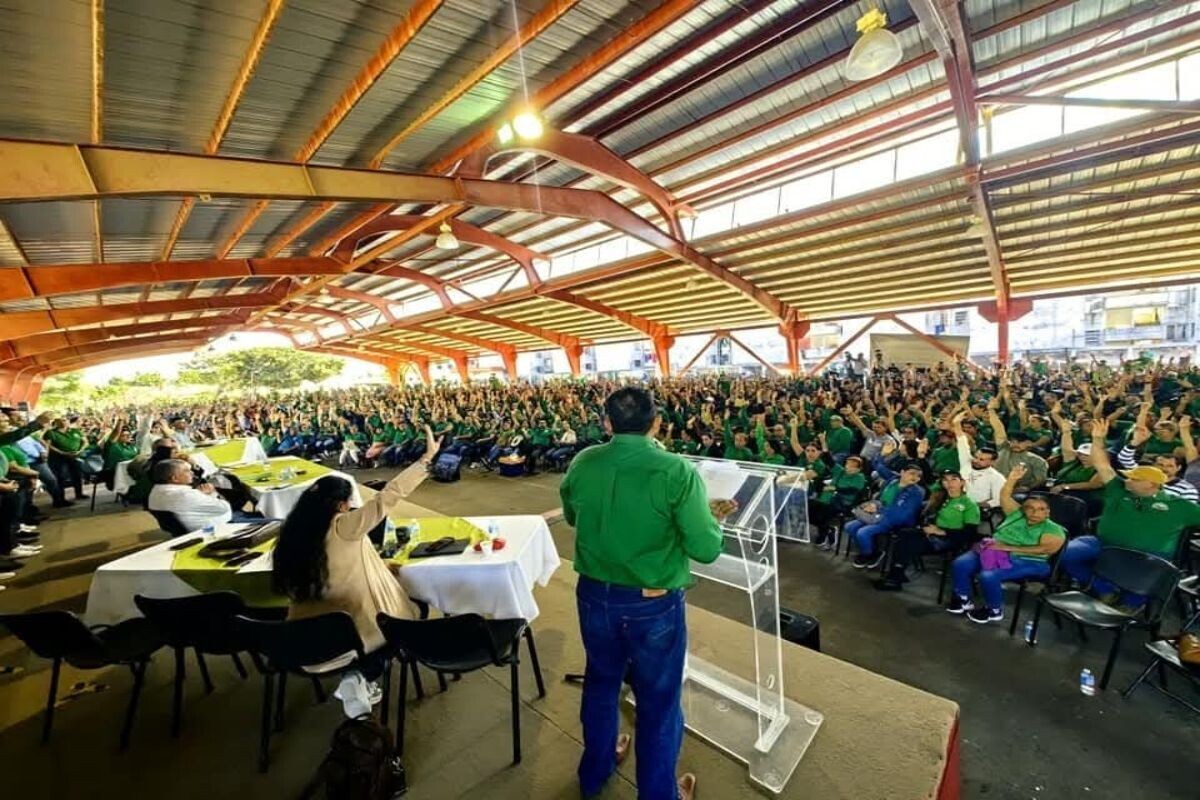
Members of the Nayarit State and Municipal Workers' Union (SUTSEM) alerted the Nayarit Congress to the risks of a swift approval of the reform to Article 137 of the local constitution and the Law of the Dignified Retirement Fund. According to a press release, the workers stated that the initiative, proposed by Governor Miguel Ángel Navarro, could cause serious legal and financial damage that would directly affect pensioners. They also criticized that the legislative process is being carried out during the vacation period to favor a limited debate without citizen participation. According to their analysis, SUTSEM identified several serious unconstitutionality; among them, the imposition of a “double cap” or different limits on pensions, which contradicts Articles 1 and 127 of the Federal Constitution. Any additional limit violates acquired rights and constitutes an illegal act. They also warn that the initiative proposes retroactive adjustments to already granted pensions, an action prohibited by constitutional Article 14, and the elimination of transitional articles that have served as a basis for judicial amparos, which represents an undue interference in resolutions of the Federal Judiciary. Another point raised by the union is that the proposed amendment to Article 137, which originally regulates municipal workers and not those of the State Powers, so it cannot be used as a basis for limiting retirement fund pensions. They also warned that the reform intends to replace the state AFORE with a Variable Capital Society without authorization or registration from the National Commission for the Retirement Savings System (CONSAR). They consider that this reform does not solve the financial problems of the pension system, but simply transfers the burden to the next administration, leaving legal and economic risks pending. The only thing they are doing is kicking the can down the road so that the next administration breaks. The union recalled that the Supreme Court of Justice of the Nation (SCJN) protects the rights of workers who are about to retire; therefore, eliminating the transitional articles of the retirement fund would affect those who have contributed for years under the current rules. They also warned that the initiative exceeds the powers of the local Congress by reinterpreting the federal reform to Article 127, something that no state Congress has the authority to do. In the justification for this amendment, Governor Navarro argues that the reform seeks to guarantee the financial sustainability of the pension system, promote republican austerity and rationalize public spending in the face of the structural pressure of the current defined-benefit pension model. These reforms must be approved by the people, not by the state governor; approving them would be participating in an institutional looting that will affect generations of workers and public finances. In the event of eventual approval, the union stated that the economic impact of the reform could be broad and the replacement of the state AFORE with an S.A. de C.V. without federal authorization and retroactive adjustments could generate lost lawsuits for the State. This, caused by a weakening of the pension system and compromising public resources that end up affecting the citizenship. Finally, SUTSEM reiterated its call to legislators to vote with constitutional responsibility, protect the rights of workers, and guarantee the financial stability of the state before approving any reform. "We are not saying that there are no financial problems, but that this is not the way to solve them," the union concluded.