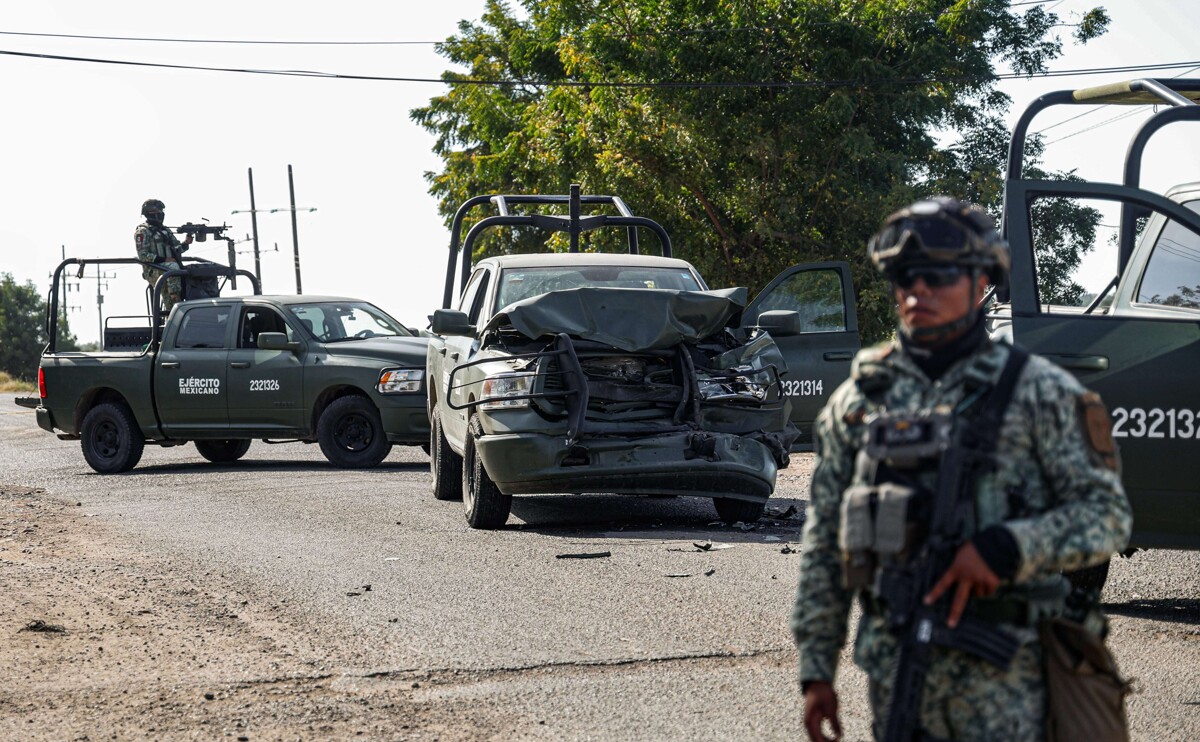
In Mexico, there is no autonomous Attorney General's Office, so the deaths of the 11 will not be investigated. How will we know what happened on March 19th in Sinaloa? If the families of the 11 from Culiacán ask to investigate the circumstances of their loved ones' deaths, would they be attended to by the National Human Rights Commission? Only now Calderón is not in power, but the 'the poor first' regime. The massacre of the 11 is not the first case of high lethality in this government. We could have victims of forced recruitment, either dead or detained by the government. In conclusion. The case was controversial due to the detention and release of a daughter of Ismael 'El Mayo' Zambada, relativizing the eleven deaths. 'A good dead' is an expression used, for example, in Colombia for presumed criminals killed in events of violence between gangs, or in clashes between authorities and presumed criminals. That dehumanization is not only contrary to the rule of law, but it could unleash more violence, exactly the opposite of what Claudia Sheinbaum's government seeks with its anti-crime strategy, and could lead Mexico back to a 'war'. I list below seven problematic issues that the event on Thursday forces us to think about: 1. The 11 dead on one side, and none from the government — although injured elements were reported — bring back the times of high lethality or excessive use of force by the uniformed. 2. How will we know what happened on March 19th in Sinaloa? 3. If they ask to investigate the circumstances in which their loved ones died, would the families of the 11 from Culiacán be attended to by the National Human Rights Commission? 4. A note from El País highlighted that after the place of origin of 10 of the deceased was made public, they are towns with high social marginalization. This movie we've seen before, it's always the poor who die, and things get worse: it has no ending; there are sequels, but no termination. 5. This movie could be titled 'The Ominous Return of the 'Good Dead''. 6. Added to the above, we have the 'good prisoner': the government boasts 46,400 detainees 'for high-impact crimes'. 7. Who can rule out that among the 'good dead' and 'good prisoners' there are people reported as missing? The problem is that in the past we have already discovered with horror (Tlatlaya, 2014) that in such a context federal forces abuse and carry out extrajudicial executions. And the Navy's operation last Thursday in Sinaloa is just one of its scenes. On the 19th, the Navy conducted an operation in the sindicaturas of Culiacán where 11 presumed members of organized crime died. On the government side, no deaths were reported. This movie could be titled 'The Ominous Return of the 'Good Dead''. The ingredients are being cooked for the cartels to again have from the authority a message of total war against them. If in each clash the chance of not surviving is 10 to 1, if prison is going to be the product of something more like raids than pre-emptive detentions based on investigation files, if society is not going to care a damn about the death of a presumed criminal, because he is a 'good dead'; if neither prosecutors, nor the CNDH, nor judges seek to be impartial, if —on top of that— some already processed or under process are extradited to the United States, then the criminals will have it clear: they will have to arm themselves and resist, because there are no institutions or society that demand a justice system based on law and even on international conventions. This movie we've seen before. People die again who come from a context of poverty. Ninety a day.