In Mexico, the figure is somewhat higher, but it is still insufficient compared to the volume that is produced.
Purifying at home
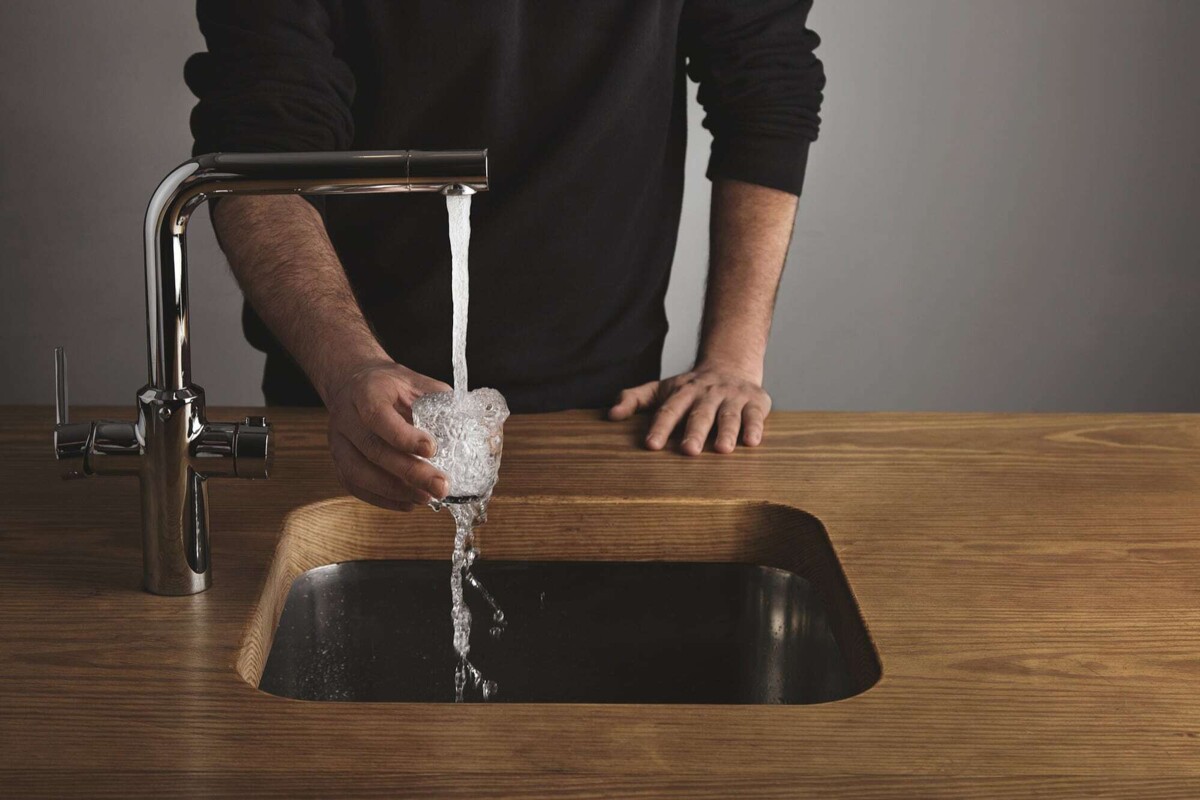
In the face of this scenario, purification systems installed directly in homes are positioned as a more and more viable option. The most effective and widespread technology is reverse osmosis: a process that forces water through a membrane with microscopic pores, capable of retaining sediments, bacteria such as Escherichia coli, and heavy metals.
In essence, it is the same method as municipal potabilization plants, but on a domestic scale and under the kitchen sink. Bebbia, a brand from Grupo Rotoplas with six years in the Mexican market, operates on that principle. The purifier is installed at the point of consumption—such as under the sink—takes water from the public network and treats it on-site, eliminating the need to buy water jugs or bottles.
It has the NOM-127 of the Secretariat of Health and the NOM-244 of COFEPRIS—one of the most demanding certifications in the sector—and the endorsement of the Mexican Association of Pediatrics. Its monthly subscription model, which includes installation and maintenance, starts from a few hundred pesos a month, which can represent significant savings compared to the usual expense in bottled water.
One of its most marked differentials is traceability, which, unlike the water jug—whose origin and purification process are rarely verifiable—this system allows you to know exactly what happens to the water before it reaches the glass.
A change of habit
Replacing the water jug with a home purifier is not just a matter of comfort or savings. It is a decision that reduces the generation of plastic waste, decreases emissions associated with distribution, and returns control to the consumer over something as basic as the water they drink.
The structural challenge remains enormous: no filter solves the historical inequity in access to water nor replaces public investment in water infrastructure. Water is the liquid that allows life to develop on Earth; without it, the world as we know it would not exist. Human beings, in fact, are unable to resist more than five days without drinking a single drop, as are many other species on the planet.
That is why, on this March 22, World Water Day, we must remember the importance of caring for it and finding alternatives that allow us to consume it in a sustainable and healthy way.
A right for all
Access to drinking water is a recognized international right that the State has the obligation to guarantee. However, this is not a reality for all regions of Mexico: the deterioration of distribution networks, water shortages, and lack of infrastructure leave a significant part of the population vulnerable. States such as Guerrero, Chiapas, and Oaxaca concentrate the greatest shortcomings; in the first, only 7% of its inhabitants receive water daily and directly.
This inequality, added to decades of distrust towards the public supply, explains why Mexico became one of the largest consumers of bottled water per capita in the world.
The invisible cost of the water jug
However, consuming water in this way presents itself as a practical solution that hides a deep-rooted environmental problem, since each single-use plastic bottle takes hundreds of years to degrade and, in that process, releases microplastics that end up in bodies of water, in the organisms of fish, and eventually in our own. Recent studies estimate that a person ingests the equivalent of a credit card in plastic per year. But while those debts are settled, purifying at home is one of the most concrete, accessible, and responsible responses that a home can adopt today.
The water jug, although reusable, also does not escape the cycle: its production, transport, and collection generate emissions that accumulate with each refill. Globally, only 14% of plastic containers are recycled.