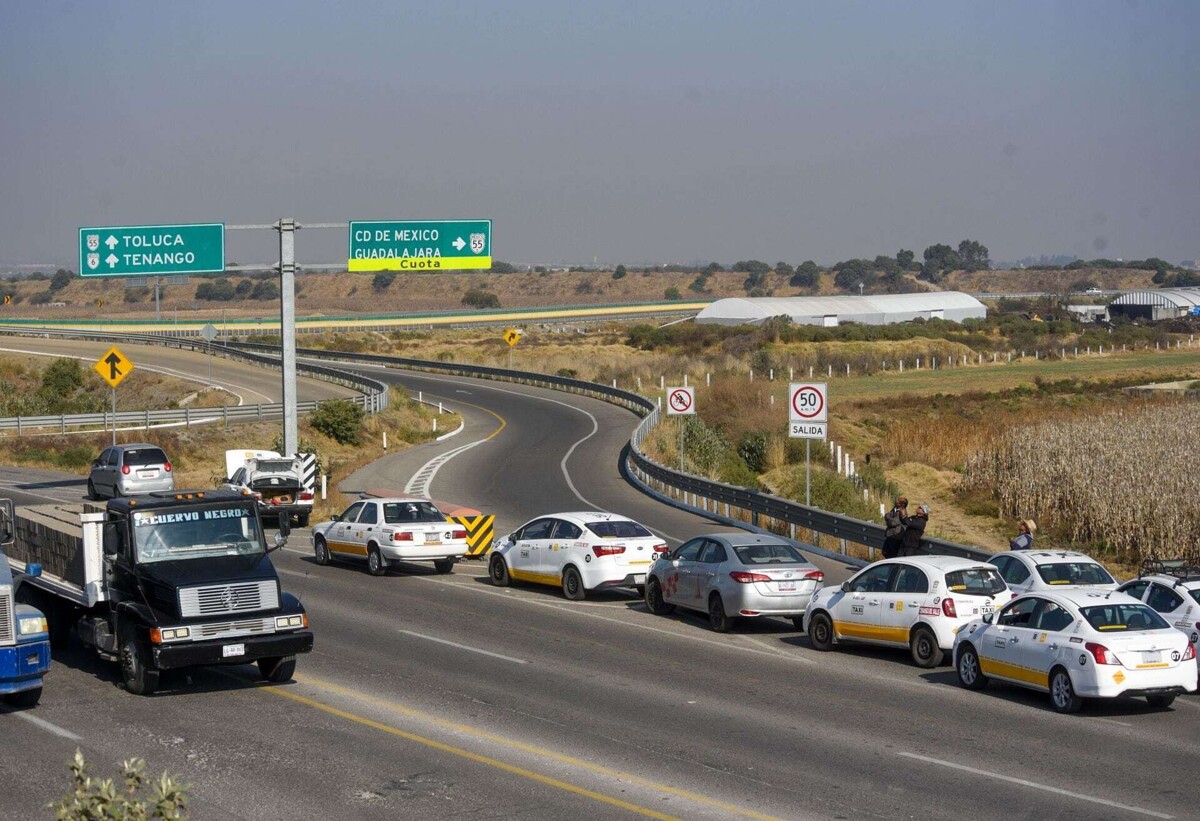
The Mexican government has offered dialogue to truckers and agricultural producers in response to the threat of new national mobilizations. According to the Ministry of the Interior, administrative simplification has helped speed up payment processes and reduce regulatory burdens, strengthening trust in institutions. In parallel, significant progress has been made in the procurement, marketing, and distribution of resources, directly impacting producers in these entities. The ministry highlighted that in the transport sector, “specific attention tables have been held that have led to agreements aimed at improving security, regulation, and operational efficiency on roads.” Among the actions implemented, it emphasized the “strengthening of security operations in coordination with federal authorities, the supervision of inspection points, the validation of digital tools for procedures, and the implementation of tracking systems that allow for greater transparency and efficiency.” “Measures have been developed for the regulation of road access and the creation of infrastructure oriented towards safety, such as rest stops and monitoring devices on strategic sections,” the Segob expressed. Therefore, “a call is made to continue prioritizing channels for understanding and building agreements, avoiding actions that affect third parties or interrupt the operation of communication routes.” “Dialogue will continue to be the fundamental instrument to advance towards lasting solutions that benefit both the productive sectors and society as a whole,” the department considered. Faced with the threat of a new national mobilization—marches and blockades by truckers and agricultural producer organizations next Monday in various states of the country—the Secretariat of the Interior offered them dialogue and responses to their demands. In a communiqué, the federal agency reported that permanent attention mechanisms have been established to guarantee dialogue and the presentation of solutions to the demands of truckers, who have denounced that they suffer extortion, robberies on highways, and other crimes in their work. The authority indicated that from the beginning of this process, direct communication channels and working tables with authorities from different levels have been enabled. The above “has made it possible to promptly address concerns related to the commercialization of products, access to incentives, security on communication routes, the simplification of procedures, and the strengthening of governmental coordination.” According to the Segob, in the agricultural sector, “timely follow-up has been given to demands focused on conflicts with an impact on mobility and productive activity” and as a result “relevant agreements have been generated.” The Mexican authority assured that some demands from truckers have already been addressed, while others are in process, according to the corresponding administrative and operational times. For these reasons, the Segob considers that there is no reason for truckers and agricultural workers to demonstrate after Easter 2026, as they announced. Peasants and truckers have also proposed blockades during the 2026 World Cup. “The government of Mexico reiterates its permanent disposition to open, respectful, and institutional dialogue with all organizations in the agricultural and transport sectors,” the authority indicated. “Actions have been promoted to strengthen the commercialization of white corn, particularly in high-production entities such as Guanajuato, Jalisco, and Michoacán,” it added. In addition, “progress has been recorded in the payment of incentives for crops such as wheat and rice, addressing accumulated debts.”